
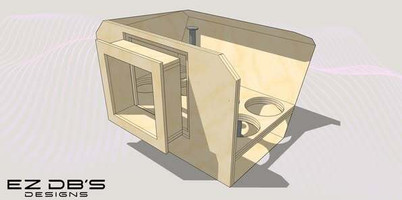
Essential Guide to Crafting a 4th Order Bandpass Subwoofer Box Design
Posted by Dominic Martino / Jacob Morris on Jun 1st 2024
Step-by-Step Guide: How to Build a 4th Order Bandpass Subwoofer Box Design
If you've been searching for the ultimate 4th order bandpass subwoofer box design, you've come to the right place. At Amped Up Car Audio, we specialize in helping car audio enthusiasts take their builds to the next level. This step-by-step guide covers everything you need to know about 4th order boxes, from ratios to port area, so you can design a system that hits harder, plays lower, and performs at competition level.
What Is a 4th Order Bandpass Enclosure?
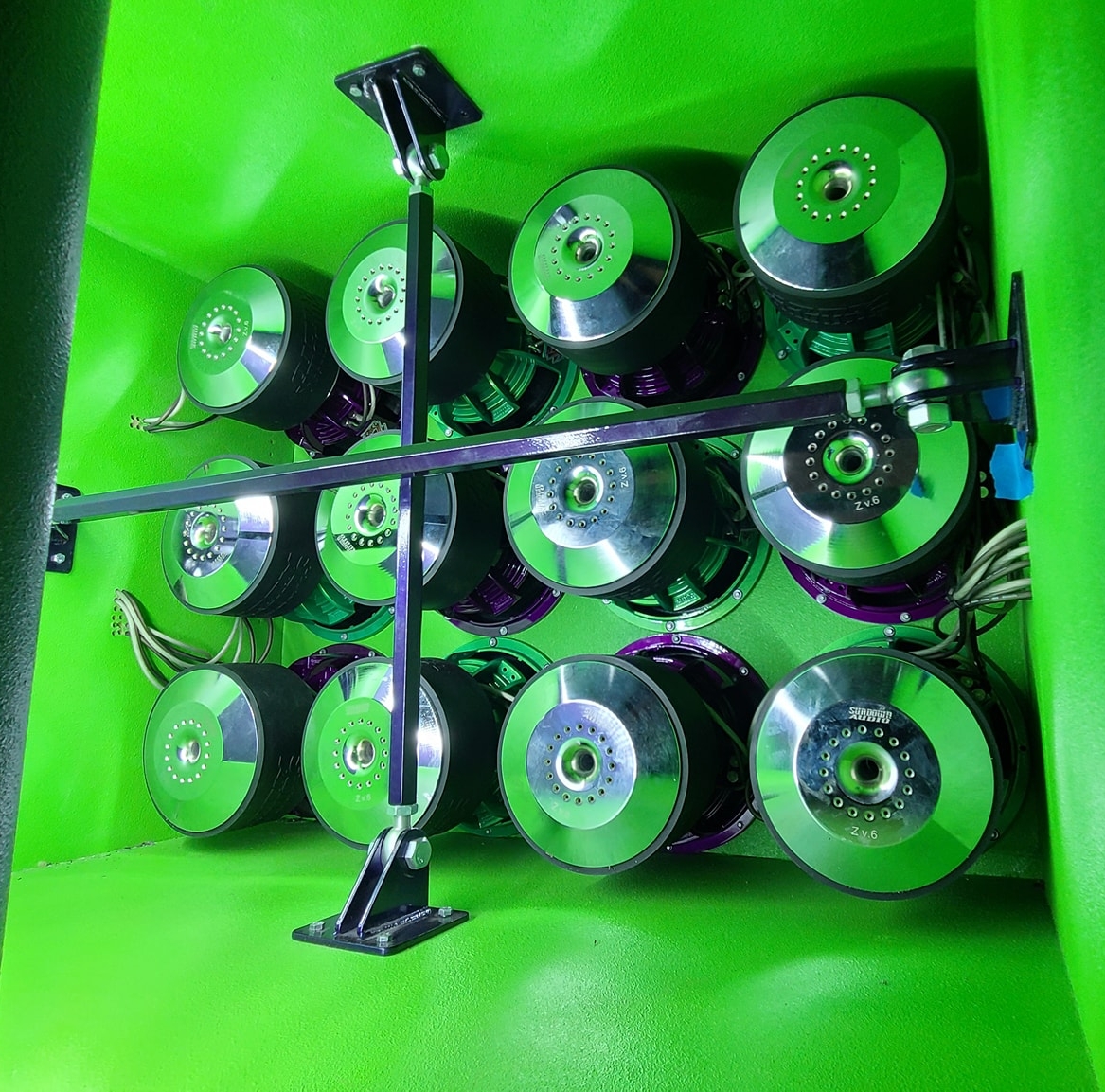
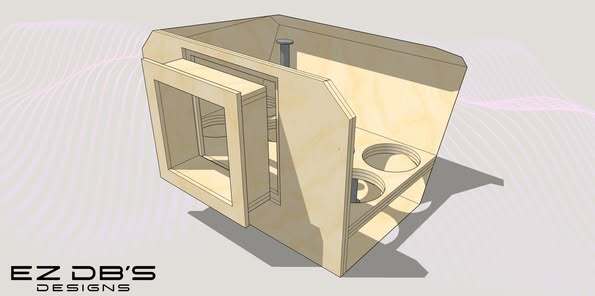
A 4th order bandpass box combines two chambers into one powerful design. This type of enclosure is also known as a fourth order enclosure, featuring a sealed chamber and a ported section working together to shape the sound.
-
Sealed chamber = controls the woofer and extends low frequency response. A sealed enclosure (or sealed box) is a simple airtight box that provides tight, accurate bass and good transient response, but may not reach as deep into the lower frequencies as a 4th order bandpass.
-
Ported section = amplifies output at a tuned frequency. The ported section is carefully tuned to boost bass output and efficiency, similar to a bass reflex enclosure but with the added benefit of the sealed chamber controlling the woofer’s movement. The ported chamber also acts as a low pass filter, selectively allowing lower frequencies to pass while filtering out higher frequencies, which shapes the frequency response and improves efficiency.
Compared to a bass reflex enclosure or a sealed box, a 4th order bandpass enclosure offers a unique balance of loudness and efficiency. It rolls off higher frequencies, focusing energy on the lower frequencies for deep, powerful bass. The transient response of a 4th order bandpass is generally good, providing punchy and dynamic bass, though it may not be as precise as a sealed enclosure.
This design is especially popular for large ratio 4th order enclosures, which prioritize strong low-end output and SPL rather than wide bandwidth or audiophile-grade sound quality. If you’re aiming for a ground-pounding bass monster, these guidelines will help you get there.
Design Goals and Tuning Frequency
Decide what you want from your system:
-
SPL (Sound Pressure Level): Port tuning frequency around 55–65 Hz.
-
Low-end extension: Sealed chamber resonance and port tuning in the 44–46 Hz range.
-
Daily all-around use: Tuning around 47–52 Hz.
These values depend on your vehicle's acoustics, so take them as starting points rather than strict rules.
Ratio and Efficiency
Large ratio enclosures (e.g., 3:1 ported to sealed volume) are more efficient and deliver louder output with fewer subs compared to small ratio designs. Increasing the ratio from 1:1 to 3:1 can yield about a 3 dB gain, equivalent to doubling cone area or power. Moving from 2:1 to 3:1 adds roughly 1.5 dB, similar to a 50% increase in cone area or power.
Port Area and Placement
A good starting point for port area is about half the cone area of your subwoofer. Use box design software to model port velocity and optimize airflow. It's important to calculate the correct port dimensions, such as port radius and length, to ensure optimal acoustic performance and minimize turbulence. Avoid top ports if possible, as they tend to be less efficient. Driver’s side ports typically produce about 1.5 dB more output than center ports.
Additional Tips
-
Subs with medium to soft suspension are ideal for 4th order bandpass designs.
-
Using a common sealed chamber can increase loudness but risks damaging all subs if one fails.
-
High motor force subs can work well in smaller sealed sections.
-
Try to mount all subs on the same plane for better performance.
-
How you connect multiple subs inside a 4th order bandpass enclosure—such as wiring them in or out of phase—can significantly affect output and sound quality. Proper electrical connection is crucial for optimal performance.
-
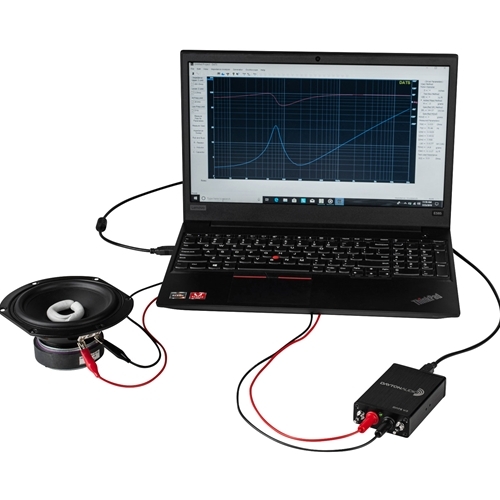
Use a DATS/WT3 tester to measure and tune sealed resonance before finalizing the loading wall.
-
Your vehicle’s acoustic peak usually sits 3–4 Hz below your tuning frequency.
Using Fiberfill (Polyfill)
Fiberfill stuffing can simulate a larger enclosure by dissipating heat inside the box, making the woofer act as if it has more air volume. This can increase effective box volume by up to 40%, improving low-end extension without increasing physical size.
-
Recommended stuffing density:
-
Small enclosures (up to ~3 cubic feet): 1.5 pounds of fiberfill per cubic foot.
-
Larger enclosures: about 1 pound per cubic foot.
-
-
Fiberfill is preferred over fiberglass or wool for safety and practicality.
-
Overstuffing can reduce effectiveness as fibers become too compact to dissipate heat.
By applying these principles and tips, you can design and build a custom 4th order bandpass enclosure that delivers powerful, efficient bass tailored to your goals and vehicle setup.
-
Sealed chamber = controls the woofer and extends low frequency response.
-
Ported chamber = amplifies output at a tuned frequency.
-
Result = loud, efficient bass with monster low-end potential.
The woofer fires into the sealed side, and sound exits through the ported side. This setup creates massive efficiency in a narrow frequency range — perfect for competitors or anyone chasing extreme lows.

Large-Ratio 4th Orders: Why They Hit Harder
Large-ratio 4ths shine with fewer subs and more ratio. The design focuses power and efficiency rather than spreading it across too many drivers.
-
3:1 ratio = great balance of loudness and lows.
-
4:1 or 5:1 ratio = insane SPL potential (if you have space).
Efficiency Gains
-
1:1 → 3:1 = ~3 dB louder (like doubling cone area or power).
-
2:1 → 3:1 = ~1.5 dB louder.
Pro Tips from Experienced Builders
-
Medium/soft suspension subs work best in 4th orders.
-
Common sealed chambers get louder but risk damaging all subs if one fails.
-
High motor force subs can use smaller sealed sections effectively.
-
Test sealed resonance before adding the loading wall — that frequency will guide your port tuning.
-
Invest in a DATS/WT3 tester for precise, data-driven tuning.
Understanding Compound Loading
Compound loading is at the heart of what makes a 4th order bandpass enclosure so effective for car audio enthusiasts seeking both power and precision. In this box design, you’re working with two chambers: a sealed chamber (the sealed side or sealed section) and a ported chamber (the ported side). Each chamber plays a unique role in shaping your system’s frequency response and overall output.
The sealed chamber is responsible for delivering a tight, controlled low frequency response. By keeping the woofer’s movement in check, the sealed side helps produce clean, punchy bass that’s ideal for music with lots of low end. On the other hand, the ported chamber is tuned to a specific frequency—this tuning frequency is where the enclosure really comes alive, amplifying output and efficiency in a narrow frequency range. The result is a flat response across your target bass frequencies, with impressive output that can outperform traditional sealed or ported boxes.
The key to successful compound loading is finding the right balance between the two chambers. Most 4th order bandpass enclosures use a ratio of 2:1 or 3:1, with the ported chamber being larger than the sealed chamber. This ratio is crucial: it determines how much air each chamber holds, which directly impacts the system’s frequency response, output, and efficiency. Too small a sealed section can choke your subwoofer, while too large a ported chamber can muddy the sound. The whole point is to create a system where both chambers work together, not against each other.
When designing your enclosure, always start with your subwoofer specs—especially the Thiele-Small parameters. These specs help you determine the ideal box volume, port area, and port tune for your specific driver. A well-executed compound loading system in a smaller enclosure can often outperform a larger box with poor design. Pay close attention to the port area and length, as these will affect your tuning frequency and the overall performance of your 4th order bandpass enclosure.
In car audio, every vehicle is different, so it’s important to account for available space and the acoustics of your specific setup. A custom box design that takes these factors into account, along with the right ratio and tuning, will deliver the best results—whether you’re after a daily driver with deep, clean bass or a competition-level SPL system.
Ultimately, compound loading is about synergy. By carefully balancing the sealed and ported chambers, and tuning your enclosure to your subwoofer’s strengths, you can create a 4th order bandpass system that delivers exceptional sound quality, output, and performance. Take the time to determine the right configuration for your setup, and you’ll experience the full potential of your subwoofer system—right where it matters most: in your vehicle.
Step-by-Step: How to Design a 4th Order Bandpass Box
Step 1: Check Your Subwoofer Specs
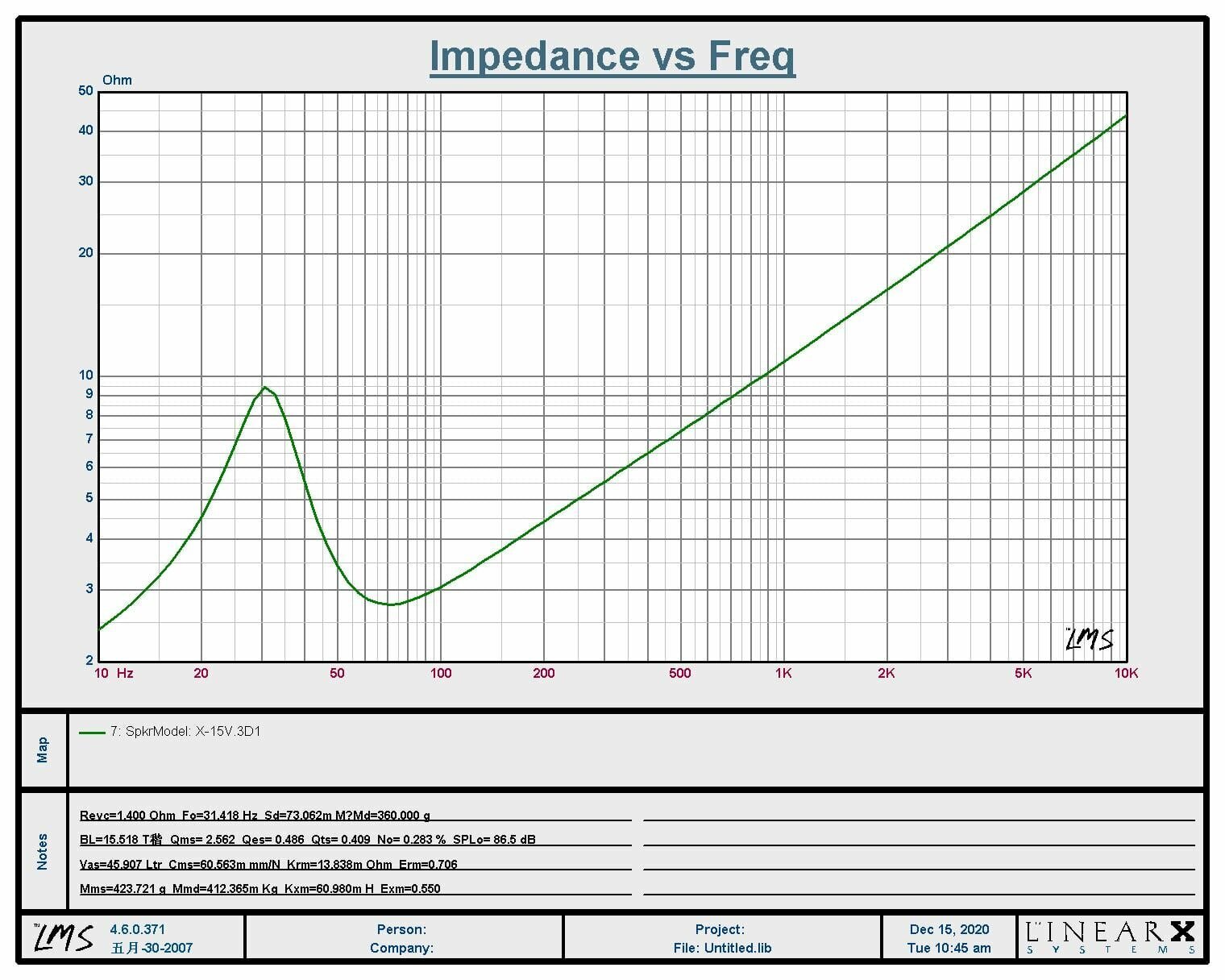
To determine if your subwoofer is a good fit for a 4th order bandpass, check its Thiele-Small parameters, focusing on the most relevant ones for this enclosure type:
-
Calculate FS ÷ QES:
-
45 and below: better suited for sealed enclosures or 4th order bandpass.
-
55 and above: better for ported boxes or 6th order bandpass.
-
Check QTS:
-
Above 0.55: typically better for 4th order bandpass.
-
Below 0.45: better for 6th order bandpass.
Some subs may fall between these ranges and work well in either setup. For example, the JL 18w6 has a low QTS but FS/QES ratio suggests it can perform well in a 4th order bandpass.
Step 2: Define Your Design Goals
Ask yourself: Do I want SPL, low end, or daily use?
-
SPL Builds: Port tune higher, around 55–65 Hz.
-
Low-End Builds: Tune in the 44–46 Hz range.
-
Daily Drivers: Aim for 47–52 Hz.
Your vehicle's acoustics also play a role — most vehicles peak 3–4 Hz below tuning.
Step 3: Dial in Your 4th Order Port Area
The 4th order port area is crucial to airflow and loudness.
-
Start with ~½ of cone area as a baseline.
-
Use software (WinISD, BassBox Pro) to model port velocity.
-
Avoid top ports if possible (less efficient).
-
Driver's side port is usually ~1.5 dB louder than a center port.
-
Always flare your ports to reduce noise.
Step 4: Build with Precision
-
Keep all subs on the same plane when possible.
-
Add polyfill (fiberfill) to the sealed chamber to simulate up to 30–40% more volume.
-
Build your shell, then test sealed resonance before finalizing the loading wall.
4th Order Wall Design vs. 4th Order Box Design
-
4th Order Wall Design:
-
Enclosure replaces the rear of the vehicle, maximizing output for demo builds.
-
Great for SPL competitors who want extreme efficiency.
-
4th Order Box Design:
-
Traditional enclosure that fits in trunks, hatchbacks, or SUVs.
-
More compact but still delivers massive low-end.
-
Compared to a bass reflex (ported) design, a 4th order bandpass uses a sealed chamber and a ported chamber, which can provide higher output in a specific frequency range, while bass reflex enclosures rely solely on port tuning and port size for low-frequency response and overall efficiency.
Common Mistakes to Avoid
-
Overstuffing fiberfill — too much can hurt performance.
-
Incorrect ratio — smaller ratios won't deliver SPL gains.
-
Under-porting — causes noise and poor output.
-
Ignoring sub specs — not all subs are ideal for a 4th order box.
Final Thoughts
A 4th order bandpass box design is all about balance — getting the ratio, port area, and tuning right for your subs and your goals. Whether you're after an everyday build with strong low end or a wall-shaking SPL monster, a 4th order can deliver results that sealed or ported enclosures alone simply can't match.
Want to Go Even Further? Explore 6th Order Bandpass Designs
If you’re finding the 4th order bandpass design intriguing and want to push your build further, consider a 6th order bandpass enclosure. This design adds an extra tuned chamber, expanding bandwidth and boosting output and efficiency when done right.
Check out our detailed 6th order bandpass guide for insights on how these boxes work and when they make sense for SPL, SQL, or competition setups.
Read the full 6th Order Bandpass Subwoofer Box Guide here
At Amped Up Car Audio, we stock the subs, amps, wiring, and accessories you need to bring your 4th order build to life — from Sundown Audio and Crossfire to DC Audio, Down4Sound, and Ruthless Audio.
Start building your 4th order box today at AmpedUpCarAudio.com and #GetAmpedUp.
Frequently Asked Questions (FAQs) about 4th Order Bandpass Enclosures
Q1: What is a 4th order bandpass enclosure?
A 4th order bandpass enclosure features two chambers—a sealed chamber and a ported chamber—that work together to deliver powerful, efficient bass. The sealed chamber controls the woofer and extends low frequency response, while the ported chamber amplifies output at a tuned frequency, creating a focused and loud bass output within a narrow frequency range.
Q2: How does a 4th order bandpass compare to a sealed or ported box?
Compared to a sealed box, a 4th order bandpass offers higher output and efficiency in a specific frequency range. Compared to a ported (bass reflex) enclosure, it provides better control over the woofer’s movement and a more focused frequency response, thanks to the combination of sealed and ported chambers.
Q3: What subwoofers work best in a 4th order bandpass box?
Subwoofers with medium to soft suspension and specific Thiele-Small parameters (FS ÷ QES below 45, QTS above 0.55) typically perform well. It’s important to check your subwoofer specs to ensure compatibility with this enclosure type.
Q4: What is the ideal ratio between the sealed and ported chambers?
Most 4th order bandpass enclosures use a ported-to-sealed volume ratio of 2:1 or 3:1. Larger ratios (like 3:1 or higher) increase efficiency and output but require more space.
Q5: How do I tune the ported chamber?
Tuning depends on your design goals. For SPL (loudness), tune the port between 55–65 Hz. For low-end extension, tune between 44–46 Hz. For daily use, aim for 47–52 Hz. Vehicle acoustics can affect these values.
Q6: Can I use two woofers in a 4th order bandpass enclosure?
Yes, you can design a box to accommodate two woofers. Proper configuration and wiring are essential to ensure optimal performance, and the enclosure volumes and port tuning may need adjustment to account for the additional drivers.
Q7: What common mistakes should I avoid?
Avoid under-porting, incorrect chamber ratios, overstuffing fiberfill, and ignoring your subwoofer’s specifications. These errors can reduce output, cause distortion, or damage your subs.
Q8: Is a 4th order bandpass enclosure suitable for trucks?
Yes, many enthusiasts build custom 4th order bandpass boxes designed specifically for trucks, taking into account available space and vehicle acoustics to maximize bass performance.
If you have more questions or want help designing your custom 4th order bandpass enclosure, feel free to reach out to the experts at Amped Up Car Audio!