
High Output Alternator Guide for Car Audio | Do You Need an HO Alternator?
Posted by Jacob Morris on Dec 18th 2025
High Output Alternator Guide for Car Audio
Your Guide to Upgrading to a High Output Alternator
If you’ve ever asked “Do I need a high output alternator?”, you’re not alone. Upgrading to a high output alternator** (HO alternator)** is one of the most important, and most misunderstood, upgrades in car audio and vehicle electrical systems.
Much of this confusion comes from the complexity involved in upgrading to a high output alternator. Of course, understanding your vehicle’s electrical system requirements is crucial—don’t just follow common misconceptions or assume every setup needs the same solution. These systems often require careful integration, additional components, and specialized knowledge to ensure everything functions properly and to avoid potential issues.
As automotive technology continues to evolve, vehicle owners are adding more electrical accessories than ever before: high-power car audio systems, electric fans, lighting, winches, inverters, and more. While these upgrades improve performance and enjoyment, they also place a heavy strain on your vehicle’s charging system; especially the alternator. Don’t make the mistake of upgrading your alternator without first assessing your actual power needs or skipping essential wiring upgrades.
This guide will walk you step by step from beginner to expert, explaining:
-
What a high output alternator is
-
When you should upgrade your alternator
-
How to calculate the right alternator amperage
-
Why the Big 3 wiring upgrade is mandatory
-
Where to buy alternator upgrade kits
-
Which alternator brands actually work for car audio
What Is a High Output Alternator?
A high output alternator (often called a HO alternator or simply “alt”) is an upgraded alternator designed to produce significantly more amperage than a factory alternator, especially at idle and low RPM. These alternators deliver more power efficiently to support additional electrical loads.
Key Features
-
Higher total amperage output
-
Improved voltage stability
-
Stronger performance at idle
-
Enhanced reliability under continuous electrical load
Why It Matters
-
Engineered for durability and consistent performance
-
Meets the demanding needs of modern vehicles
-
Increased efficiency results in better overall performance, reduced heat generation, and long-term cost savings
-
Without proper management, the higher amp load can lead to overheating, potentially affecting performance or causing damage
This makes high output alternators essential for off-road vehicles, work trucks, and performance builds.
Internal Design Differences
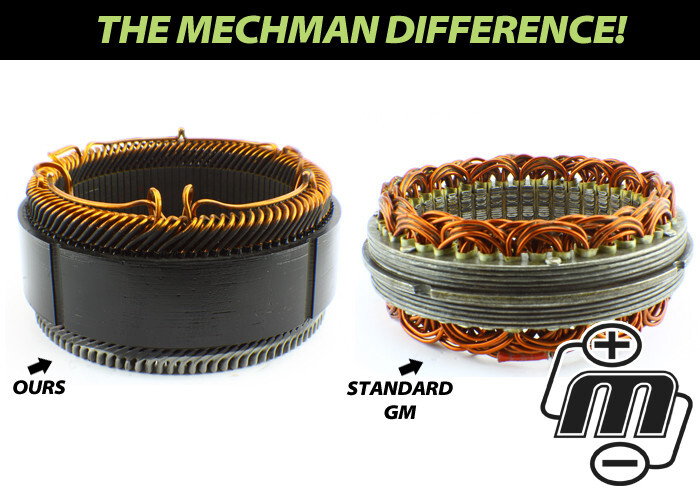
Internally, high output alternators feature advanced design elements that enable them to produce more amperage and maintain superior voltage stability compared to standard alternators. One key difference lies in the stator winding design, such as the use of a 6-phase hairpin winding instead of a traditional slot winding.
-
6-Phase Hairpin Winding: This design uses six separate phases of copper windings shaped like hairpins, offering a larger conductor cross-sectional area and improved cooling. The result is higher current capacity, greater efficiency, and reduced heat generation. Additionally, the hairpin winding has lower electrical resistance and inductance, which helps the alternator deliver stable, higher output power, especially at low RPM or idle.
-
Traditional Slot Winding: Standard alternators typically employ three-phase slot windings with less copper cross-section and less efficient heat dissipation. This limits their maximum current output and efficiency under heavy electrical loads.
Beyond winding design, high output alternators often include heavy-duty internal components such as upgraded diodes, rotors, and bearings, along with reinforced mechanical structures to handle increased electrical and thermal stresses.
Why It Matters
-
Enables high output alternators to supply more reliable "juice"
-
Maintains voltage under heavy loads
-
Provides superior performance and durability compared to stock or factory alternators
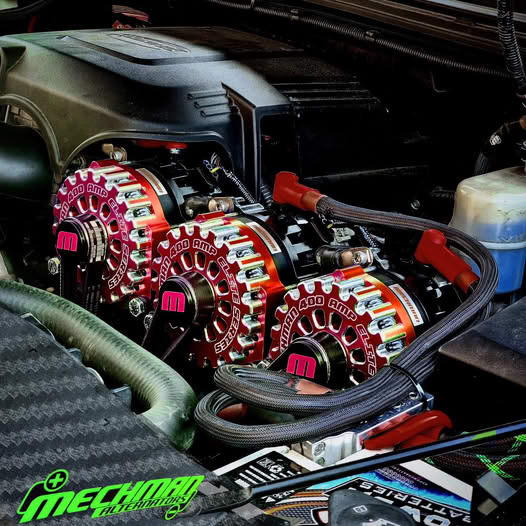
When Should I Upgrade My Alternator?
One of the most searched questions online is:
“When should I upgrade my alternator?”
Before making any changes, it’s important to decide if a high output alternator is necessary for your vehicle based on your specific electrical demands. For many typical car audio setups, the stock alternator is fine and can handle the load without issues. To determine if your current system provides enough juice, consider the total amperage draw of your audio equipment and whether your factory electrical system can support it during operation.
Signs You Need an Alternator Upgrade
-
Headlights dim or flicker when bass hits
-
Voltage drops below 13V while driving
-
Amplifiers go into protect mode
-
Battery struggles to stay charged
-
Electrical accessories slow down under load
Common Reasons to Upgrade
-
Car audio systems over ~1000W RMS or large stereo setups
-
Large amplifiers or multiple amps
-
Electric cooling fans or fuel pumps
-
Off-road lighting or LED light bars
-
Winches or power inverters
If your electrical demand exceeds what your stock alternator can produce, especially at idle, a HO alternator upgrade is no longer optional.
Why Headlights Dim: Low Voltage & Low Idle Output Explained
Dimming headlights are one of the most common symptoms of an undersized alternator.
Here’s why it happens:
-
At idle, factory alternators often produce 40–60% of their rated output
-
High-power audio systems pull large current instantly
-
Voltage drops occur when demand exceeds supply, and an undersized alternator can result in lost charging capacity, causing these symptoms
-
Monitoring voltage at the battery is important to assess system performance and ensure proper power distribution throughout your audio setup
-
Certain sounds, such as distortion or pulsing, can indicate alternator or voltage issues that need to be addressed for optimal system operation
A high output alternator is designed to maintain voltage under load, preventing:
-
Headlight dimming
-
Amplifier clipping
-
Battery drain
-
Premature electrical failure
Upgrading your alternator solves the root cause: not just the symptom.

How to Determine the Right Alternator Amperage (Step-By-Step)
Choosing the correct alternator size is critical. Selecting the right model of high output alternator to match your vehicle’s requirements ensures compatibility, optimal performance, and system stability.
Note: When calculating the amperage needed for your system, always consider the total electrical load and any future upgrades to avoid underestimating your requirements.
Too small and you’ll still have voltage issues. Choosing the wrong alternator size can lead to system failures, inefficiencies, or even damage to your vehicle’s electrical system. Too large without proper wiring and you risk damage.
Step 1: Calculate Electrical Demand
-
Calculate Electrical Demand
-
Use this formula: Watts ÷ Volts = Amps
-
Example: 2000W audio system ÷ 14V ≈ 143A
-
It's a good idea to add a bit of extra capacity to your calculation to account for unexpected loads or future upgrades.
-
This is only your audio load, not total vehicle demand.
-
Step 2: Add Vehicle Load
-
Add Vehicle Load
-
Include:
-
Lights
-
HVAC
-
ECU
-
Fans
-
Fuel pump
-
-
All these electrical units add up quickly, impacting your alternator choice.
-
Most vehicles use 40–80 amps before audio.
-
Step 3: Add Safety Margin
-
Add Safety Margin
-
Always add 30–50% headroom for:
-
Heat
-
Inefficiency
-
Music dynamics
-
Future upgrades
-
-
Installers typically recommend a 30–50% safety margin to ensure reliability and accommodate the typical demands of high-output systems.
-
Example Final Target
-
Example Final Target
-
Audio draw: 143A
-
Vehicle draw: 60A
-
Total: 203A
-
With margin: 260–300A alternator recommended
-
Electrical Load of Common Vehicle Accessories
|
Component |
Approx. Wattage |
|---|---|
|
Headlights |
100–200W |
|
Audio amplifiers |
500–5000W+ |
|
Electric fans |
100–300W |
|
Fuel pump |
50–150W |
|
LED lighting |
50–300W |
All these accessories demand a lot of juice from your alternator, which is why upgrades are often necessary. For optimal audio performance, a well-designed speaker house (enclosure) is also crucial, as it can significantly impact sound quality and system efficiency. When considering a high output alternator upgrade, note that wiring kits or other accessories are not always supplied with the alternator and may need to be purchased separately to ensure proper installation and operation.
This is why factory alternators fail to keep up.

Why the Big 3 Wiring Upgrade Is REQUIRED
No high output alternator upgrade is complete without a Big 3 wiring upgrade. A proper install of the Big 3 wiring is essential to ensure your high output alternator delivers reliable performance and prevents issues like voltage drops or system failure. Don’t forget this crucial step—overlooking the Big 3 upgrade can lead to unnecessary electrical problems and limit the benefits of your new alternator.
After installation, always test your system thoroughly. If you encounter issues, dealing with common problems such as pulsing voltage, overcharging, or wiring challenges is often necessary, especially if the Big 3 upgrade was not done properly.
The Big 3 Includes
-
Alternator positive → Battery positive
-
Battery negative → Chassis
-
Engine block → Chassis
Why It Matters
-
Factory wires are undersized
-
High amperage creates heat & voltage loss
-
Poor wiring kills alternators early
A Big 3 upgrade ensures:
-
Proper current flow
-
Stable voltage
-
Alternator longevity
-
System safety
Installing a HO alternator without upgrading wiring is one of the most common, and expensive, mistakes.
After installation, it’s crucial to have your upgraded wiring and high output alternator tested to confirm proper function and avoid issues like voltage drop, pulsing, or underperformance.
To help you do it correctly, we’ve created a detailed step-by-step Big 3 Upgrade Step-by-Step | Fix Voltage Drop & Lights Dimming guide that walks you through wire sizing, tools needed, proper routing, grounding, and testing—making it easy for beginners and experienced installers alike.
Where to Buy Alternator Upgrade Kits?
Not all alternators are created equal. When making a purchase decision, it’s important to choose a reputable company known for quality and reliability. Many “high output” alternators online are:
-
Rated only at cold output
-
Weak at idle
-
Built with low-quality components
Many positive forum posts and user reviews support the recommended brands, highlighting their performance and reliability. Investing in a quality alternator is worth the price paid for long-term reliability and peace of mind.
It’s best to shop at trusted stores or shops that test and stand behind their alternators to ensure you get the right fit for your vehicle.
At Amped Up Car Audio, we offer only alternators proven to work in real-world car audio builds:
Trusted High Output Alternator Brands
-
Brand X Electrical Alternators
These brands are known for:
-
Strong idle output
-
Accurate ratings
-
Heavy-duty internals
-
Long-term reliability
If you're asking “Where can I buy a real alternator upgrade kit?” — this is the level you want.
Beginner vs Expert Alternator Upgrade Recommendations
Under 1000W RMS
-
Stock alternator may survive
-
Big 3 recommended
1000–3000W RMS
-
High output alternator strongly recommended
-
Big 3 required
-
AGM or lithium battery upgrade
-
Consider adding a second battery to help sustain power and prevent voltage drops in high-power systems
3000W+ Systems
-
HO alternator required
-
Big 3 + 1/0 wiring
-
Battery bank matched to alternator
-
Check PCM compatibility when upgrading to a new alternator for very high-powered systems; ensure proper wiring and system integration
-
Proper pulley sizing is crucial when installing a high output alternator, as a smaller pulley can improve charging performance at low RPMs
-
Racing and extreme performance applications may require specialized high output alternators designed for demanding environments
Final Thoughts: Do You Really Need a High Output Alternator?
If your system demands more power than your stock alternator can deliver; yes, you need a high output alternator.
A properly sized HO alternator, paired with the Big 3 wiring upgrade, is the foundation of a reliable electrical system. It protects your equipment, stabilizes voltage, and ensures your vehicle performs exactly as intended. Investing in a high output alternator may cost more upfront, but it can save you money in the long run by preventing equipment failure and reducing maintenance costs. You’ll notice an amazing improvement in your system’s performance and reliability after a proper upgrade—it's a difference that can truly be heard when you push your audio to the limit.
A high output alternator enhances your ride, letting you enjoy powerful, clean sound on the road. Always consider your vehicle’s self-regulation and inherent limitations when choosing upgrades to ensure optimal performance and safety. Reliable power supply is especially important for nighttime driving, so your system stays strong and stable even at night. Avoid junk alternators that can cause pulsing, overcharging, or other electrical issues—these can create more problems than they solve.
If you need help choosing the right alternator, wiring, or battery setup for your build, our team is here to help.
sales@ampedupcaraudio.com
Written by Jacob Morris
Audio Specialist & Co-Owner Amped Up Car Audio