
Choosing A Subwoofer For Your Car Audio System
Posted by Jacob Morris on Feb 11th 2026
Choosing the Best Subwoofer: A Comprehensive Guide for Audiophiles
Adding a car subwoofer is the single biggest upgrade you can make to your sound system. But picking the right one involves more than grabbing the largest speaker on the shelf. This complete buyer’s guide from Amped Up Car Audio walks you through everything—from size and power to enclosures and installation—and will explain confusing subwoofer terminology and concepts for beginners, so you can build a bass system that actually fits your vehicle, your music, and your goals.
Quick Answer: How to Pick the Right Car Subwoofer (Start Here)
If you want the short version before diving deep, here’s your checklist from the team at Amped Up Car Audio. These four decisions drive 90% of your subwoofer purchase:
|
Decision |
Key Options |
|---|---|
|
Sub Size |
8”, 10”, 12”, 15”, or 18" |
|
Box Type |
Sealed, ported, or powered enclosure |
|
RMS Power |
Match amp RMS to sub RMS (within 75–125%) |
|
Available Space |
Measure trunk depth, width, and height first |
Best for most drivers: One 10” or 12” sub in a sealed or ported enclosure, powered by a mono amp delivering 300–800W RMS. This setup delivers deep, clean bass for daily driving without sacrificing your entire trunk.
The rest of this article goes deeper into specifications, wiring configurations, and system design for enthusiasts who want to dial in maximum performance. Read on if you want the full knowledge to make an informed decision—or skip straight to any section that matters most to you.
Introduction: Why a Subwoofer Transforms Your Car Audio
A car subwoofer is a type of speaker specifically designed to reproduce low-frequency sound, also known as bass. These drivers are typically larger than your door speakers—usually 8 to 18 inches in diameter—and engineered to move substantially more air. That air displacement is what creates the deep, physical impact that standard speakers simply cannot produce.
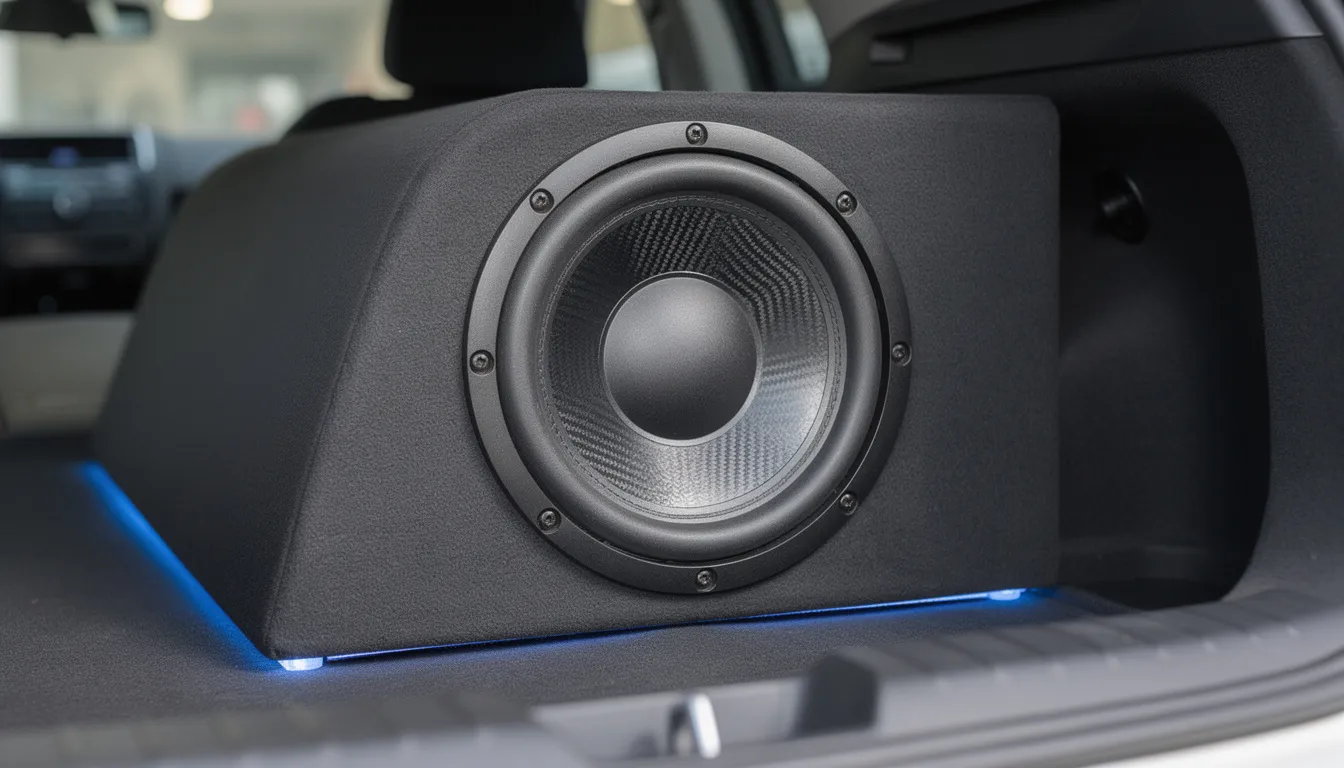
Even “premium” factory sound systems in 2022–2026 vehicles fall short on real bass. The door speakers are too small, the amplifier power is limited, and the factory DSP processing often rolls off low frequencies to prevent distortion. The result? Music that sounds thin, lacks punch, and misses the foundation that makes songs feel complete.
Here’s what a properly matched subwoofer adds to your car audio system:
-
Deeper impact on bass-heavy genres – Hip hop, trap, and EDM come alive with chest-thumping low end that you feel as much as hear
-
Fuller kick drums and bass guitars – Rock, metal, and country benefit from the weight and presence that small speakers miss
-
Improved sound quality across your system – When a sub handles the lows, your door speakers can focus on mids and highs, playing cleaner at higher volumes without strain
-
Richer movie soundtracks and podcasts – Background music and effects gain depth and realism during long drives
A quality subwoofer essentially redistributes the workload across your system. Your mids and tweeters stop trying to produce frequencies they were never designed for, and everything sounds better as a result.
At Amped Up Car Audio, we specialize in subwoofers, amplifiers, wiring, and installation—serving online customers nationwide. This guide reflects the same advice we give customers every day.
Understanding How Car Subwoofers Work
Before you shop, understanding basic subwoofer mechanics helps you read spec sheets with confidence instead of just trusting marketing claims. This section covers the fundamentals without getting overly technical.
Main parts of a subwoofer:
|
Component |
Function |
|---|---|
|
Cone |
The visible surface that moves air to create sound waves |
|
Surround |
Flexible ring (rubber or foam) connecting cone to basket, allowing movement |
|
Spider |
Corrugated disc that centers the voice coil and controls excursion |
|
Voice Coil |
Wire wrapped around a former; receives electrical signal from the amp |
|
Magnet |
Creates magnetic field that interacts with voice coil to produce motion |
|
Basket |
Metal frame holding all components together |
|
Dust Cap |
Covers the center, protecting internal components |
How it works: Your amplifier sends an AC electrical signal to the voice coil. That coil sits in a magnetic gap created by a powerful magnet assembly. As current flows through the coil, it moves back and forth within the magnetic field—and because the coil is attached to the cone, the cone moves too. That cone motion pushes and pulls air, creating the pressure waves your ears perceive as bass.
Larger cones and longer excursion (called Xmax) move more air. The displacement formula manufacturers use is Vd = Xmax × Sd, where Xmax is maximum linear excursion and Sd is effective cone area. More displacement means louder, deeper bass when the sub is properly powered and enclosed.
Subwoofers handle the low frequency range—typically 20 to 200 Hz in car audio—while your mids and tweeters handle everything above. Most builds set the crossover point between 70 and 100 Hz, letting each speaker type play the frequencies it handles best.
Build quality matters significantly for high-power systems. Better spiders, voice coils with proper cooling, and reinforced surrounds allow subs to handle 1000W RMS and beyond without failing during summer heat or extended listening sessions.
Step 1: Defining Your Budget, Goals, and Vehicle Constraints
Like brands such as MTX and others emphasize, “best” is personal. Your budget, goals, and vehicle type drive every other decision in your subwoofer purchase. Getting clear on these three factors first saves you from expensive mistakes.
Budget Tiers
Your budget must account for more than just the subwoofer itself. Plan for the complete system:
|
Tier |
Total Budget |
Includes |
|---|---|---|
|
Entry-Level |
Under $250 |
Basic sub, entry amp, budget wiring kit |
|
Midrange |
$250–$600 |
Quality sub, matched amp, proper wiring, basic enclosure |
|
High-Performance |
$600+ |
Premium sub(s), high-output amp, upgraded wiring, custom or loaded enclosure, possible electrical upgrades |
For systems drawing 1000W RMS or more, factor in potential electrical upgrades—AGM or lithium batteries, Big 3 wiring, or a high-output alternator. Skipping these creates voltage sag, headlight dimming, and potentially damaged components.
Goals
Define what you actually want from your system:
-
SQ-focused daily driver – Clean, accurate bass that blends seamlessly with your front stage; emphasis on musicality over volume
-
Loud weekend cruiser – Strong output for showing off; ported enclosure for maximum boom
-
SPL competition build – Extreme output for competition events; specialized enclosures, multi-kilowatt power, serious electrical work
-
Stealth OEM-plus installation – Factory-look upgrades that add bass without visible modifications; often using powered under-seat options
Vehicle Constraints
Your vehicle determines what physically fits:
-
Trunk sedans – Room for standard boxes; consider how much cargo space you can sacrifice
-
Hatchbacks and SUVs – Cargo area installation; measure carefully around spare tire access
-
Pickup trucks – Under-seat or behind-seat installs; shallow-mount subs often required
-
Compact EVs – Limited 12V electrical support; powered enclosures often the best option
Before you shop, answer two questions honestly: “How loud do I really need it?” and “How much space am I willing to give up?” Your answers determine everything else.
Step 2: Choosing the Right Subwoofer Size
Subwoofer size affects output, bass depth, and cargo space—but box design and power matter just as much as diameter. A well-designed 10” sub in the right enclosure can outperform a poorly installed 15”.
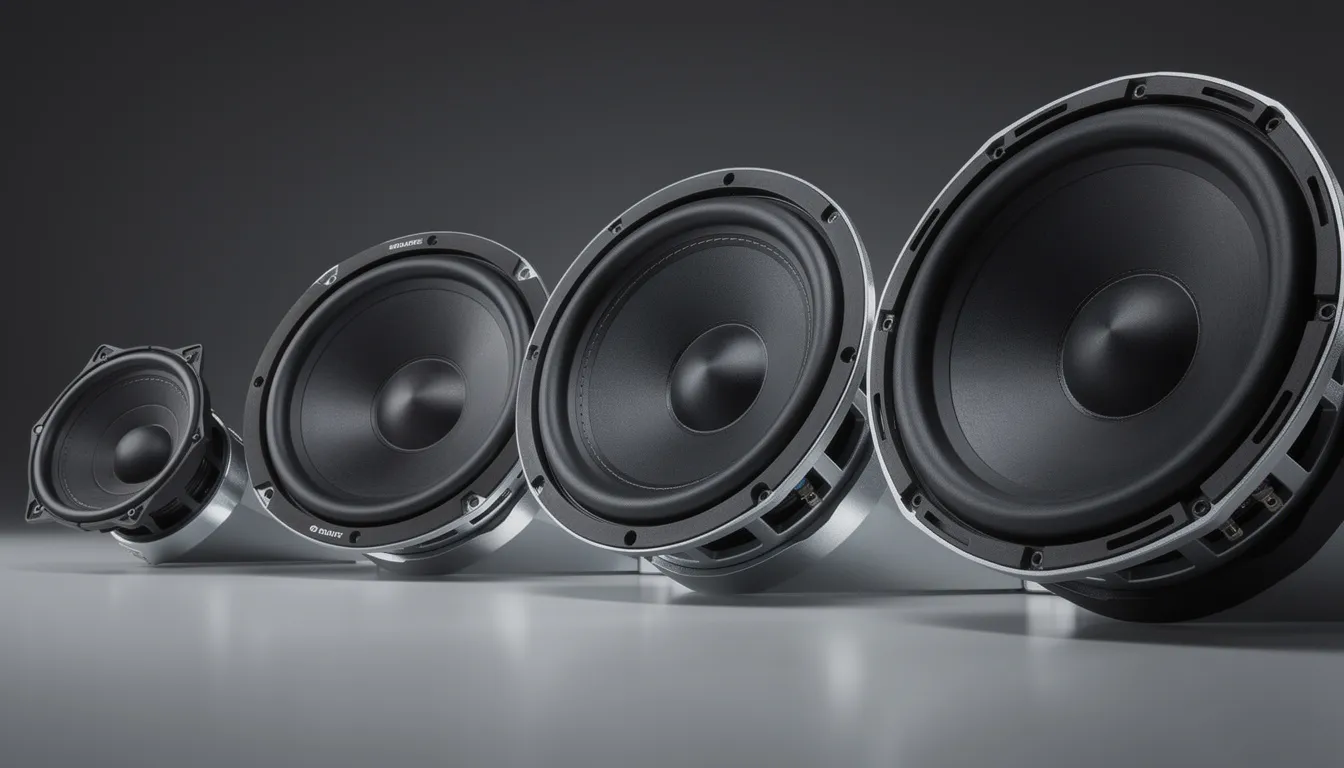
The Four Most Common Sizes
8” Subwoofers
-
Tight, controlled, and fast bass response
-
Perfect for compact cars or factory upgrade locations
-
Minimal space required (mounting depth often 4–5 inches)
-
Ideal for rock, acoustic, and clean midbass reproduction
-
Typical RMS handling: 150–400W
10” Subwoofers
-
Balanced option for diverse genres—country, pop, R&B, and mixed playlists
-
Fits many under-seat boxes and compact trunk enclosures
-
Good mix of punch and low-end extension
-
Versatile daily driver choice
-
Typical RMS handling: 300–1000W
12” Subwoofers
-
Most popular upgrade size—60% of daily-driver sales fall in the 10–12” range
-
Deeper, heavier bass perfect for hip hop, trap, and EDM
-
Requires moderate trunk space but delivers serious output
-
Recommend pairing with 400–1500W RMS for strong performance
-
Sweet spot between size and output for most vehicles
15” Subwoofers
-
Maximum output and low-end extension (down to 20–25 Hz in proper enclosures)
-
Requires significant trunk or SUV cargo space—3 to 5 cubic feet for some ported designs
-
Built for high-output and SPL systems
-
Risk of sounding boomy without precise box tuning
-
Not ideal for space-limited builds
Specialty Sizes
6.5” and Small Subwoofers
-
Designed for motorcycles, ATVs/UTVs, and tight cabins
-
Often mounted in custom pods where traditional enclosures won’t fit
-
Great for sportsmen and powersports applications
18” Subwoofers
-
Deliver extremely deep and powerful bass with substantial air movement
-
Require significant trunk or cargo space and robust amplifiers (typically 1000W+ RMS)
-
Ideal for SPL competition builds and enthusiasts seeking maximum low-frequency impact
-
Often paired with large ported or custom enclosures for optimal performance
24” Subwoofers
-
The largest commonly available car subwoofers, producing massive bass output and extension
-
Designed for specialized, high-budget SPL systems with custom enclosures and electrical upgrades
-
Require considerable vehicle space and heavy-duty amplification to handle their power demands
-
Best suited for extreme bass enthusiasts and professional competition setups
Shallow-Mount Subwoofers
-
Mounting depths under 4 inches
-
Perfect for 2020+ Silverado crew cabs, F-150s, and similar trucks with limited behind-seat space
-
Advanced cone materials (carbon fiber, aluminum) maintain output despite reduced excursion
Good for most drivers: A single 10” or 12” in a properly designed sealed or ported box delivers the best balance of bass, space efficiency, and value.
Step 3: Power Handling, RMS vs Peak, and Matching Your Amplifier
Power handling and amp matching are where many buyers get confused—and where expensive mistakes happen. Understanding how much power your system actually needs prevents both weak performance and blown equipment.
RMS vs Peak: Know the Difference
RMS Power is the continuous power a sub can handle safely over extended listening. This is the number that matters for system design. When you see rms power ratings on 2023–2026 spec sheets, use these figures for matching.
Peak/Max Power represents short bursts the subwoofer might withstand momentarily. This is largely a marketing figure. Ignore peak numbers when building your system.
If a subwoofer only lists peak power, divide by two to estimate RMS. A sub rated at “1200W Peak” likely handles around 600W RMS.
The Amp/Sub Matching Rule
Your amplifier’s RMS output at the chosen impedance should be roughly 75–125% of the subwoofer’s RMS rating.
|
Scenario |
Result |
|---|---|
|
Amp RMS within 75–125% of sub RMS |
Safe, optimal performance |
|
Amp grossly overpowers sub |
Risk of mechanical and thermal damage |
|
Amp severely underpowered |
Clipping, distortion, potential coil damage |
Example: A 600W RMS dual 4-ohm subwoofer paired with a mono amp rated 600–800W RMS at 2 ohms (wiring the DVC sub to 2 ohms) represents a solid midrange build. The amp provides enough power without risking damage, and the sub receives the clean signal it needs.
Mismatched power ratings between amplifier and subwoofer lead to distortion and permanent damage to cones, voice coils, or the amp itself. This is where many DIY installations go wrong.
The team at Amped Up Car Audio can help calculate safe, real-world RMS pairings for both daily drivers and competition setups. Don’t guess on power matching—verify your specs before you purchase.
Step 4: Impedance, Voice Coils, and Wiring Flexibility
Impedance (measured in ohms) and voice coil configuration determine how you wire your subs and what power your amplifier can actually deliver. Getting this right is essential for a properly functioning system.
Impedance Basics
Impedance is resistance to current flow. Common car subwoofer ratings are 2 ohm and 4 ohm. Your amp’s power output changes based on the total impedance load—most amps produce more power at lower impedance (down to their stable minimum).
Single Voice Coil vs Dual Voice Coil
|
Type |
Configuration |
Best For |
|---|---|---|
|
Single Voice Coil (SVC) |
One coil, one impedance (2Ω or 4Ω) |
Simple wiring, straightforward setups |
|
Dual Voice Coil (DVC) |
Two coils, multiple wiring options |
Flexibility to match modern mono amps |
DVC Wiring Examples:
-
Dual 2-ohm sub: Wire coils in series for 4Ω total, or parallel for 1Ω total
-
Dual 4-ohm sub: Wire coils in series for 8Ω total, or parallel for 2Ω total
This flexibility matters because many modern mono Class D amps deliver maximum power at 1 or 2 ohms. A dual voice coil sub lets you hit that optimal impedance.
Don’t guess on wiring configurations. Use Amped Up Car Audios wiring diagrams or contact us for recommended strategies that keep your amps cool and your subs safe. We also offer our own comprehensive, user-friendly Subwoofer Wiring Diagram that can help you make sure your subwoofers are wired correctly with ease and confidence.
Critical Considerations
Verify amp stability: Many budget amplifiers in 2026 are not 1-ohm stable. Wiring below your amp’s rated minimum impedance causes overheating, protection mode triggering, or permanent damage. Always check your amp’s specifications before wiring.
Multiple subs: With two or more DVC subs, series/parallel combinations can achieve various total impedances. For example, two dual 4-ohm subs can be wired to present a 2-ohm load to a mono amp—maximizing power delivery.
Don’t guess on wiring configurations. Use wiring diagrams or contact Amped Up Car Audio for recommended strategies that keep your amps cool and your subs safe.
Step 5: Choosing the Right Enclosure Type
Even a top-tier sub will sound weak or boomy in the wrong box. Your enclosure is as important as the woofer itself—arguably more important for the final sound.
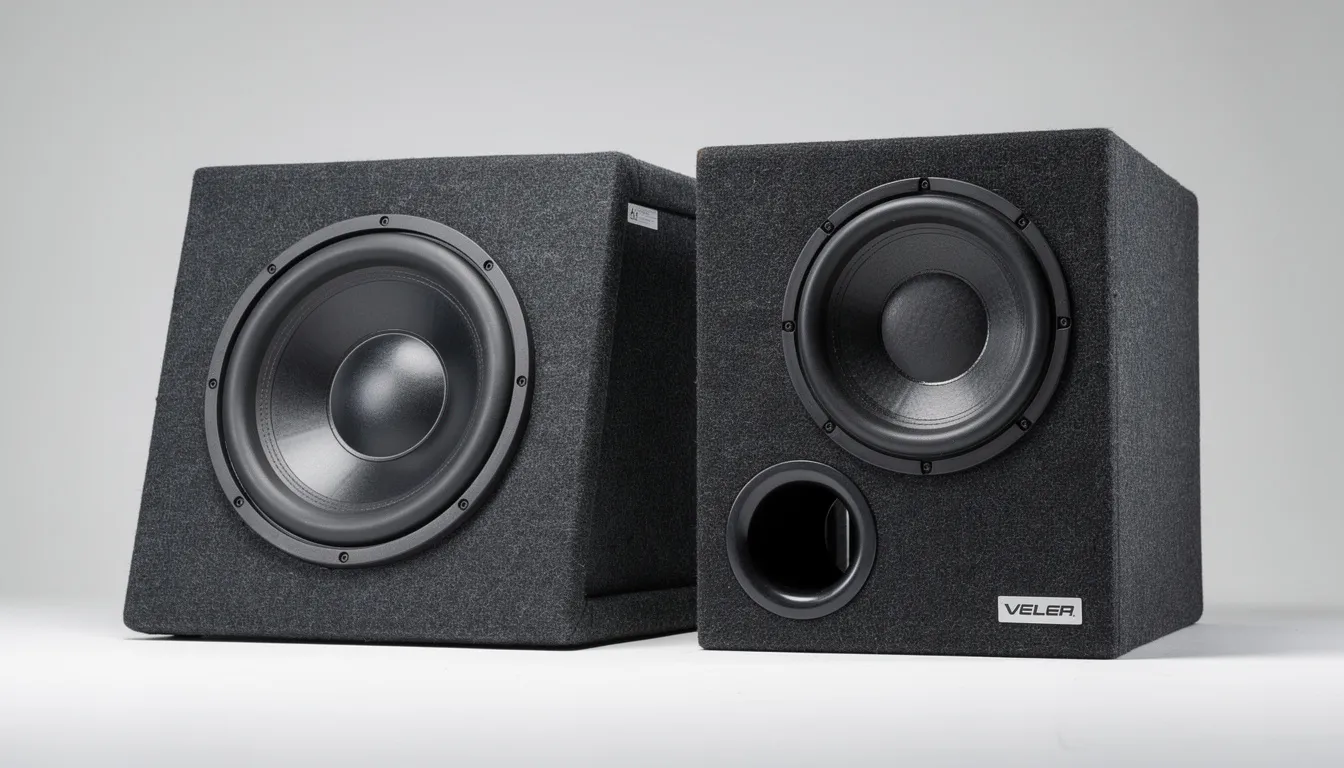
Sealed Enclosures (Acoustic Suspension)
-
Airtight box with no ports
-
Produces tight, accurate, punchy bass
-
Smaller enclosure footprint (0.5–2 cubic feet for most 10–12” subs)
-
Great for rock, metal, country, jazz, and mixed playlists
-
Requires slightly more power to achieve same volume as ported
-
Excellent transient response and sound quality focus
Ported/Vented Enclosures (Bass Reflex)
-
Tuned port boosts output near the tuning frequency
-
Louder and deeper bass—typically +3–6 dB below the tuning frequency
-
Higher efficiency means more output per watt
-
Perfect for hip hop, trap, EDM, and bass-heavy genres
-
Requires precise internal volume and port tuning (usually 28–40 Hz for car audio)
-
Larger enclosure size than sealed equivalents
Bandpass Enclosures
-
Combines sealed and ported chambers
-
Very efficient and loud over a narrow frequency range
-
Complex design—usually purchased pre-engineered rather than DIY
-
Specialized application for specific SPL goals
Loaded Subwoofer Enclosures
Subs pre-installed and matched to the box by the manufacturer. These are ideal for beginners and quick installs—guaranteed compatibility, proper tuning, and faster setup.
Powered Subwoofer Enclosures
Sub, box, and built-in amp in one unit. Perfect for:
-
2020s compact vehicles with limited space
-
Leased vehicles where minimal modification is desired
-
Simple “plug-and-play” upgrades with limited wiring
Simple rule: Sealed for tight and musical, ported for louder and deeper.
Amped Up Car Audio supplies prefab boxes, vehicle-specific enclosures, and can design custom solutions for serious builds. The right box transforms good components into a great system.
Step 6: Car Subwoofer Package Types and System Configurations
Shoppers can choose between bare component subs, loaded boxes, powered boxes, and full system packages. Each approach has distinct advantages depending on your experience level and goals.
Component Subwoofers
Just the driver—no enclosure included. This is the option for:
-
Custom box builders
-
Trunk builds where you need specific dimensions
-
High-power SPL setups requiring specialized enclosures
-
Experienced installers who want full control
Component subs require more planning and installation skill but offer maximum flexibility.
Subwoofer Boxes/Enclosures Only
Empty sealed, ported, or bandpass boxes that you load with your chosen woofer. Key consideration: match box volume and cutout diameter to your specific driver’s specifications. A 12” box designed for one sub may not work optimally for another—verify the recommended enclosure volume in your sub’s specs.
Loaded Enclosures
Factory-assembled combinations of sub and box—for example, a 12” woofer in a tuned vented enclosure. Benefits include:
-
Faster installation
-
Guaranteed compatibility
-
Manufacturer-optimized tuning
-
Ideal for most DIYers
Powered Enclosures
Self-powered sub boxes including compact 8” and 10” models that fit under seats. These are ideal for:
-
Commuters wanting easy bass upgrades
-
Leased vehicles where you can’t modify extensively
-
Drivers who want minimal wiring complexity
Full System Packages
Sub(s), amp, and wiring curated by retailers like Amped Up Car Audio. These packages remove guesswork for common vehicles and budgets—everything is matched and ready to install.
Which type suits you:
|
Customer Profile |
Best Option |
|---|---|
|
Beginner with limited tools |
Loaded enclosure or powered box |
|
Budget-conscious but handy |
Component sub + prefab box |
|
Experienced installer |
Component sub + custom enclosure |
|
Competition builder |
Component sub + custom 4th/6th order enclosure |
Step 7: Space, Installation, and Vehicle-Specific Considerations
Physical fitment and practicality matter as much as specs. A massive ported box is useless if it makes your car unusable for daily life.
Measure First
Before purchasing, measure your trunk or cargo area:
-
Width at the narrowest point
-
Height available for the enclosure
-
Depth from rear seat to trunk lid or cargo door
Consider seat-folding clearance and spare tire access. Many loaded boxes are designed for specific volume, but they still need to physically fit your space.
Mounting Specifications
Check both the woofer and enclosure specifications:
-
Mounting depth (magnet clearance)—standard subs range 5–8 inches; shallow-mount under 4 inches
-
Top-mount diameter (cutout size)
-
Cutout-to-enclosure wall clearance
Failing to verify mounting depth is a common mistake that results in magnets hitting the back of the box or clearance issues in under-seat installs.
Common Installation Locations
|
Vehicle Type |
Typical Location |
Notes |
|---|---|---|
|
Sedan |
Trunk, against rear seat |
Standard or ported boxes work well |
|
Hatchback/SUV |
Rear cargo area |
Consider cargo flexibility needs |
|
Pickup Truck |
Under or behind rear seats |
Shallow-mount subs often required |
|
Compact EV |
Under seats or small cargo |
Powered enclosures handle limited 12V support |
Installation Complexity
Even a basic install requires:
-
Running power cable from battery to amp (through firewall)
-
Solid ground connection to chassis metal
-
Mounting the amplifier securely
-
Signal connection via RCA from head unit or line output converter from factory radio
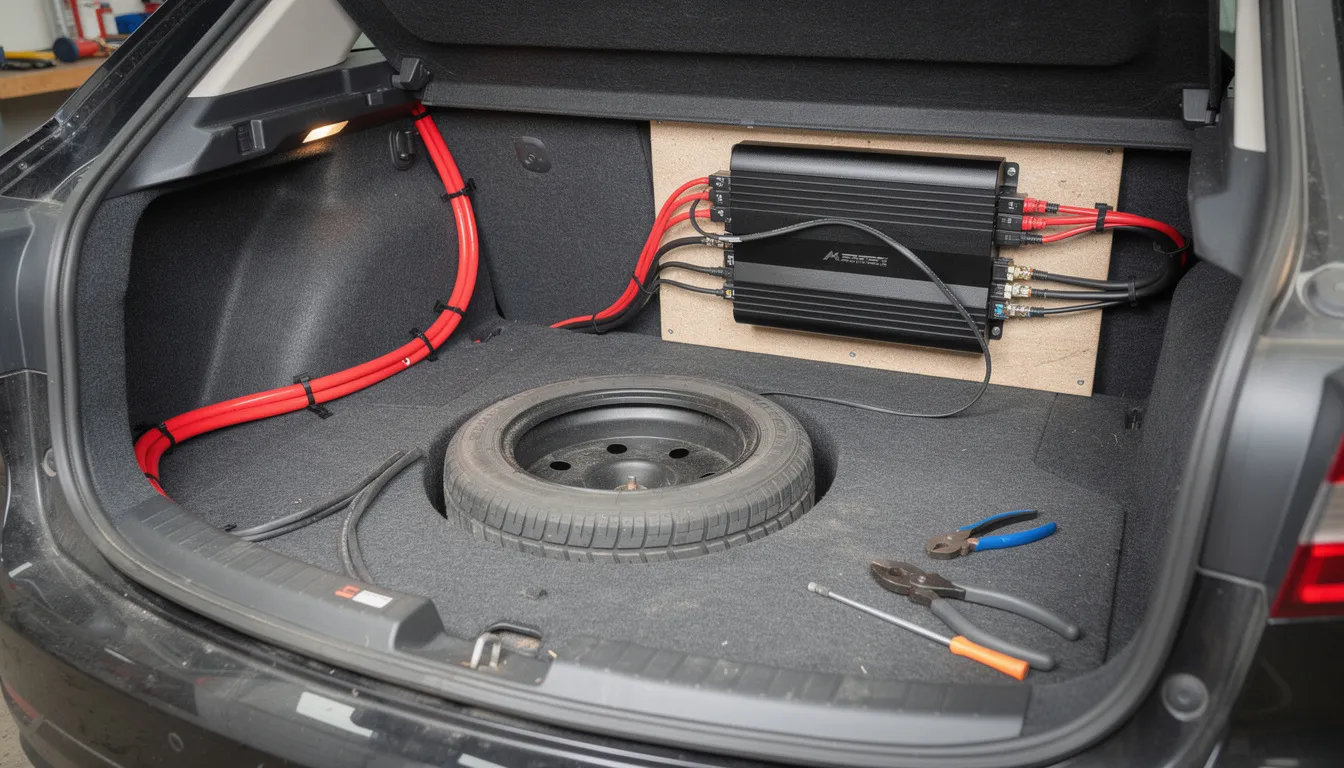
Amped Up Car Audio offers both DIY-ready gear shipped nationwide and professional installation at our Conover, NC shop. Whether you want to tackle it yourself or have experts handle the process, we can help.
Step 8: Sensitivity, Build Quality, and Other Key Specs
Beyond size and power, several specifications help you compare subs designed for different purposes. Here’s what to look for.
Sensitivity
Measured in dB SPL at 1W/1m, sensitivity indicates how much volume a sub produces from a given amount of power. Typical car subs range from 85–95 dB.
-
Higher sensitivity (90+ dB): More volume from less power—useful when running smaller amps in daily drivers
-
Lower sensitivity: May require more amplifier power to reach the same output levels
Frequency Response
Typically listed as a range like “25–250 Hz” or “30–150 Hz.” This indicates what frequency range the sub can reproduce. Key considerations:
-
Larger subs generally extend lower (15” subs may hit 20–25 Hz)
-
Enclosure design and in-car acoustics affect real-world performance more than the raw spec line
-
Most music content rarely goes below 30 Hz in meaningful ways
Construction Quality
|
Feature |
Benefit |
|---|---|
|
Cone material (paper, treated paper, composite, polypropylene) |
Affects weight, rigidity, and sound character |
|
Surround type (rubber vs foam) |
Rubber lasts longer; foam may decay over time |
|
Heavy-duty spiders |
Handle high excursion without failure |
|
Vented pole pieces |
Improve cooling for high-power applications |
|
Aluminum voice coil formers |
Better heat dissipation than plastic |
|
Stitched tinsel leads |
Resist fatigue during long-throw excursion |
For systems running 1000W RMS or more—especially in hot summer conditions—cooling and durability features become essential, not optional.
Don’t chase a single spec in isolation. Consider how sensitivity, power handling, and intended enclosure work together to create your final result.
Step 9: Electrical System, Wiring, and Essential Accessories
A strong subwoofer stage depends on stable electrical supply and proper wiring—not just big speakers. Neglecting the electrical side is a common cause of disappointing performance.
Amplifier Wiring Kits
Quality wiring matters. Look for:
-
True-to-gauge OFC (oxygen-free copper) power and ground cable
-
Proper gauge for your power level: 4-gauge for systems under 1000W RMS; 0-gauge or 1/0-gauge for higher power
-
High-quality fuse holders rated for your amp’s current draw
-
Correct fuse rating near the battery for safety
Cheap copper-clad aluminum (CCA) wire has higher resistance, causing voltage drop and reduced amp performance. Invest in quality wiring for your sound system.
When to Upgrade Electrical
Consider electrical upgrades when:
-
Running 1000W RMS or more continuously
-
Experiencing headlight dimming during bass hits
-
Measuring voltage drops below 13V at the amp during play
-
Planning multi-amplifier or SPL competition builds
Common upgrades include:
-
Big 3 upgrade (larger alternator, battery, and ground cables)
-
AGM or lithium batteries rated for car audio
-
High-output alternator (200+ amps)
-
Auxiliary battery for dedicated audio power
Performance Accessories
|
Accessory |
Benefit |
|---|---|
|
Sound deadening mats |
Reduce door and trunk rattles; improve bass clarity by 20–30% |
|
Polyester box stuffing |
Increases perceived enclosure volume by 10–15% in sealed boxes |
|
Proper speaker wire gauge |
Ensures full power delivery from amp to sub |
|
Secure mounting hardware |
Prevents box movement and potential damage |
|
Remote bass controls / Eco bass knobs |
Adjust bass level from driver’s seat without changing amp gains |
Amped Up Car Audio stocks all these accessories and can recommend exact kit sizes based on your amplifier power and cable run length.
Installing and Tuning Your Car Subwoofer System
Correct installation and tuning often matter more than adding a second sub. Focus on getting one subwoofer performing optimally first.
Basic Install Flow
-
Mount sub in correct enclosure – Verify box volume matches sub specifications
-
Run power cable from battery to amp location – Use grommets through firewall; fuse within 18” of battery
-
Connect ground cable – Short run to clean, bare metal chassis; sand paint if necessary
-
Run remote turn-on wire – From head unit remote output or switched 12V source
-
Connect signal – RCA from head unit, or high-level input with line output converter from factory radio
-
Set crossover and gain on amp – Critical for proper blending and protection
Crossover and Gain Settings
Low-pass crossover: Start around 80 Hz and adjust by ear. Range of 70–100 Hz is typical for 2026 builds. The crossover determines which frequencies your sub receives—set too high, and you’ll hear localized bass from the trunk; set too low, and you lose impact.
Gain setting: Gain is not a volume knob. Here’s the correct process:
-
Set head unit to moderate volume (around 75% of max, below distortion)
-
Play familiar bass-heavy track
-
Slowly increase amp gain until you hear distortion, then back off
-
The goal is matching input signal to amp capability—not maximum output
Phase and Polarity
Most amps have a 0/180-degree phase switch. If bass sounds weak or hollow, flip the phase. In some vehicles, moving the enclosure position or aiming it toward the cabin (speakers firing forward or upward) improves output.
Advanced Tuning
For those using DSP (digital signal processors), EQ adjustments can smooth out cabin peaks and nulls caused by vehicle acoustics. This is where experienced tuners can extract maximum performance from modest equipment.
Amped Up Car Audio performs professional tuning at our Conover, NC shop and can provide remote guidance for DIY customers.
Best Subwoofer Setups for Common Use Cases in 2026
Here are practical “recipes” instead of theoretical specs—starting points for different types of drivers.
Daily Commuter
-
Sub: One 10” or 12” in compact sealed box
-
Power: 300–600W RMS mono amp
-
Focus: Tight bass, minimal trunk space sacrifice
-
Electrical: Stock system usually sufficient
Bass Enthusiast
-
Sub: One or two 12” subs in ported enclosure tuned mid-30s Hz
-
Power: 800–1500W RMS
-
Focus: Loud, deep bass for hip hop and EDM
-
Electrical: Big 3 upgrade recommended; consider AGM battery
SQ-Focused Build
-
Sub: Single high-quality 10” or 12” in precisely sized sealed box
-
Power: 400–800W RMS
-
Focus: Smooth response, seamless blending with front stage
-
Extras: Heavy sound deadening, DSP for room correction
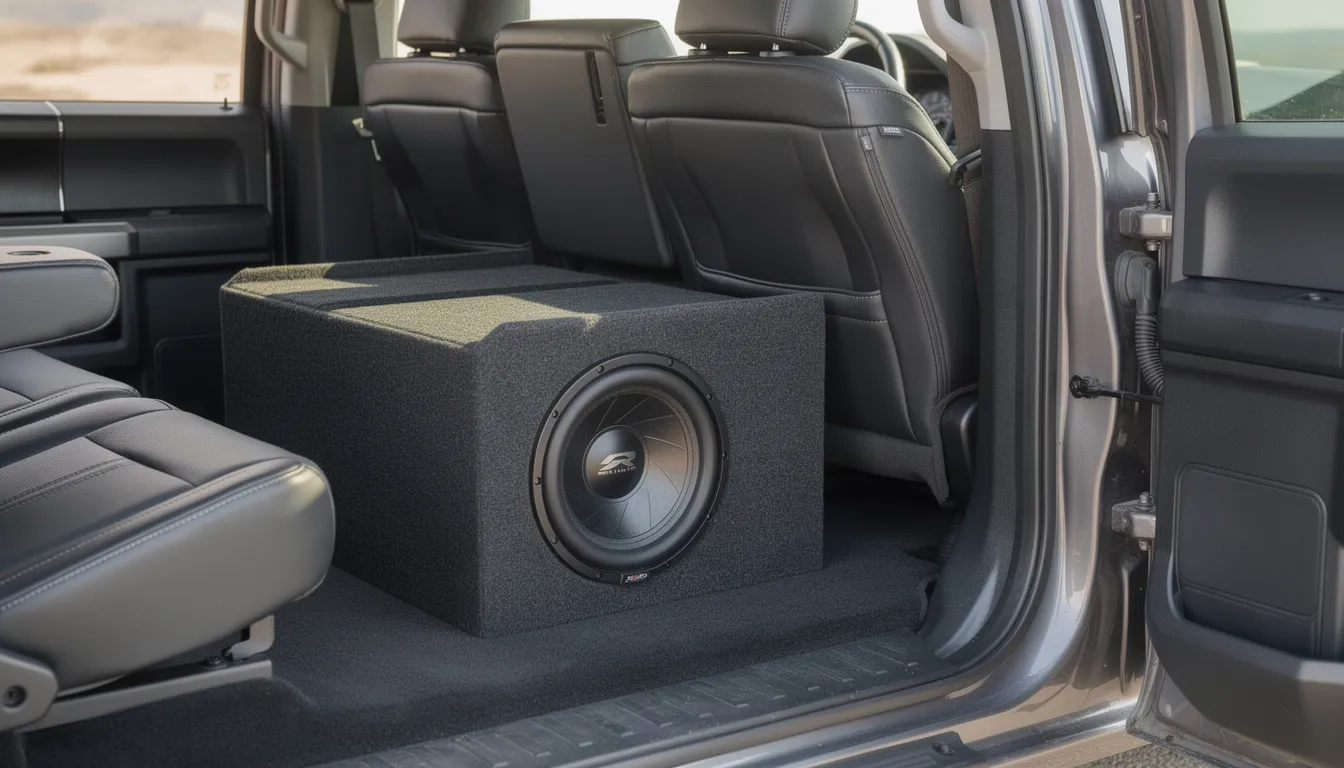
Truck/Space-Limited
-
Sub: Shallow 10” or 12” under or behind rear seat
-
Power: 250–500W RMS via compact mono amp or powered enclosure
-
Focus: Bass without cargo sacrifice
Competition/SPL
-
Sub: Multiple 12” or 15” subs (or larger)
-
Enclosure: Large custom ported or 4th/6th-order bandpass
-
Power: Multi-kilowatt amplification (2000W+ RMS)
-
Electrical: High-output alternator, lithium batteries, full electrical overhaul
-
Note: This is specialist territory requiring significant investment and expertise
These setups are starting points. Amped Up Car Audio can tailor recommendations to your specific vehicle and music preferences.
Frequently Asked Questions About Car Subwoofers
These are the questions we hear most often at Amped Up Car Audio—both online and in the shop.
What size subwoofer hits the hardest?
12” and 15” subs typically move the most air and produce the deepest output. However, enclosure design and power matter enormously. A well-designed 10” in a properly tuned ported box with adequate RMS power can outperform a poorly installed 15” in a generic sealed enclosure. Size is just one variable.
Is a sealed or ported box better for bass?
Neither is universally “better”—they serve different purposes. Sealed boxes deliver tight, accurate, punchy bass ideal for rock, metal, and SQ builds. Ported boxes produce louder, deeper bass with higher efficiency, perfect for hip hop, trap, and EDM. Decide based on your music style and available space.
How much RMS power do I need?
-
Mild upgrade: 250–400W RMS
-
Strong daily bass: 500–1000W RMS
-
Hardcore enthusiast: 1500W+ RMS (with proper electrical support)
Most subwoofers in daily systems perform well with 400–800W RMS. Match amplifier output to subwoofer rms rating within 75–125% for optimal results.
Can I run a subwoofer without an amplifier?
Component subwoofers always require an external amplifier—period. Factory head units and radios cannot deliver enough power to drive a subwoofer properly. Only powered enclosures include a built-in amp and can run from line-level or speaker-level signals.
Do I really need a box?
Yes. Nearly all car subwoofers require an enclosure to perform correctly. The box controls rear-wave radiation and provides the air volume necessary for proper cone loading. Free-air or infinite baffle installs exist but require subs specifically designed for that application—most standard subs will sound terrible and may damage themselves without an enclosure.
Are dual voice coil subwoofers better?
DVC subs aren’t automatically better in sound quality. However, they offer significantly more wiring flexibility to match modern mono amps that deliver peak power at low impedance. If you’re building a custom system, DVC gives you options that single voice coil subs don’t.
Will a subwoofer drain my battery?
A properly installed system with correct wiring and, when needed, upgraded batteries or alternators will be reliable for daily use. Problems arise when:
-
Wiring is undersized, causing voltage drop
-
Stock electrical can’t support 1500W+ RMS systems
-
You idle at full volume for extended periods without the engine running
For high-power builds, budget for electrical upgrades as part of your system cost.
Final Thoughts: Choosing the Right Subwoofer with Amped Up Car Audio
Conclusion: Choosing the right subwoofer comes down to matching your vehicle space, listening preferences, power system, and budget—not just picking the biggest cone or highest wattage. Proper component selection is crucial for getting the best performance, so don’t hesitate to reach out for support if you need help making the right choice.
The best subwoofer is the one that matches your vehicle space, listening preferences, power system, and budget—not just the biggest cone or highest wattage on the box. Marketing numbers mean nothing if the sub doesn’t fit your car, your amp can’t power it properly, or the enclosure works against the driver’s design.
For most drivers in 2026, a well-matched 10” or 12” subwoofer in the correct enclosure, powered by a properly rated amplifier, and installed with quality wiring delivers everything you need. Clean, deep bass that transforms your music without sacrificing your entire trunk or draining your battery.
When planning your system, think beyond the initial purchase. Consider future upgrades, choose impedance configurations that give you flexibility, and invest in quality wiring and electrical support from the start. The money you spend on proper installation components pays dividends in reliability and performance.
Amped Up Car Audio is here to help—whether you’re ordering online, we offer:
-
Expert advice on sub/amp matching for your specific vehicle
-
Curated packages that remove the guesswork
-
Quality wiring kits, batteries, and sound deadening accessories
-
Professional installation and tuning services
Explore our full selection of car subwoofers, amplifiers, enclosures, wiring, and eco bass knobs at AmpedUpCarAudio.com and upgrade your ride today. For any questions or assistance, contact us and we’ll be happy to help.
Ready for better bass? Contact Amped Up Car Audio for a personalized subwoofer recommendation tailored to your exact vehicle and music style. We’ll help you build a system that sounds as good as it looks on paper.