
Class D Amplifier vs AB: Which Offers Better Performance and Value?
Posted by Jacob Morris on Jun 4th 2026
Class D Amplifier vs AB: Which Amp Class Is Best for Your Car Audio Build?
Audio amplifiers boost small electrical signals to drive speakers, but the way an amp makes that power changes everything: heat, efficiency, sound, size, and electrical demand. If you are comparing class d amplifier vs ab for a car audio build, the right answer depends on whether you are chasing deep bass, clean vocals, compact installation, or all the power your charging system can safely support.
Quick Answer: Class D vs Class AB for Car Audio
For most car audio systems, class D is better for subwoofers and high-power builds, while class AB is often better for mids, highs, and listeners who prioritize sound quality over power efficiency. Choosing between Class D and Class AB amplifiers depends on efficiency and sound quality preferences.
Class d amplifiers are usually the excellent choice for subs because they are compact, offer good efficiency, and generate less heat than Class AB amplifiers. Class AB amplifiers excel in handling mid-range and high frequencies, and Class AB amplifiers provide better sound quality than Class D in many critical listening setups.
That said, modern class d design has improved audio fidelity significantly. At Amped Up Car Audio, we routinely use class d amps for bass and class ab amplifiers for the front stage when a hybrid setup gives the best balance of output power, clarity, control, and reliability.
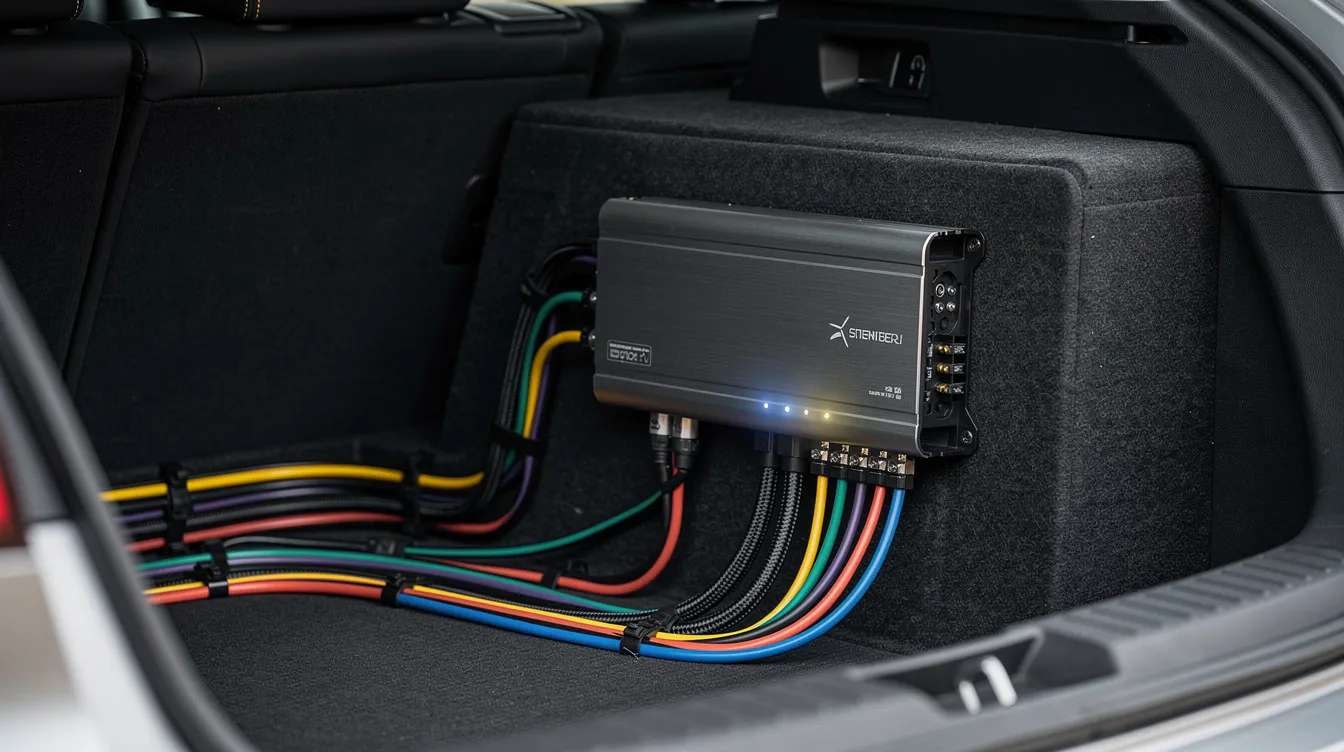
Amplifier Classes Explained (A, B, AB, D, G in Plain English)
Amplifier classes describe how the output stage and output transistors operate through the music signal cycle. Different amplifier classes affect efficiency, distortion, power consumption, heat, cost, and how the amp handles a real speaker load.
|
Class |
How it works |
Efficiency |
Best use |
|---|---|---|---|
|
class a |
Transistors conduct all the time |
Around 30% |
Boutique hi fi |
|
class b |
Each side handles half the waveform |
Higher than A |
Rare alone |
|
class ab |
Slight overlap reduces distortion |
~40–60% typical |
Mids/highs |
|
class d |
High-speed switching with pulse width modulation |
85–95%+ |
Subs, compact systems |
|
class g |
Switches supply rails as needed |
Better than AB |
Specialty amps |
-
Class A amplifiers:
-
Around 30% efficient.
-
In class a operation, the transistor stays active 100% of the time.
-
Class a designs can sound extremely clean but run hot.
-
Rare in cars due to high power needs, major heat, and voltage waste for a 12V system.
-
Class B amplifiers:
-
This class b amplifier topology uses two output transistors, each handling 180 degrees of the waveform.
-
More efficient than class a.
-
Can create crossover distortion at the point where the devices switch.
-
Class AB amplifiers:
-
Sometimes written class a b by shoppers.
-
Traditional compromise: reduces crossover distortion by keeping both devices slightly active around the zero-crossing.
-
Standard for high-fidelity home audio and long-time standard for full-range car amplifiers.
-
Class D amplifiers:
-
Use transistors as high-speed switches.
-
Converts the input signal into a fast switching signal using pulse width modulation.
-
Output filter smooths the output back into analog sound for the speakers.
-
Despite the nickname, class d does not mean digital audio.
-
Class G and H amplifiers:
-
class g amplifiers use multiple supply rails or rail switching to improve efficiency compared with traditional AB, which shapes the typical class expectations listeners have for each design.
-
Class h amplifier or class g amp can be useful.
-
Less common in aftermarket car audio than class d and class ab.
How Class AB Amplifiers Work (and Why Audiophiles Still Love Them)
Class ab amplifiers bias their output devices so they conduct slightly more than half the waveform, but not the full cycle like class a. Think of it like a car already idling at a green light: because the engine is ready, the launch is smoother. That bias helps reduce roughness in the signal handoff.
Efficiency and Heat
The tradeoff is efficiency. Class AB amplifiers are less efficient than Class D amplifiers. In real car audio use, many amps in this class land around 40–60% efficiency, meaning a lot of battery power becomes heat instead of output power.
That heat matters. Class AB amplifiers generate more heat, requiring larger heatsinks. Class AB amplifiers are larger due to heat dissipation needs, so they typically need more mounting space and airflow than class d amps.
This is also why multiple high-power class ab amplifiers can stress a stock alternator, standard battery, and undersized wiring. If the power supply cannot keep voltage stable under peak current, the amp can clip, shut down, or sound strained.
Sound Quality and Distortion
This is why ab amplifiers have a reputation for smooth vocals, natural cymbals, and strong detail at high frequencies. Class AB amplifiers typically have lower distortion than Class D, and Class AB amplifiers have lower distortion compared to Class D amplifiers in many full-range designs. They typically have lower distortion compared to Class D amplifiers, especially when driving sensitive tweeters or 4-ohm component speakers.
The reason the “AB sounds better” reputation still exists is simple: many legendary transistor amplifiers from the 1990s and 2000s used AB layouts and sounds good. For front-stage quality, many enthusiasts still prefer the class ab sound.
How Class D Amplifiers Work (and Why They Dominate Modern Car Audio)
Class D amplifiers rapidly switch their output devices on and off. The audio signal is encoded as a PWM waveform, and the output filter removes the high-frequency switching content before the music reaches the speakers.
Class D amplifiers use transistors as high-speed switches, not as always-on linear devices. That is the main difference between the two amplifiers when you compare class d amplifier vs ab.
Efficiency and Heat
Class D is the modern standard for compact, high-efficiency electronics. Class D amplifiers are ideal for smartphones, car audio, and active subwoofers because they deliver more power from less space with less heat.
Class D amplifiers can achieve over 90% efficiency. Class D amplifiers can exceed 90% efficiency, and many premium car audio models sit in the 85–95% range at useful output levels. Class D amplifiers generate less heat than Class A and AB, which helps under seats, behind panels, and in daily-driven vehicles.
Class D amplifiers are typically smaller and lighter than Class AB. Class D amplifiers can deliver high power outputs for their size, which is why a compact mono amp can run serious low frequencies without filling the trunk with heatsink.
Sound Quality and Distortion
There are downsides. High-frequency switching in Class D amplifiers creates electrical noise, so the electronic design has to control electromagnetic interference, grounding, PCB layout, and filtering. Class D amplifiers can exhibit higher distortion in mid and high frequencies, especially in cheaper designs.
Still, technology has moved fast. Faster MOSFETs, better feedback loops, improved control circuits, and cleaner output filters have made modern class d amps far better than early models. For bass and midbass, almost all listeners will care more about tuning, enclosure, and speaker quality than the amp class alone.
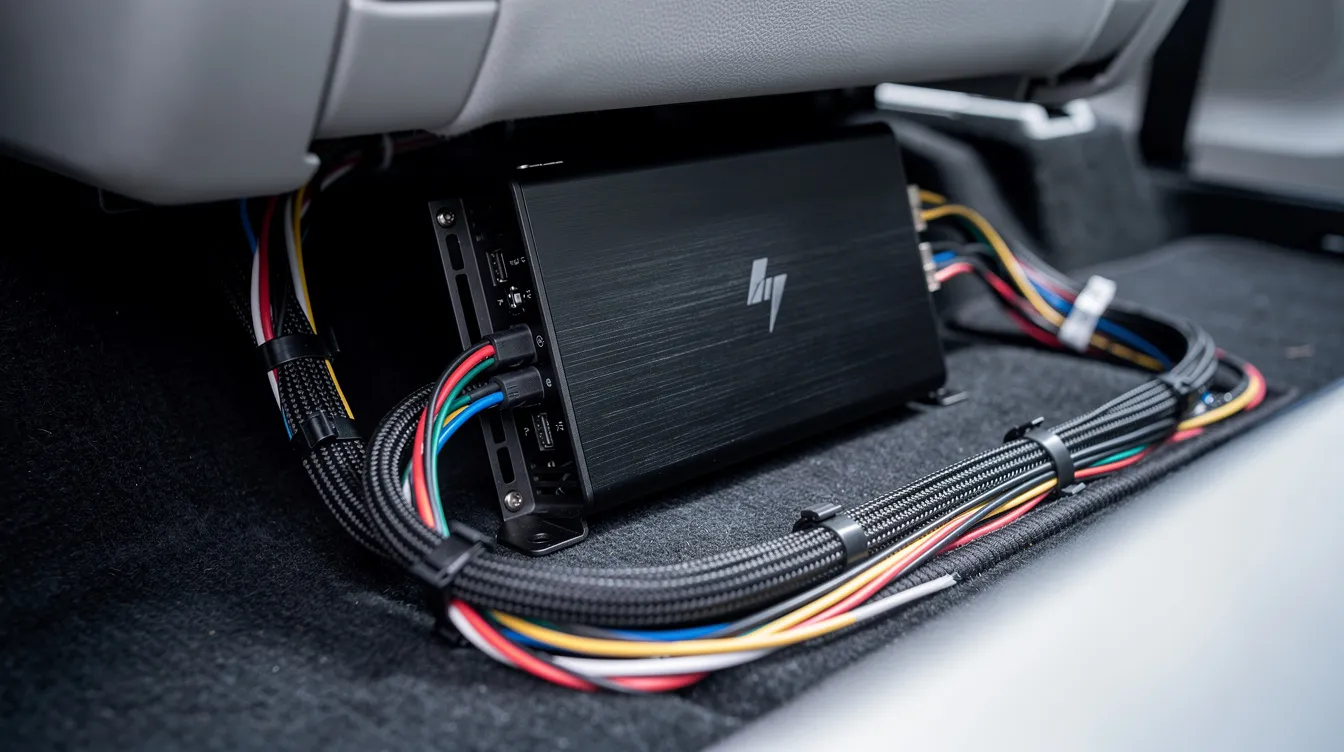
Class D Amplifier vs AB: Real-World Car Audio Comparison
Here is the practical point: class D gives you more usable power, less heat, and better packaging, while class AB gives you a traditional sound advantage for mids and highs when space and electrical demand are less of a concern.
|
Category |
class ab |
class d |
|---|---|---|
|
Efficiency |
Usually ~40–60% |
Often 85–95% |
|
Heat |
Runs hotter |
Runs cooler |
|
Size |
Larger heatsinks |
Smaller chassis |
|
Best frequency range |
Midrange/highs |
Subs/low frequencies |
|
Sound |
Often warmer and smoother |
Very clean when well-built |
|
Power output |
Costly and bulky at high wattage |
High output power for size |
For example, a daily driver sedan with a 1,200W RMS class d monoblock on dual 12-inch subs is a normal, efficient build. Trying to make that same power with a class ab monoblock usually means more current draw, more heat, larger mounting space, and a harder job for the vehicle’s power supply.
A simple current estimate shows why. Current draw is roughly watts ÷ voltage ÷ efficiency. At 14.4V, a 1,000W class d amp at 90% efficiency may draw about 77 amps. A 1,000W class ab amp at 60% efficiency may draw about 116 amps. That difference affects wire gauge, battery choice, alternator load, and voltage drop.
Heat is another real-world issue. In sustained testing reported by car audio measurement sources, similar AB and D setups have shown chassis differences of 20–40°F under load, with AB amps often much hotter. That is why class d is easier to live with in North Carolina summer trunk temperatures.
Sound quality is more nuanced. Class AB amplifiers provide better sound quality than Class D for many front-stage systems, and Class AB amplifiers typically have lower distortion than Class D in the midrange and treble. But modern class d amps are close enough that, in a moving car with road noise, the difference is often small.
Noise and interference also come down to installation. Poorly designed class d amps can add hiss, whine, or switching noise. Quality amps, proper grounds, twisted signal cables, clean routing away from power wire, and correct gain settings usually solve the issue.
Bottom line: use class d amps for most subwoofer and high-power needs. Use class ab amps when the sound character of mids and highs is the top priority and you have room for more heat and chassis size.
Choosing the Right Amp Class for Your System (Use Cases & System Planning)
Most real systems use a supporting cast of gear: speakers, subwoofers, batteries, wiring, DSP, and the correct amplifier classes for the job. Start with the goal.
Bass-Heavy Daily Driver
-
Use a class d monoblock from about 500–1500W RMS for subs.
-
Add a class d or class ab 4-channel for door speakers depending on budget, space, and sound goals.
Sound Quality Build
-
Use a class ab 4- or 6-channel amp for components.
-
Then a clean class d mono for the sub stage.
Show or SPL Build
-
Use multiple class d amplifiers because efficiency, size, and heat control matter when you need more power.
Compact or Lease Vehicle
-
Use micro class d amps that can hide under seats and be removed cleanly later.
Speaker matching matters. class d amplifiers pair extremely well with 1–2 ohm subwoofer loads when the amp is rated stable at that impedance. For 4-ohm components and sensitive tweeters, many installers still like class ab because of its low noise floor and smooth high frequencies.
Before buying, check these specs:
-
RMS power output at 14.4V, not just “max” power
-
Stable impedance rating
-
Signal-to-noise ratio
-
THD+N at the rated load
-
Damping factor for woofer control
-
Thermal and short-circuit protection
-
Fuse rating and wiring requirements
Also consider installation constraints:
-
A large class ab chassis may need open airflow in the trunk.
-
Several compact class d amplifiers may fit under seats or behind trim panels.
-
If you are upgrading a 2015–2026 compact car with a stock alternator, class d plus a properly sized AGM or lithium battery is typically easier on the electrical system.
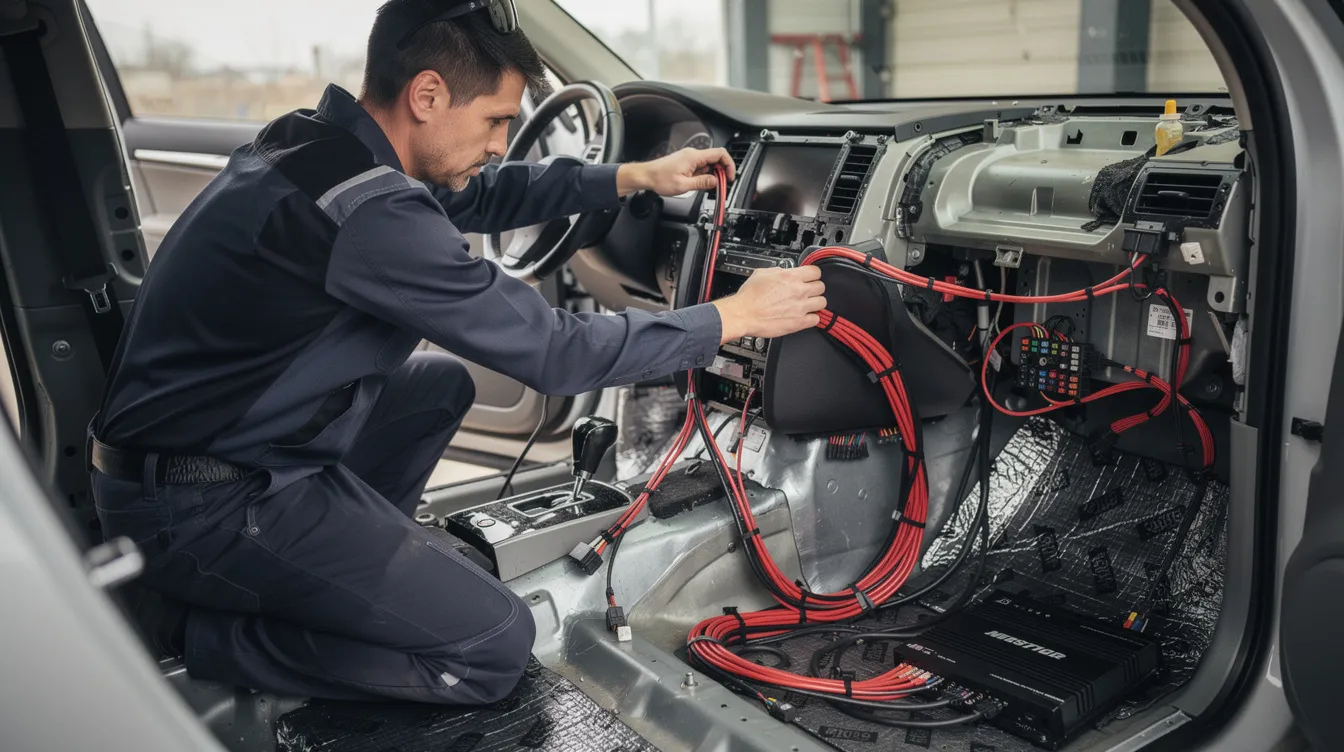
Why Buy from Amped Up Car Audio? (Support, Troubleshooting & System Design)
Amped Up Car Audio operates exclusively as an online retailer, without a physical store or installation services. However, we bring over 35 years of expert experience in the car audio industry to help you choose the right products and troubleshoot your system.
We help match amps to your vehicle, electrical system, and listening goals. A compact truck, family SUV, and SPL sedan do not need the same setup. We look at battery type, alternator capacity, wire runs, subwoofer impedance, speaker sensitivity, and where the amp will be mounted.
You can contact us for help with:
-
Choosing a single 5-channel class d amp vs separate class d and class ab amps
-
Matching amplifier output to subwoofers and speakers
-
Planning Big 3 wiring, dedicated grounds, AGM batteries, or lithium options
-
Diagnosing clipping, protect mode, shutdowns, hiss, or alternator whine
-
Understanding whether a claimed power rating is realistic
Because we sell the same products we recommend, we can provide real feedback on heat, reliability, mounting space, and sound performance in North Carolina weather and road conditions. If your amp gets hot, your lights dim, or your system sounds harsh, Amped Up Car Audio can guide you through troubleshooting and the next steps instead of leaving you guessing.
FAQ: Class D Amplifiers vs Class AB in Car Audio
-
Which is better for subwoofers, class D or class AB?
class d is usually better for subwoofers because it is efficient, compact, and cooler at high power. Most modern subwoofer amplifiers in 2025–2026 are class d for this reason. -
Do class D amps sound worse than class AB?
Early class d amps had more audible issues, but modern class d designs have improved greatly. For bass and midbass, most people cannot hear a clear difference in a moving car, but class ab can still have the edge for critical mids and highs. -
Will a class D amp save my car’s battery?
class d uses less power for the same output than class ab, so it reduces strain on the charging system. High-power systems still need proper wire, fusing, grounds, and sometimes upgraded batteries or alternators. -
Is class A ever used in car amplifiers?
Full class a car amps are rare because they are inefficient and hot. Some niche SQ models use heavy biasing, but true class a is mostly a home hi fi or specialty design. -
What about class G or H amplifiers in car audio?
class g and class h use dynamic power rails to improve efficiency compared with AB. They can work well, but implementation matters more than the letter printed on the amp. -
Can I run class D and class AB amps together?
Yes. Mixing amplifier classes is normal, and many systems use a class d monoblock for subs with a class ab or class d 4-channel for speakers. -
How do I know if my amp is clipping or overheating?
Common signs include distortion on loud passages, the amp going into protect, a very hot chassis, or bass that gets weaker as volume rises. Set gains correctly, match impedance, improve ventilation, and contact Amped Up Car Audio if you want help reading your system layout or install photos.
If you are still deciding between class d amplifier vs ab, send Amped Up Car Audio your vehicle, speaker list, subwoofer wiring plan, and photos of your install space. We will help you choose an amp setup that delivers clean music, strong output, and reliable power without guessing.