
How to Fuse Car Audio Power Wire for Safe, High-Performance Installs
Posted by Jacob Morris on May 7th 2025
Fuses for Car Audio: How to Fuse Power Wire for Safe, High-Performance Installs
When it comes to car audio installations, one of the most overlooked yet critical components is properly fusing your power wire. Whether you’re running a single amp or a full competition-grade system, the right fuse can mean the difference between a clean build and a catastrophic electrical fire.
In this guide, we’ll break down why fusing your power wire is essential, how to choose the correct fuse size, and which types of fuses or circuit breakers to consider — all based on wire gauge, amp power, and installation length. We’ll also explain the step-by-step process of selecting the correct fuse size, including how to calculate current draw in amperes, match fuse ratings to your wiring, and ensure your system is protected and compliant.
Adding the correct fuse at the right location is crucial to protect your wiring and components from short circuits and overloads. Selecting the correct size fuse for your wiring is essential to prevent damage and maintain system performance. Ensuring your system is working safely and efficiently depends on proper fuse sizing and placement. There is a lot at stake if fuse sizing is not done correctly, so attention to detail is key.
Introduction to Car Audio Power Wire Fusing
When building a high-performance car audio system, one of the most important — and often overlooked — steps is properly fusing your power wire. Inline fuses are your first line of defense against electrical hazards, protecting your car, your equipment, and yourself from the dangers of a short circuit or excessive current draw. Whether you’re running a single amplifier or a full competition setup, choosing the right fuse size and wire size is essential to safely supply power and get the most out of your system.
The key to safe power delivery is matching your inline fuse to the wire’s rated amperage, not just the amp’s power rating. This means selecting a fuse that will blow before your wire overheats, preventing potential damage or even fire. Always check manufacturers’ recommendations for both fuse size and wire gauge — for example, a 4-gauge main wire might call for a 120-amp fuse, while a smaller 10-gauge line could be fine with a 30-amp fuse. Using the correct wire ampacity ensures your system can handle the current without risk.
Distribution blocks (or distro blocks) play a big role in multi-amp setups, splitting the main power line to feed several pieces of equipment. Each branch should be protected with its own fuse, and the main wire from the battery to the distribution block should be fused with an ANL fuse or similar high-quality inline fuse. This setup ensures every part of your system is protected, from the hood to the trunk.
It’s important not to exceed the recommended fuse size — going too big can leave your wiring vulnerable to overheating, while a fuse that’s too small may blow unnecessarily and interrupt your music. Some amplifiers come with their own fuses, but you should always check the manufacturer’s recommendations to determine if additional protection is needed on the main power line.
For systems that experience temporary current surges, such as those with large subwoofers or multiple amps, time delay (slow-blow) fuses may be recommended. These fuses can handle brief spikes without blowing, but it’s crucial to use the type specified by your equipment’s manufacturer.
When planning your install, consider the wire gauge and the length of the line running from the battery (often in the hood) to the trunk or amp location. A good rule is to use the thickest wire that fits your system’s rated amperage and keep runs as short as possible to minimize voltage drop and maximize performance.
If you’re new to car audio or just want to make sure you’re doing things right, there are plenty of resources available. Trusted retailers like Amped Up Car Audio — offer a wide selection of fuses, wiring, and installation tools. Online forums and enthusiast groups are also great places to find advice and real-world experience from people who have built their own systems.
In short, taking the time to choose the correct inline fuse size, wire size, and fuse type is a good thing for anyone serious about car audio. By following manufacturers’ recommendations and using quality components, you’ll protect your investment, your car, and your peace of mind — all while enjoying the best possible sound. Whether you’re a seasoned installer or just getting started, understanding the basics of power wire fusing is the foundation of a safe, high-performance car audio system.
Why Your Amp Power Wire Needs a Fuse
Your amplifier draws power directly from the car’s battery — and that power wire is essentially a live feed of current. In the event of an accidental short (like a frayed wire touching metal), an unfused wire can overheat, melt, or ignite — potentially destroying your vehicle.
Solution? Install a fuse holder on the positive post of your battery, ideally within 18 inches. This protects you, your vehicle, and your investment from dangerous electrical surges.
How to Choose the Right Fuse for Car Audio Power Wire
Selecting the correct fuse size depends on three main factors:
-
Wire Gauge (AWG)
-
Wire Material (OFC vs. CCA)
-
Total Length of the Wire Run
Use this fuse size chart as a guideline for oxygen-free copper (OFC) wire approximately 20 feet long:
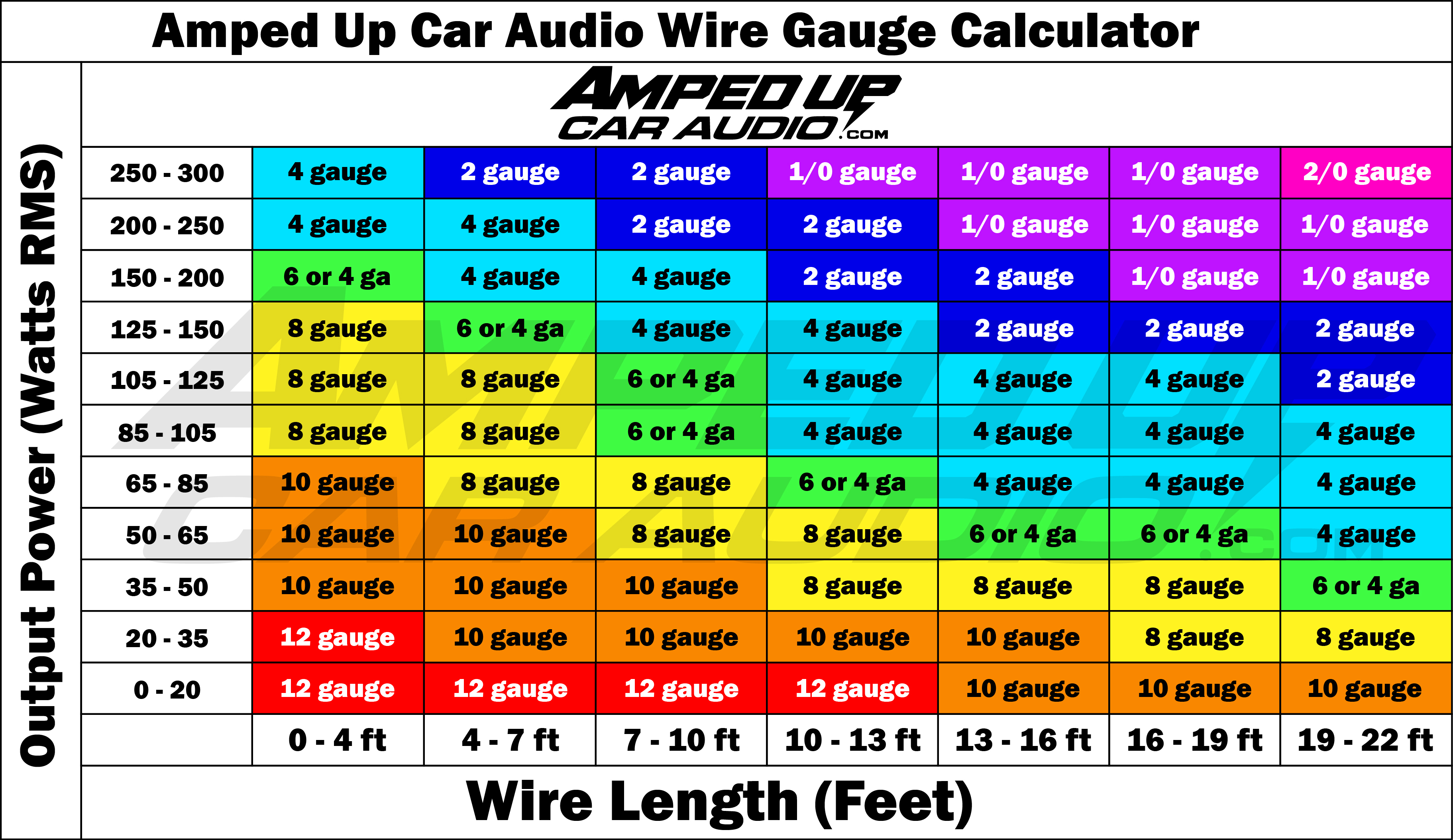
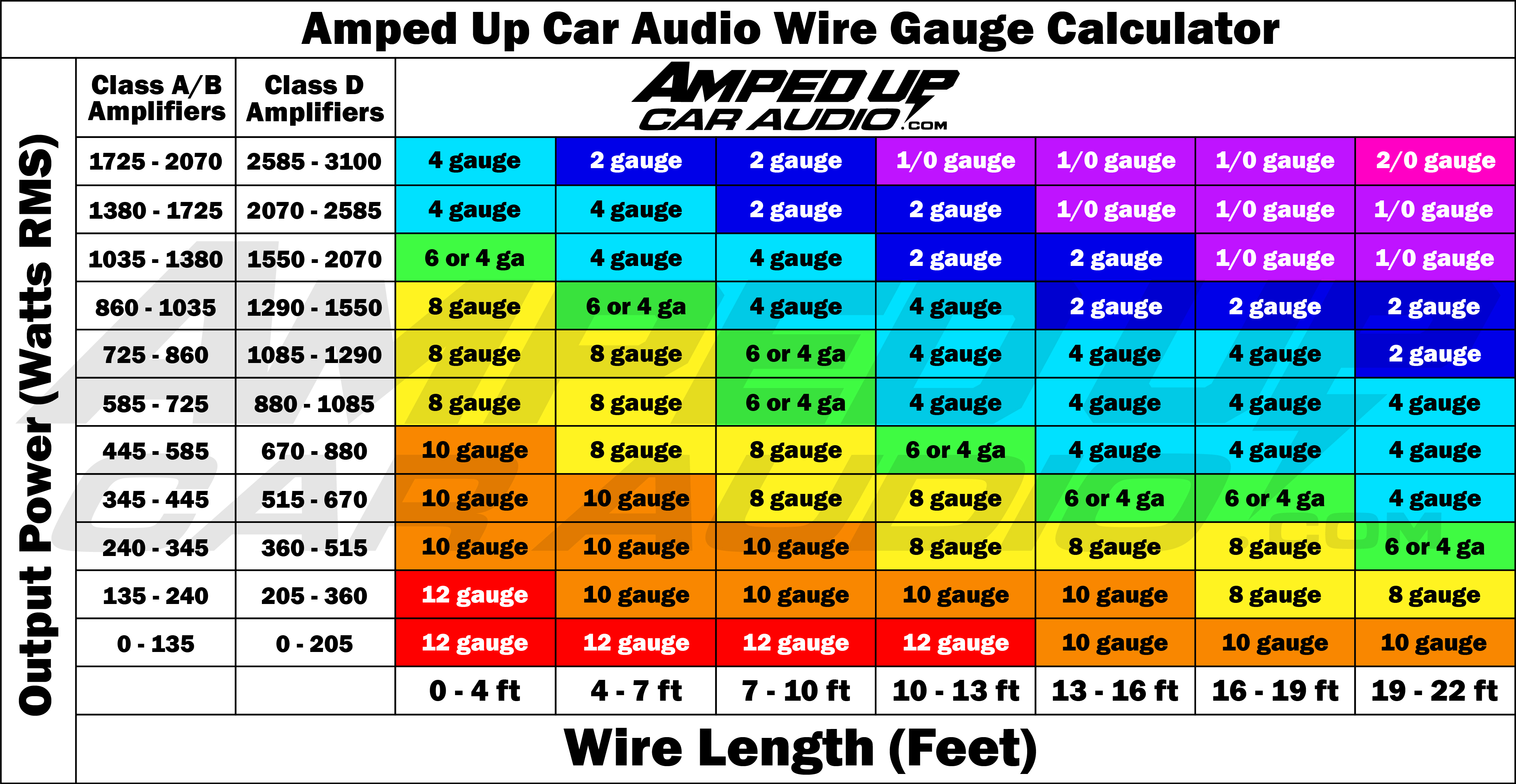
To learn more about selecting the right wire for your car audio system, check out our blog titled Essential Wire Gauge Chart: Understanding AWG and Ampacity Basics. This resource dives deeper into wire sizes, ampacity ratings, and how to match your wiring to your system’s power needs for optimal performance and safety.
⚠️ Important: If you’re using copper-clad aluminum (CCA) wire, fuse ratings may be lower. Always refer to the manufacturer’s specifications or choose a quality OFC wiring kit from a reputable car audio dealer.
Where to Mount the Fuse
Always mount your fuse holder as close to the battery as possible — typically within 6 to 18 inches. This ensures the wire between the battery and the fuse is as short as possible to minimize risk in the event of a short circuit.
If you’re running multiple battery banks, it’s important to fuse each connection between battery / banks. Place a fuse within 6 to 18 inches on each side of every battery bank to protect the wiring and reduce the risk of electrical fires or system damage. Proper fusing at each connection helps safeguard the rest of your vehicle’s wiring from overcurrent or short circuits, not just the amplifier.
Tips for mounting:
-
Use wire ties or clamps to secure the fuse holder.
-
Keep the wire away from heat sources or moving engine parts.
-
Avoid routing the wire through pinch points or over sharp edges.
Fuses vs. Circuit Breakers: Which Should You Use?
Fuses are single-use and offer fast response times when overloaded.
Circuit breakers can be reset and reused — ideal for SPL competitors, demo vehicles, or anyone wanting a quick “kill switch” for their system.
Pro Tip: While some audiophiles avoid circuit breakers due to their slightly slower trip time, for most daily-driven systems, the difference is negligible.
When a Fuse Blows — What It Means
A blown fuse is a warning sign, not just a minor inconvenience.
If your fuse blows:
-
Do NOT replace it with a higher-rated fuse.
-
Inspect for shorts, loose wires, or overpowered components.
-
Use a multimeter or continuity tester to confirm electrical flow before replacing the fuse.
Never “upsize” a fuse to stop it from blowing — that’s how fires happen. If you continue using a larger fuse (for example, a 120amp fuse after a 30amp fuse has blown), you risk serious electrical damage and potential fire hazards.
Fusing Multiple Amplifiers or Distribution Blocks
Using multiple amplifiers? You’ll need:
-
A main fuse near the battery
-
Individual fuses for each amp, especially if they don’t have onboard fuses
-
Fuses for your distribution block (also called a distro block, which splits power to multiple amps and requires proper fuse sizing for each output to protect against shorts and ensure safe current distribution)
Why? Because an internal amp fuse only protects the device — it won’t stop a live wire from arcing if there’s a short before the amp. Your fuse near the battery is your first line of defense.
Marine-Grade and Ignition-Protected Fuses
In boats, RVs, or enclosed fuel areas, marine-grade ignition-protected fuses are a must. Regular fuses can spark when they blow, which is dangerous in environments with gas fumes.
Final Tips: Fuse Selection Made Easy
-
Fuse for the wire, not the amp. Your fuse protects the wiring, not the amplifier.
-
Use fuse blocks or ANL fuse holders for cleaner installations.
-
Always match fuse rating to wire gauge and material — never guess.
-
Choose OFC wire for best conductivity and higher power transfer.
Need Help Choosing the Right Car Audio Fuse?
At AmpedUpCarAudio.com, we offer premium amplifier wiring kits, fuses, and expert support to help you get the job done right the first time. Whether you're building a show car or a daily driver system, we've got what you need to #GetAmpedUp — safely.