

Maximize Your Sound: Essential Guide to Car Audio Electrical Upgrades
Posted by Jacob Morris on Jun 20th 2026
Complete Guide to Car Audio Electrical Upgrades (How Much Power Your System Really Needs)
Your amplifier isn't the problem. If your lights dim on bass hits and your amp keeps going into protect mode, the real issue is almost always an undersized electrical system. This guide walks you through exactly how to determine what your car audio electrical setup needs - from calculating current draw to choosing the right alternator, battery, and wiring.
Key Takeaways
Most people blame their equipment when audio performance suffers, but dimming lights indicate an underpowered audio system. Your total RMS power, real vehicle voltage, and amplifier efficiency together determine whether you need a Big 3 upgrade, a high output alternator, or an extra battery.
-
Total RMS power is the starting line - add up every amplifier's RMS output to size your electrical system
-
Current draw is calculated by dividing watts by voltage, then accounting for efficiency losses
-
Big 3 wiring upgrade is the cheapest, highest-impact method to fix voltage drops
-
High output alternator becomes necessary once you exceed roughly 1,000W RMS
-
Battery upgrades (AGM or lithium) provide reserve capacity and voltage stability under demand
Amped Up Car Audio (online) specializes in high output alternators, OFC wiring, AGM and lithium batteries, and complete electrical kits to solve these issues.
Understanding Your Car's Electrical System
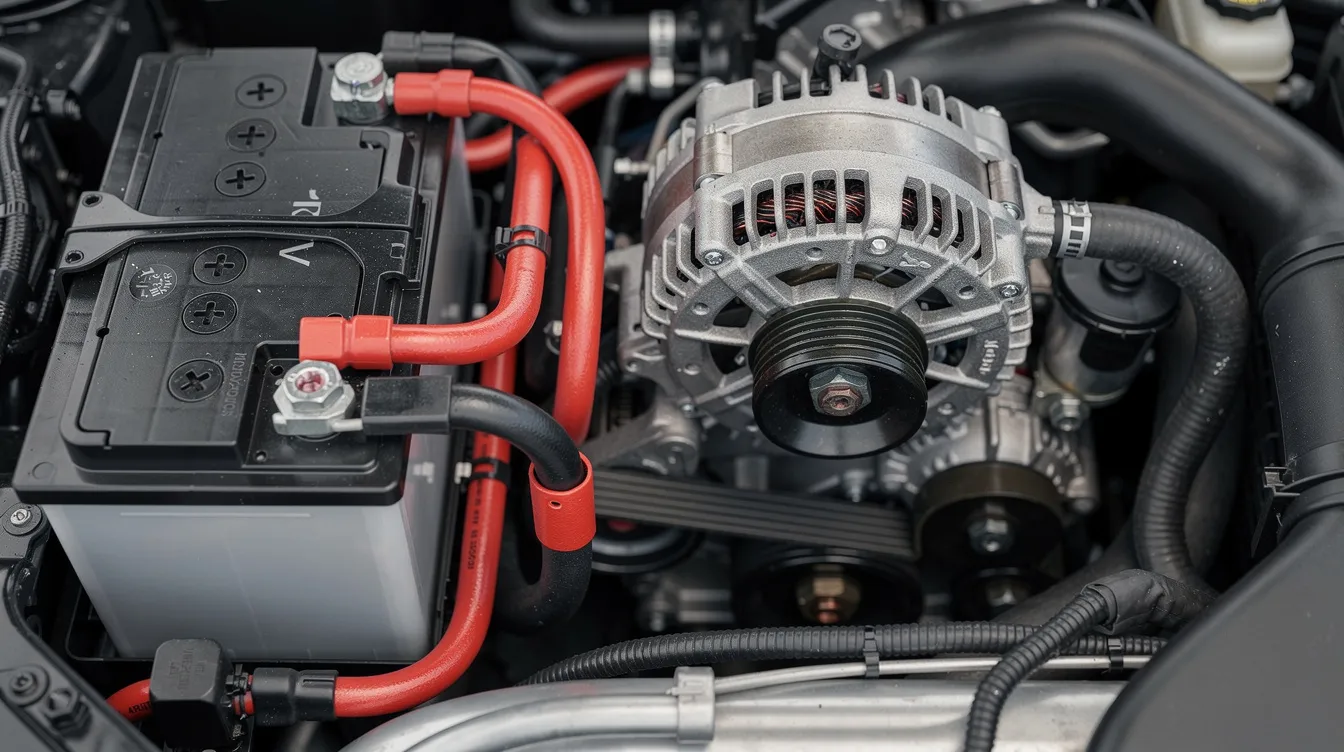
Your car electrical system is a 12-volt DC network where the alternator, battery, wiring, and ground connections all work together. When the engine is running, the alternator supplies power and recharges the battery at roughly 13.8–14.4V. When the engine is off, resting voltage sits around 12.6V.
-
Most vehicles need 50–100 amps just for basic electrical functions: ECU, lights, blower motor, heated seats, and windows
-
Stock alternators on typical 2010–2024 vehicles are rated 90–150A - designed for factory loads, not a 2,000W sound system
-
Modern vehicles with start-stop and smart charging can throttle alternator output at idle, making car audio electrical surges even more problematic
Quick Answer: Do You Need an Electrical Upgrade for Your Car Audio?
Under roughly 800–1,000W RMS with quality wiring, most people can run on stock electrical. Above that line, you should plan upgrades. High-output alternators are essential for systems over 1,000W RMS. Dimming lights indicate a need for a high-output alternator - upgrade your alternator if your system exceeds 1,000W RMS.
Symptoms your electrical system is undersized:
-
Dimming headlights on bass hits
-
Voltage dropping below 12.6V with music playing
-
Amplifiers entering protect mode under load
-
Weak, muddy bass at stoplights that cleans up at higher RPM
-
Slow cranking after a loud listening session with engine off
Power tier cheat sheet:
-
Up to ~800W RMS: Big 3 strongly recommended, healthy stock alternator, upgraded AGM helpful
-
800–2,000W RMS: Big 3 required, high output alternator recommended, secondary battery worth considering
-
2,000–5,000W RMS: High output alternator required, 1/0 OFC wiring, dedicated AGM or lithium bank
-
5,000W+ RMS: Multiple high output alternators, large lithium bank, professional installation
Step 1: Add Up Your Total RMS Power
All electrical sizing starts with total RMS power - not "max" or "peak" ratings printed on boxes. Car audio systems transform electrical energy into sound waves through various components, and it's the amplifier that determines the electrical load, not the subwoofer or speakers.
The head unit generates a low-voltage audio signal from various sources. The amplifier boosts the low-voltage audio signal from the head unit, and speakers convert amplified signals into sound waves through mechanical movement. Dedicated components like amplifiers and tweeters enhance audio output quality.
-
Example system: 1 Sundown Audio SALT-2 rated 2,000W RMS at 1Ω for subs, plus 1 SALT-200.4 rated 200W × 4 = 800W RMS for mids/highs
-
Total audio system power: 2,800W RMS
-
Always pull RMS ratings from reputable manufacturer specs on their website, not inflated marketplace ads
Step 2: Convert RMS Watts to Current Draw (Amps)
Converting watts to amps lets you determine exactly how much your stereo system will draw power from the vehicle. Use RMS power to estimate current draw - this guide created a simple estimate method, and the formula is straightforward:
-
Amps = Watts ÷ Voltage - use realistic voltage like 13.8V, not the 14.4V model that marketing numbers assume
-
2,800W ÷ 13.8V ≈ 203A (ideal, assuming 100% efficiency)
-
You can also add up fuse ratings for total maximum current draw as a worst-case reference
-
To get a more realistic number, multiply watts by the efficiency factor and divide by voltage (covered in Step 3 using the above equation)
Step 3: Three Real-World Factors That Increase Current Draw
Amp ratings like "2,000W at 14.4V" are lab numbers. In a real vehicle, voltage is lower, your amp is less efficient, and average current draw climbs.
-
Voltage drop: Many vehicles fall to 12.6–13.2V under heavy bass at idle. Voltage drop affects amplifier performance and current draw, forcing the unit to pull more power to compensate
-
Amplifier efficiency: Class A/B amps run at 55–70% efficiency; class D designs hit 80–90%. Most high-output alternators operate at 80% efficiency or higher, and you should account for these losses in your plan
-
Impedance rise and headroom: Speaker impedance rises above nominal with frequency and movement - pros add 30–50% safety margin
Realistic calculation for our 2,800W example:
-
At ~80% average efficiency: 2,800W ÷ 0.8 = 3,500W electrical load
-
3,500W ÷ 13.8V ≈ 253A under heavy listening
-
Note that an average listener uses about 20% of amplifier power, but you must size electrical for peaks, not averages
Step 4: How Much Alternator Output Do You Need?
The alternator - not the battery - is the primary power plant once the engine is running. Most factory alternators rated 120–180A often deliver only 60–70% of that output at idle, which is where most music listening happens.
-
Roughly 100 amps of alternator output equals approximately 1,000 watts RMS of capable audio power
-
A 270 Amp alternator at 13.7 volts provides 3,700 watts of power - enough to support a serious build
-
For our 2,800W example: ~253A draw plus OEM accessories (50–100A) plus headroom ≈ target 375A+ from a true high output alternator, where many builds need to replace the stock alternator rather than rely on factory output
-
Quality brands like Mechman and Brand X Electrical offer strong idle output ratings and reliable performance under continuous load
Step 5: Big 3 Wiring Upgrade (Why It's Almost Always a Yes)
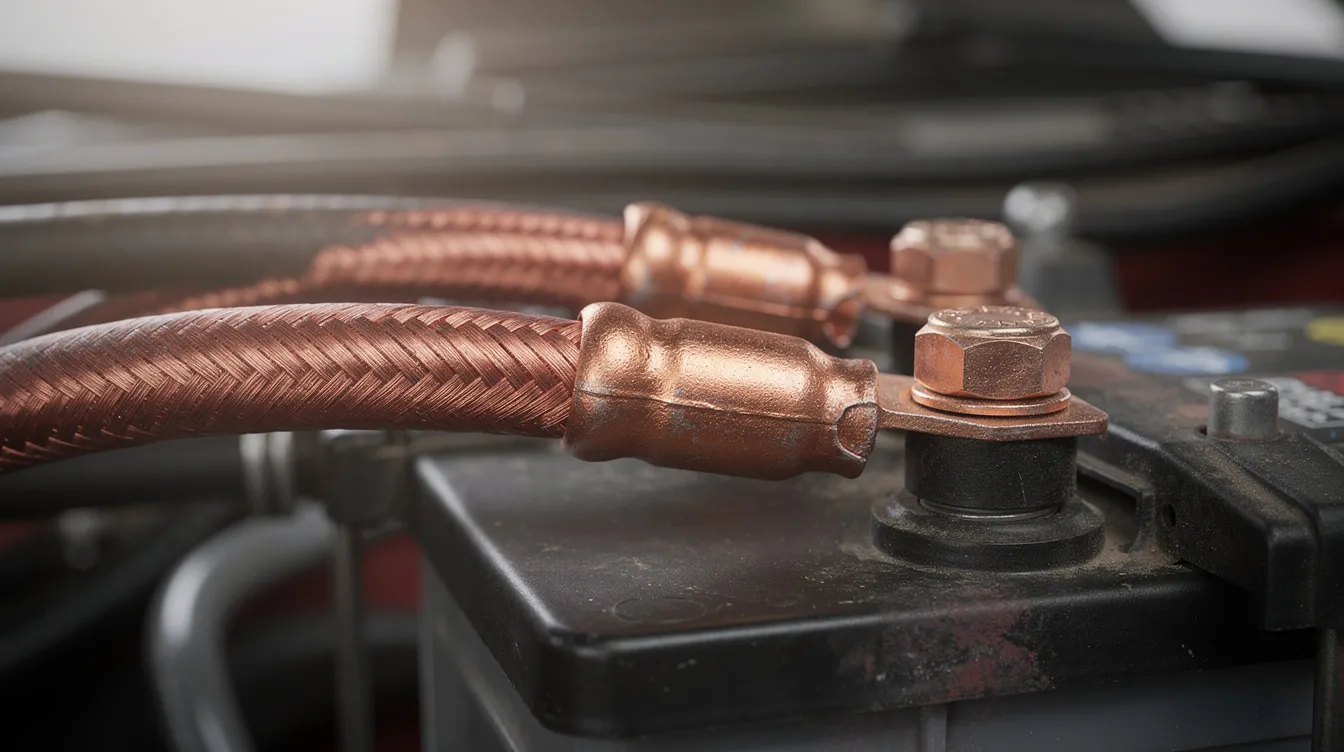
The Big 3 upgrade is the cheapest, highest-impact car audio electrical upgrade you can do. Big 3 wiring includes three key connections under the hood:
-
Alternator positive → battery positive
-
Battery negative → chassis ground
-
Engine block → chassis ground wire
The Big 3 upgrade reduces resistance in the electrical system, improves charging efficiency for car audio systems, and stabilizes voltage at the amplifier. A solid wire connection is essential for a car audio system to function effectively. It is essential for high-current audio systems - strongly recommended above 800W RMS, required when installing a high output alternator or second battery. Always fuse the alternator-to-battery charge cable near the battery for safety.
Step 6: Battery Upgrades – AGM vs Lithium for Car Audio
The battery provides reserve power and voltage stability during big bass transients. Systems exceeding 750–1,000W RMS should upgrade their battery. Adding separate power supplies can help manage heavy power loads in audio systems.
-
Lead acid batteries rest at about 12.6 volts - limited deep-cycle duty, least ideal for high output car audio
-
AGM batteries rest at approximately 12.85 volts - better discharge performance, more vibration resistant (e.g., XS Power D3400). A strong option for most builds
-
Lithium batteries are best for systems over 3,000W RMS - lighter, better voltage stability, 2,000–5,000 cycle life vs. 300–500 for AGM
-
Mixing AGM and lead acid batteries can cause long-term issues - avoid mixing chemistries without expert guidance
-
A second battery can provide more reserve capacity for audio systems, typically justified above 1,500–2,000W RMS when you listen with the engine off or voltage dips even after a Big 3 and alternator upgrade
Amped Up Car Audio carries XS Power AGM, Limitless Lithium, and other high-performance batteries for daily drivers and competition builds.
Step 7: Car Audio Wire Gauge Guide (What Size Wire Do You Really Need?)
Undersized power and ground wiring is one of the most common causes of voltage drops and amplifier failure. High-quality wiring is critical for high-powered amplifier performance. Oxygen-free copper wiring improves power transfer and reduces overheating.
-
Up to ~60A, 10–12 ft total run length: 8 AWG OFC
-
60–150A, 15–18 ft run: 4 AWG OFC
-
150–300A, 18–20 ft run: 1/0 AWG OFC
-
300A+ or very long runs: 2 runs of 1/0 AWG OFC
Use thicker wire for longer runs because added wire length increases resistance and voltage drop, and always choose a larger gauge wire to prevent voltage drops. Inspect wire thickness to ensure proper gauge before installation - many cheap kits use oversized jackets hiding small conductors. Avoid CCA wire as it is less conductive than copper. Use a wire gauge chart to select appropriate wire size. Ground wire should match the power wire gauge and run as short as possible to clean bare metal.
Step 8: Testing Your Electrical System (Voltage & Clamp Checks)
Simple tests confirm whether your alternator, wiring, and batteries are keeping up with your stereo demand.
-
Use a digital voltmeter at the battery and at the amplifier input - with engine running and music playing loud, healthy systems hold roughly 13.8–14.6V
-
Sustained drops below ~12.6V indicate the electrical system is undersized or the ground connections are poor
-
If voltage drops hard at idle but recovers with RPM, you need an alternator with stronger idle output or more battery reserve
-
For advanced users: clamp a DC ammeter around the alternator output cable, turn on headlights, blower, and play bass-heavy music loudly, then compare peak current to your alternator's ratings
Beginner to Expert Car Audio Electrical Targets (Quick Reference)
-
Under 1,000W RMS: Stock alternator usually okay; Big 3 recommended; quality AGM starting battery; 4 AWG OFC wiring
-
1,000–2,000W RMS: Big 3 required; high output alternator (220–270A range); upgraded AGM or one additional trunk-mount AGM; 1/0 OFC main runs
-
2,000–4,000W RMS: High output alternator required (250–350A+); Big 3 plus multiple 1/0 runs; dedicated rear AGM or entry-level lithium; careful fuse sizing
-
4,000–8,000W RMS: Very high output alternator(s), possibly dual setups; large lithium bank; multiple 1/0 or 2/0 OFC runs
-
8,000W+ RMS: Competition-grade electrical only; multiple alternators; large lithium or sodium-ion banks; professional design required
These are realistic daily-driven targets. Use this reference before purchasing amplifiers so you budget for supporting electrical upgrades.
Special Cases: EVs, Smart Charging, and High-Tech Vehicles
Vehicles from 2018 and newer, hybrids, and EVs have more complex charging systems. EVs offer very quiet cabins that make audio upgrades rewarding, but limited 12-volt support from a DC-DC converter can cap realistic amplifier power. Some vehicles run accessory buses at 14–18V or even 48V, which can damage conventional car audio amplifiers.
A digital signal processor allows precise tuning for optimized sound quality on these platforms, and signal separation improves clarity by directing specific frequencies to designated speakers. On modern vehicles, amplifier efficiency, total current draw, and proper interface with factory DSP systems matter more than ever - professional installation is recommended.
FAQ – Car Audio Electrical & High Output Systems
Do I really need a high output alternator, or will a second battery be enough?
A second battery adds reserve capacity but does not create power - only the alternator generates energy while the engine is running. Above roughly 1,000–1,500W RMS, relying only on extra batteries will still let voltage sag because the stock alternator cannot recharge fast enough to keep up. For daily-driven systems, a high output alternator plus upgraded main battery is more effective and safer than stacking multiple batteries on a weak alternator.
Is a Big 3 wiring upgrade safe on modern vehicles with ECU-controlled charging?
Yes. A correctly installed Big 3 uses fused, properly routed OFC cable and does not bypass factory current sensors or modules. The upgrade simply reduces voltage drop and heat in the main charging paths. Never remove factory wiring - add larger cables in parallel and always fuse the charge line near the battery.
Can voltage drop damage my amplifiers or other car electronics?
Severe voltage drop can cause amplifiers to clip earlier, shut down into protect mode, or overheat from trying to make power at low voltage. Chronic low voltage also stresses the alternator, shortens battery life, and can affect sensitive factory modules. Keep loaded voltage in the 13.8–14.6V range for reliability and sound quality.
Should I choose AGM or lithium for a 3000W RMS daily system?
For ~2,000–3,000W RMS daily listening, a strong high output alternator, Big 3, and one or two quality AGM batteries is a cost-effective solution. Lithium shines when weight is a concern or when you want the stiffest possible voltage under heavy bass. Contact Amped Up Car Audio with your exact amps and vehicle for a tailored recommendation.
How do I know if my wiring kit is good enough for my amps?
Check three things: true AWG gauge, OFC vs CCA construction, and fuse rating vs your amplifier's current draw. Many low-cost "0 gauge" kits have oversized jackets with small CCA conductors inside, which leads to voltage drop and hot wires. Use reputable OFC kits sized to match the calculations in this guide.
Build a Car Audio System Your Electrical Can Actually Support
Clean, loud, reliable car audio starts with a solid electrical foundation - not just more watts on a page. Send Amped Up Car Audio a quick rundown of your vehicle (year, make, model), amplifiers (RMS power and impedance), and goals (daily, SQ, or SPL) for a personalized electrical system recommendation.
Browse the Amped Up Car Audio online store for Mechman and Brand X Electrical high output alternators, XS Power AGM and Limitless Lithium batteries, GP Car Audio OFC Big 3 kits, 1/0 power wire, fuses, distribution hardware, and eco bass knobs with integrated voltage monitors.
Plan your car audio electrical upgrade today so your system plays louder, cleaner, and longer - without dimming lights or killing batteries. Visit us online for expert advice and premium car audio electrical upgrades.