
What Does a Subwoofer Do? The Essential Role in Your Audio Experience
Posted by Jacob Morris on Jun 11th 2026
What Is a Subwoofer? Complete Car Audio Guide from Amped Up Car Audio
If you've ever felt a kick drum punch you in the chest or experienced a bass drop that rattled your rearview mirror, you've experienced what a subwoofer does. But what exactly is a subwoofer, how does it work, and do you actually need one in your car? This guide covers everything from core definitions and enclosure types to specs, installation, and system matching-so you can make a confident buying decision.
Quick Answer: What Is a Subwoofer (and Why It Matters in Your Car)?
A subwoofer is a specialized speaker designed exclusively to reproduce low frequencies and deep bass in a car audio system. It handles the lowest portion of the audio spectrum that your factory door speakers and coaxials simply cannot deliver with any authority.
Most car speakers start rolling off significantly around 60–80 Hz. A subwoofer picks up where they leave off, covering roughly the 20–80 Hz frequency range where kick drums, bass guitar lines, 808s, sub bass frequencies, and low frequency effects from movie soundtracks live. Without a sub, those deep bass tones are either missing entirely or reproduced as weak, distorted noise through speakers never meant to handle them.
Adding a properly powered subwoofer instantly improves impact, clarity, and overall frequency response-even at everyday listening volumes. Subwoofers enhance sound quality by adding depth and power to every genre you play. Your main speakers get to focus on what they do well (vocals, instruments, detail), while the sub handles the heavy lifting below.
Amped Up Car Audio is a Conover, NC–based car audio specialist that helps customers choose and install the right subwoofers for their vehicles. Whether you're building a show truck or just want your daily commute to sound complete, this guide will walk you through everything you need to know.
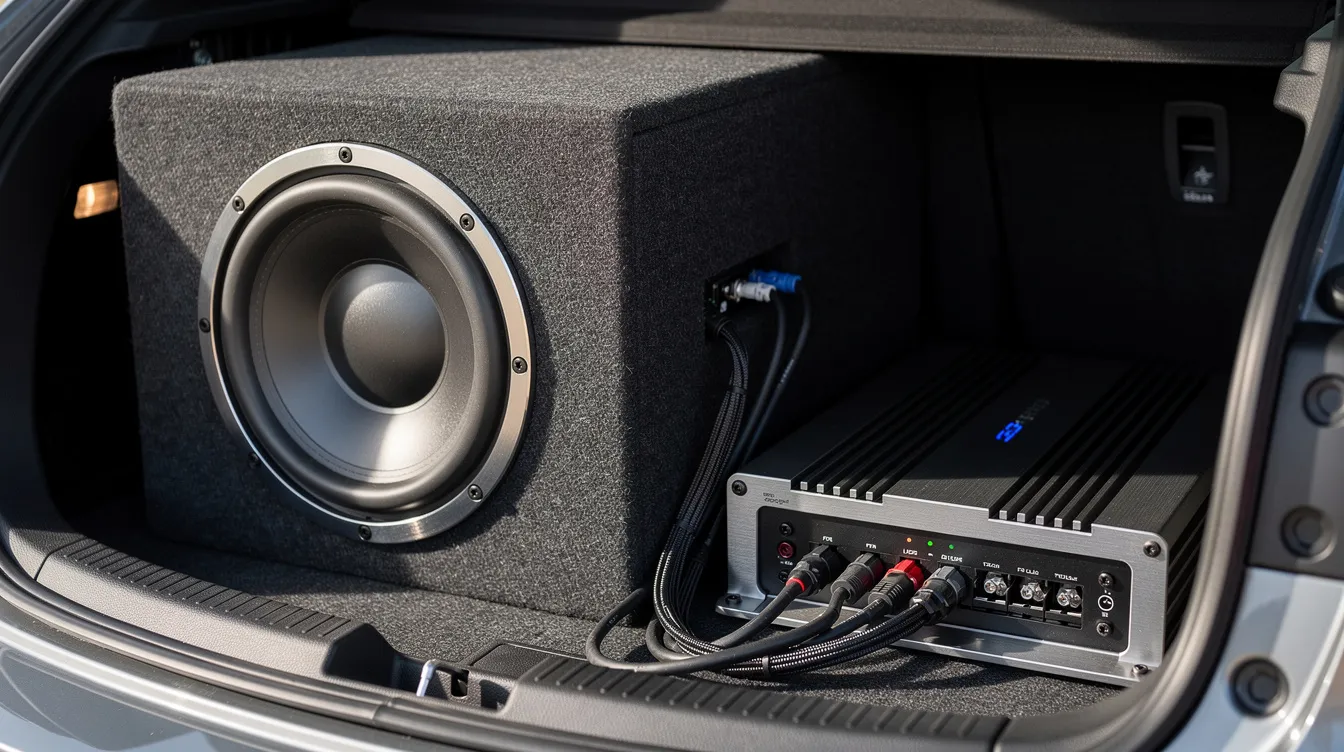
What Is a Subwoofer? (Core Definition)
At its simplest, a subwoofer is a dedicated loudspeaker engineered to reproduce low frequencies that regular speakers struggle with. Here's what that means in practical terms:
-
A subwoofer typically reproduces frequencies from 20 to 200 Hz. In car audio systems, the crossover frequency is usually set around 70–100 Hz so the sub only handles the lowest portion of the audio signal.
-
"Low frequency" or "bass" refers to long sound waves we often feel as much as we hear. A 40 Hz tone has a wavelength of roughly 28 feet. These are the bass drops in hip hop, the rumble in electronic music, and the cinematic punch of movie sound effects.
-
Standard full range speakers-door speakers, 6x9s, coaxials-are designed to cover mid and high frequencies effectively. A subwoofer speaker's only job is low frequency extension and impact. By contrast, a standard woofer can reproduce frequencies up to 2500 Hz or higher, making it a broader-range speaker driver rather than a deep bass specialist.
-
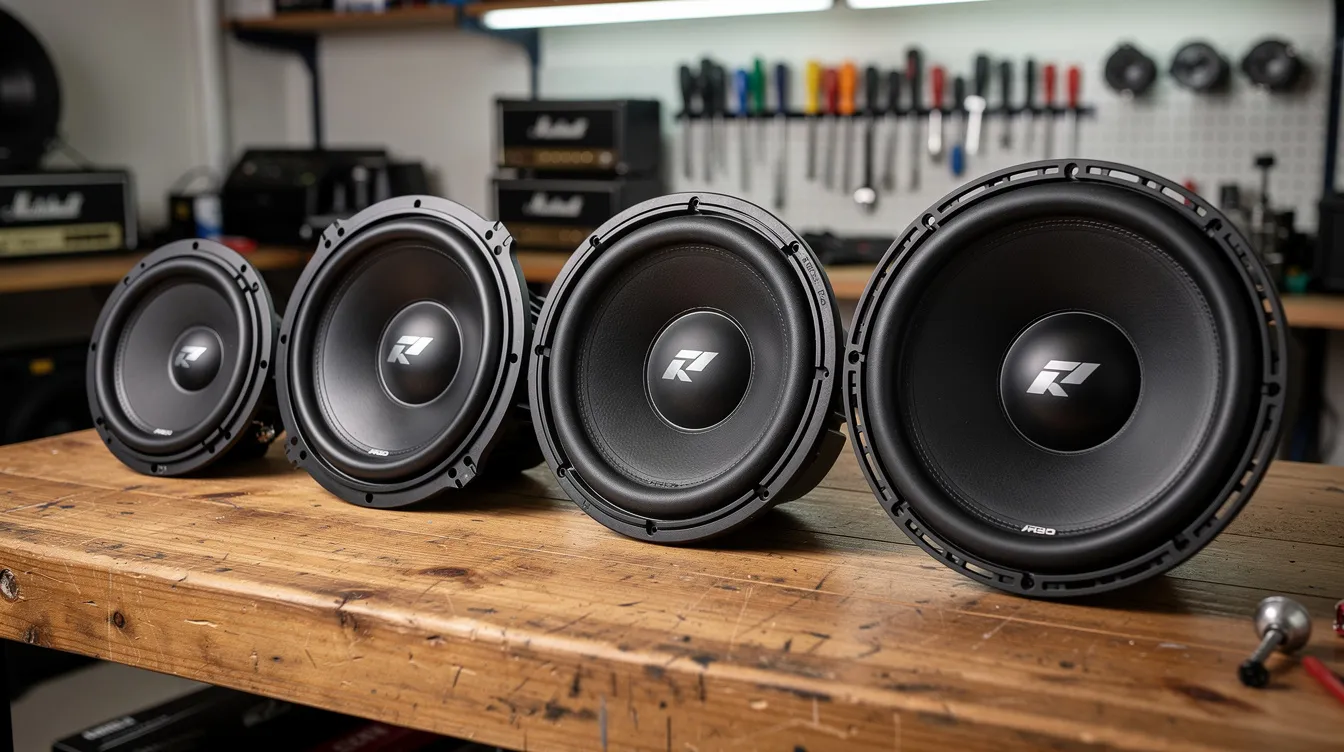
Subwoofers typically use drivers between 8 and 21 inches, with 8", 10", 12", and 15" being the most common sizes in car audio. Each driver mounts in a dedicated subwoofer enclosure designed to optimize deep bass reproduction.
-
A subwoofer reproduces low-frequency sounds typically below 80 Hz or 100 Hz in a real-world car install. It can also reproduce low frequencies below 40 Hz, delivering the sub bass that you feel in your seat and steering wheel.
-
A quality subwoofer improves overall audio system clarity and fills in the lowest octave that most factory sound systems simply cannot reproduce.
How Does a Subwoofer Work?
Producing deep bass requires moving a lot of air in a controlled way. Here's the chain of events that turns an electrical signal into the bass you feel:
-
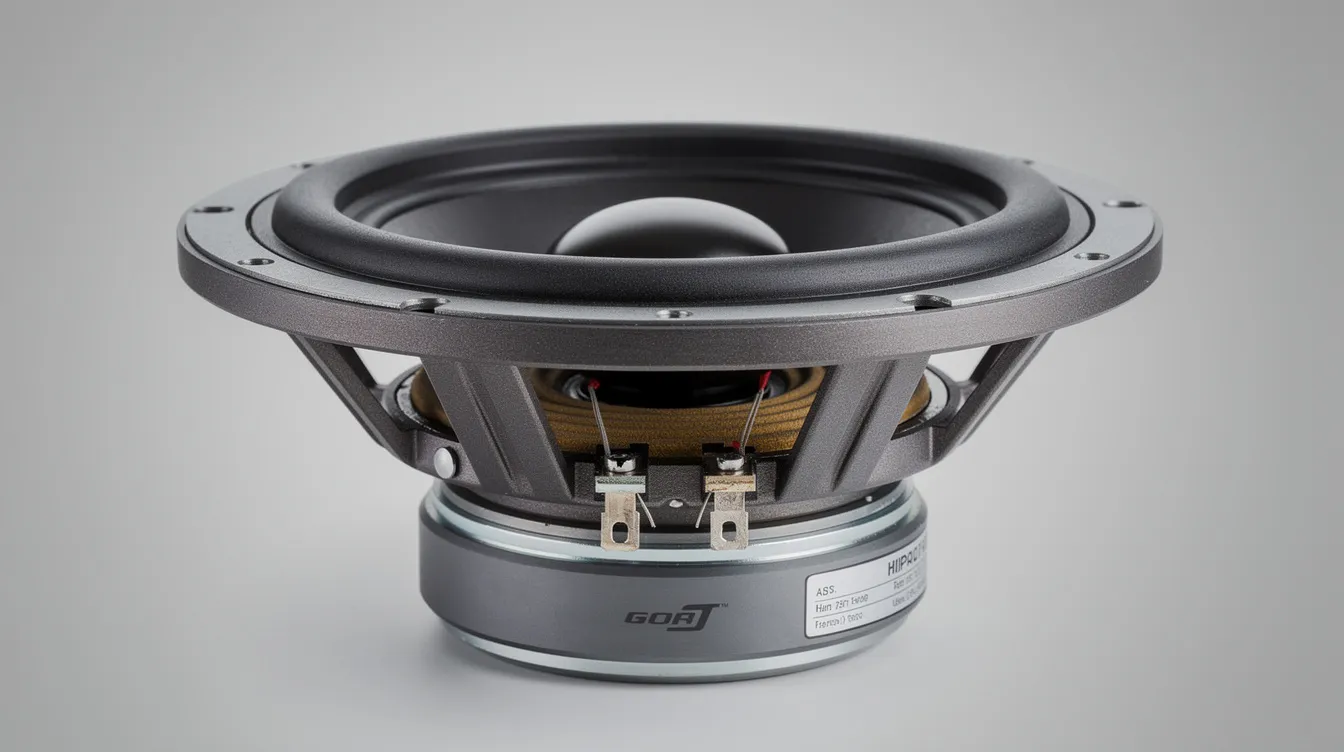
Amplifier to voice coil: The amplifier sends an audio signal (alternating current) through the subwoofer driver's voice coil. The voice coil sits inside a strong magnetic gap created by the magnet assembly.
-
Magnetic interaction: As the current alternates direction, it generates a magnetic field that pushes and pulls against the permanent magnet. This forces the voice coil-and the cone attached to it-to move back and forth rapidly.
-
Cone and air movement: The speaker cone (often treated paper, polypropylene, or composite material) pushes and pulls the air in front of it, generating sound waves at low frequencies. Because bass notes have such long wavelengths, the cone must move significant distances (called excursion) to produce adequate output.
-
Suspension control: The suspension system-made up of the spider and surround-keeps the cone centered and controls its long excursion. For subwoofers that produce deep bass at high output, the suspension must allow large movement while staying linear. When excursion exceeds the driver's linear limits (Xmax), distortion increases sharply.
-
Enclosure matters: The subwoofer enclosure is equally important as the driver. Its internal volume, shape, and design (sealed or ported) dramatically affect the subwoofer's low frequency extension and frequency response. A poorly designed or mismatched box can make a great driver sound muddy, thin, or boomy.
-
Cabin gain: In car audio, the vehicle cabin itself acts like a small pressurized room. Below roughly 50–70 Hz, the cabin naturally boosts low frequency output at approximately 12 dB per octave, which is why cars can feel so bass-heavy compared to open-air environments. This cabin gain partially offsets the natural roll-off of sealed boxes and influences how enclosure tuning is optimized.
Subwoofers require more power than standard woofers for low frequencies because moving large volumes of air at 20–40 Hz demands serious energy and cone displacement.
Key Subwoofer Types: Active vs Passive, Sealed vs Ported
When shopping for a car subwoofer, you'll encounter four main categories that define how the system is powered and how the enclosure behaves. Buyers mainly choose between active subwoofers and passive subwoofers on the power side, and between sealed subwoofers and ported subwoofers (sometimes called vented or bass reflex) on the enclosure side.
Each combination affects how deep the bass goes, how loud it can get, how much power you need, and how much trunk space it occupies. Beyond these four primary types, you'll occasionally see bandpass subwoofers (which use a sealed cabinet within another cabinet for narrow, high-output bandwidth), horn-loaded subwoofers (which produce deeper bass with greater efficiency using flared enclosures), and servo controlled subwoofers (which use feedback circuits for extremely precise cone control). These are specialized and less common in everyday car builds.
Amped Up Car Audio stocks all of these configurations-from compact amplified truck boxes to high-excursion 15" subs for large ported enclosures.
Active Subwoofers (Powered Car Sub Enclosures)
A powered subwoofer combines a subwoofer driver, built-in amplifier, and integrated enclosure into a single unit. Here's why they matter:
-
Active subwoofers include their own dedicated amplifiers, eliminating the need for a separate external amplifier for bass duties.
-
Installation is simplified: run power, ground, remote turn-on, and signal wires (RCA or high-level input) and you're producing bass.
-
The internal amp is factory-matched to the driver's power handling and impedance, which answers the "how much power do I need" question right out of the box.
-
Most active units include onboard controls for gain, crossover frequency (low-pass filter), bass boost, and sometimes phase adjustment to blend with your other speakers.
-
Amped Up Car Audio often recommends active subwoofers for daily drivers, lease vehicles, and compact cars where space and simplicity matter most.
Passive Subwoofers (Sub + External Amplifier)
A passive subwoofer is a bare speaker (or speaker in an enclosure without amplification) that requires a separate external amplifier to power it:
-
Passive subs are the standard choice for serious car audio builds, multi-sub setups, and SPL-focused systems where maximum flexibility matters.
-
They come in single voice coil (SVC) or dual voice coil (DVC) configurations at various impedances (e.g., dual 2Ω, dual 4Ω), giving you wiring options to optimize power delivery from your amplifier.
-
This approach lets you choose exactly how much power you want, which brand and class of amplifier you prefer, and how to wire for maximum performance.
-
A subwoofer allows main speakers to perform better by relieving bass duties, and a passive setup lets you dedicate an entire monoblock amp to that job.
-
Amped Up Car Audio helps customers match passive subwoofers with the right monoblock amplifiers and wiring kits for safe, reliable power delivery.
Sealed Subwoofers (Acoustic Suspension Enclosures)
Sealed enclosures trap air behind the cone, creating an air spring that tightens control over cone movement:
-
A sealed subwoofer cabinet is compact and provides tighter bass with faster transient response, making kick drums and bass notes sound punchy and defined.
-
Sealed subwoofers provide faster transient response and tighter bass than ported alternatives, with a gentle 12 dB/octave roll-off below the system's resonance frequency.
-
Sealed enclosures deliver smoother frequency response and more accurate bass across a wider bandwidth-ideal for listeners who want precision.
-
Sealed subwoofers require more power for lower frequencies to reach the same SPL as ported designs, but cabin gain in a car partially compensates for this.
-
Amped Up Car Audio frequently recommends sealed boxes for SQ (sound quality) builds and hi fi–style listening where control and musicality are the priority.
Ported Subwoofers (Vented / Bass-Reflex Enclosures)
Ported enclosures use a tuned vent to boost efficiency and output in a targeted frequency band:
-
Ported subwoofers deliver more powerful bass than sealed designs by using a port (vent) tuned to a specific frequency. Bass reflex cabinets include ports to enhance bass output in the tuned range.
-
A properly tuned ported box can produce 3–6 dB more output than the same driver in a sealed enclosure-a significant real-world difference.
-
Ported subwoofers require less power and produce more bass in the 25–40 Hz range, making them efficient for delivering deep bass at high volume.
-
Below the tuning frequency, ported boxes roll off steeply at ~24 dB/octave, and the driver can "unload," risking over-excursion damage without a subsonic filter.
-
Ported enclosures are usually larger than sealed (typically 1.5–2.5 ft³ for a 12" vs 0.8–1.25 ft³ sealed) and more sensitive to design errors like port turbulence and chuffing.
-
For customers who prioritize maximum impact for hip hop, trap, EDM, and movie soundtracks, Amped Up Car Audio offers prefab and custom-spec ported enclosures that get the tuning right from the start.
Subwoofer Specs Explained: Frequency Response, Power, Sensitivity, and Impedance
Spec sheets can look overwhelming, but understanding a few key numbers helps you compare subs and predict how they'll perform in your car. No single spec-like watts or size-tells the whole story. You need to look at frequency range, RMS power, sensitivity, and impedance together to find the best subwoofer for your build.
Amped Up Car Audio publishes accurate spec sheets and helps interpret them for real-world car audio builds both online and in-store.
Frequency Range and Frequency Response
-
Frequency range is the span of low frequency audio a subwoofer can reproduce. The typical frequency range for a subwoofer is 20–200 Hz. For example, the JBL S3-1224 lists a frequency response of 25 Hz–175 Hz.
-
Low frequency extension-how low the sub can play with authority-is what separates a sub that rumbles from one that just thumps. Real in-car extension depends heavily on the enclosure design and cabin gain.
-
Choose a subwoofer with lower frequency response than your main speakers to ensure seamless coverage of the full audio spectrum.
-
Good subwoofers maintain output levels at low frequencies without distortion, meaning the response curve stays relatively flat across the usable range rather than spiking at one frequency.
-
Prioritize honest low frequency extension and smooth bass response over marketing claims about extreme peak SPL at a single test tone.
How Much Power Does a Subwoofer Need? (RMS vs Peak)
-
RMS power handling is the continuous wattage a subwoofer can handle safely-this is the number that matters. Peak power represents short-term bursts (often 2–4× RMS) and is less useful for system planning.
-
For most daily-driver systems, match amplifier RMS output at the chosen impedance to the subwoofer's RMS rating. Slightly under-powering is safer than clipping an undersized amp trying to keep up.
-
More power is not automatically better. Clean, properly set power is more important than chasing the biggest watt number on the box. Clipping from an underpowered amp damages subs faster than overpowering.
-
Amped Up Car Audio staff can help calculate realistic amplifier power needs based on your vehicle, music style, and goals-whether SQ or SPL.
Sensitivity and Efficiency
-
Sensitivity measures how loud a sub gets with a given amount of power, typically rated as dB at 1 W / 1 m in free air. The JBL S3-1224, for example, rates at 92 dB sensitivity.
-
A higher sensitivity subwoofer plays louder with the same power, reducing the demand on your amplifier and electrical system.
-
Some extreme-excursion subs trade sensitivity for ultra-low frequency extension, requiring more amplifier power to reach high SPL. This is a deliberate design choice, not a flaw.
-
View sensitivity in context with enclosure recommendations and cabin gain rather than as a standalone "better or worse" number.
Impedance and Voice Coil Configuration
-
Impedance is the electrical resistance the subwoofer presents to the amplifier, commonly 1Ω, 2Ω, or 4Ω final load in car audio.
-
Dual voice coil (DVC) subs-such as dual 2Ω or dual 4Ω-allow multiple wiring options. Wire in series for higher impedance or parallel for lower impedance to reach the amplifier's ideal load.
-
Many car mono amps deliver maximum power at 1Ω or 2Ω, so choosing the correct DVC configuration helps maximize clean output without stressing the amp.
-
Always check your amplifier's minimum stable impedance before wiring. Running below the rated load causes overheating, distortion, and potential amp failure. Amped Up Car Audio provides wiring diagrams and guidance to get this right.
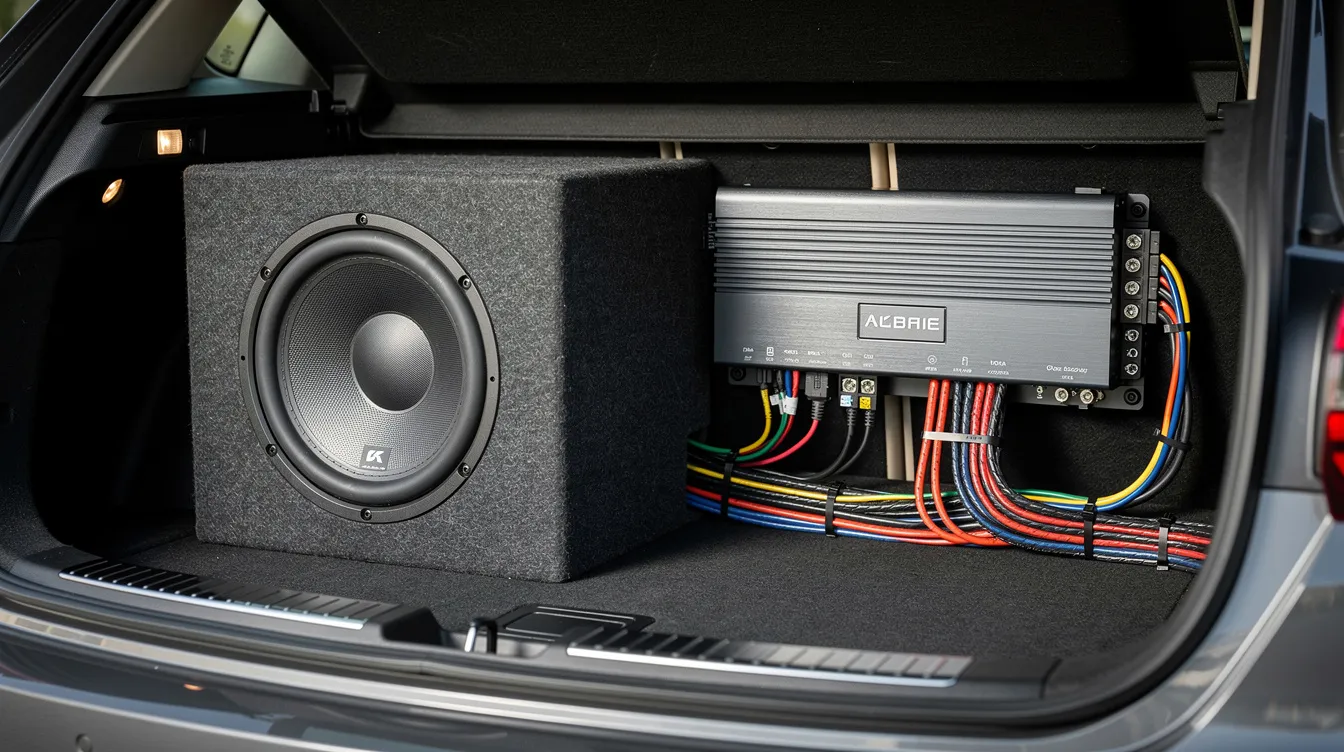
Do You Really Need a Subwoofer in Your Car?
Even if you're not chasing booming bass that rattles license plates, the answer is almost always yes-and here's why.
A dedicated subwoofer relieves your door speakers from trying to reproduce deep bass. When mid-range drivers aren't overworked trying to push low end frequencies, they reproduce vocals and instruments with less distortion and more clarity. Subwoofers improve overall audio system clarity by letting every speaker in the system focus on what it does best.
The result is a fuller, more balanced speaker system. Without a sub, factory setups typically fade quickly below 50 Hz. Add a properly matched subwoofer and you restore the impact of kick drums, bass guitar, synth bass lines, and 808s that the original mix intended you to hear.
Subwoofers add depth to various music genres like rock and hip-hop. They contribute to a broader soundstage in acoustic recordings, where the natural resonance of upright bass or cello gains body and realism. For electronic music and trap, a sub is non-negotiable-those genres are mixed with sub bass frequencies that don't exist without a dedicated driver.
Subwoofers also create a more immersive audio experience for movies by delivering physical impact from explosions, engines, and environmental rumble. They handle low frequency effects in surround sound systems and surround sound mixes, which is why subwoofers are essential for home theater systems to reproduce LFE-and the same principle applies to your car's listening experience.
With proper tuning, a subwoofer does not have to be overwhelming. It can be set for tight, musical support that feels natural at normal volumes. Amped Up Car Audio frequently upgrades stock systems with a single compact sub and amp to transform the listening experience without rattling the neighborhood.
Car Subwoofers vs Home Subwoofers vs Pro Audio Subs
Not all subwoofers are built for the same job. Understanding the differences prevents costly mismatches.
|
Feature |
Car Subwoofer |
Home Theater / Hi Fi Sub |
Pro Audio Sub |
|---|---|---|---|
|
Environment |
Small, sealed cabin |
Living room or listening room |
Concert venue, club |
|
Cabin/room gain |
Strong (~12 dB/oct below 70 Hz) |
Moderate (room dependent) |
Minimal (open air) |
|
Typical power |
200–3000 W RMS |
100–1500 W RMS |
1000–10,000+ W RMS |
|
Impedance |
1–4Ω (car amplifiers) |
4–8Ω (home amplifiers) |
4–8Ω (pro amps) |
|
Durability needs |
Vibration, heat, humidity |
Climate-controlled |
Road wear, heavy use |
Car subwoofers are engineered for smaller, highly reflective cabins where cabin gain significantly changes low frequency behavior. Standing waves can cause uneven bass response in different locations within the car, and subwoofer placement relative to the trunk walls, rear deck, and cabin opening matters more than in a home setup.
Home hi fi and home theater subwoofers prioritize flat in-room response down to around 20 Hz. In a home environment, subwoofers should be placed in corners for better bass response, and they can be placed close to walls to enhance bass output. Acoustic treatment in the listening room helps smooth response. Sound bars and small bookshelf speakers in home setups often pair with a dedicated sub to handle the lower frequency range that satellite speakers cannot reach. Surround sound systems in home theaters rely on subwoofers to deliver the ".1" LFE channel that makes movie theater–quality sound possible at home.
Professional sound reinforcement subwoofers for concerts and clubs are built for very high SPL, durability, and large venues using heavy-duty enclosures and high-power audio equipment.
Don't mix product categories. Using a home subwoofer plate amp in a car creates impedance mismatches, power issues, and reliability problems. Amped Up Car Audio focuses exclusively on automotive-grade subwoofers, amplifiers, and electrical upgrades engineered to survive real-world driving conditions.
Choosing the Best Subwoofer for Your Car
There is no single best subwoofer for everyone. The right choice depends on your vehicle size, music preferences, desired loudness versus sound quality, and budget. Room size influences the type of subwoofer to choose in home audio-and the same principle applies to your vehicle's cabin volume and trunk space.
Start by deciding your priority:
-
Tight, accurate bass (SQ): Lean toward sealed enclosures, moderate power, quality drivers
-
Maximum volume (SPL): Go ported or bandpass, high power, large cone area
-
Balanced daily driver: One well-chosen sub, moderate enclosure, matched amp
Sedan trunks, hatchbacks, SUVs, and trucks each have different enclosure space and acoustic loading characteristics that affect whether sealed or ported is ideal. Match sub size and quantity to available space, amplifier capability, and your vehicle's electrical capacity (battery, alternator, Big 3 wiring upgrades).
Amped Up Car Audio can recommend complete packages-subs, amps, enclosures, wiring, and batteries-tailored to specific vehicle models and goals.
Sub Size and Vehicle Space
-
8" and 10" subs are ideal for compact cars, under-seat truck boxes, and stealth installs where space is tight. They still produce surprisingly capable bass when properly enclosed and powered.
-
12" subs are the most popular all-rounders, balancing low frequency extension, output, and enclosure size for most sedans and SUVs. A single 12" in a quality enclosure handles the majority of daily-driving scenarios.
-
15" and larger subs require more space but deliver extreme low frequency output when powered and boxed correctly. These are common in SPL builds and dedicated bass vehicles.
Measure your trunk or cab space accurately before purchasing. Amped Up Car Audio provides enclosure dimensions and fitment guidance for common vehicles.
Music Style and Listening Habits
-
Hip hop, trap, EDM, and bass-heavy genres benefit from subs and enclosures tuned for strong output in the 25–45 Hz range. Ported boxes tuned in the mid-30s Hz are standard here.
-
Rock, metal, country, and acoustic music often sound best with faster, tighter bass from sealed enclosures or smaller, well-controlled drivers that prioritize mid bass punch and clarity.
-
Daily commuting at moderate volumes may only need a subwoofer that delivers clean, musical low end. A single efficient sub handles this. Show builds or demo vehicles might run multiple subwoofers for maximum output and smoother in-car bass distribution.
-
Be honest about how loud you truly plan to play the system when choosing cone area and amplifier power. Overbuilding wastes money and trunk space; underbuilding leads to clipping and frustration.
System Matching: Subwoofers, Amplifiers, and Electrical
Building a great bass system means thinking beyond the subwoofer driver itself:
-
The subwoofer's RMS rating, impedance, and enclosure recommendation must align with the amplifier's power output and stable ohm load. A mismatch in any of these creates distortion, damage, or wasted potential.
-
High-power systems often require upgraded power wiring, dedicated grounds, upgraded batteries, or even high-output alternators for stable voltage. Dimming headlights are the classic warning sign of an overtaxed electrical system.
-
Amped Up Car Audio carries OFC wiring kits, distribution blocks, fuses, and AGM or lithium batteries designed specifically for car audio power management.
-
If you plan to exceed a few hundred watts RMS of sub power, consult with the team before purchasing to avoid voltage drop and clipping issues.
Installation, Placement, and Tuning in a Car
Even the best subwoofer will sound poor if installation or tuning is off. In cars, placement is usually dictated by available space-trunk, hatch area, behind seats, under seat-but orientation and position within that space still matter.
Subwoofers should be positioned away from large openings to avoid cancellation of low frequency sounds. In a sedan trunk, corner placement with the sub and port (if ported) firing backward toward the trunk wall often yields the strongest cabin gain peaks around 50–70 Hz. In SUVs and hatchbacks where the cabin is more open, forward-firing into the passenger area can be more effective.
Common orientations to experiment with:
-
Sub and port firing back toward the trunk lid
-
Sub firing up toward the rear deck
-
Sub firing forward through the ski pass or rear seat fold-down
Fine-tune with crossover, gain, and phase controls after physical placement is set. Amped Up Car Audio is an online-only retailer specializing in high-performance car audio gear. We provide expert advice, curated product selections, and detailed installation guides to help you build the perfect bass system from the comfort of your home. Shop our extensive range of subwoofers, amplifiers, enclosures, and accessories online with confidence, backed by our knowledgeable customer support team ready to assist you every step of the way.
Basic Tuning: Crossover, Gain, and Phase
Follow these steps to dial in your new sub if you're going the DIY route:
-
Set the low-pass crossover on the amp (or head unit) between 70–100 Hz, slightly above where your door speakers' frequency response starts to fall off. This prevents overlap and keeps bass from sounding localized in the trunk.
-
Set gain correctly. Gain is a signal-level match, not a volume knob. Start low, play a familiar track at moderate volume, and increase gain until bass is strong but clean. If you hear distortion or the sub sounds strained, back it down.
-
Test phase alignment. Try 0° and 180° phase settings while listening from the driver's seat. Choose whichever setting produces the fullest, most even bass at the crossover frequency. Some amps offer continuously variable phase for finer adjustment.
-
Use test material. A playlist with consistent bass lines (sine sweeps, familiar tracks with defined kick patterns) helps you judge when the sub and front speakers blend smoothly across the crossover point.
-
Apply a subsonic filter if running a ported box. Set it approximately 5 Hz below the port tuning frequency to protect the driver from unloading on content below tuning.
Frequently Asked Questions (FAQ)
Frequently Asked Questions About Car Subwoofers
What frequency range does a subwoofer cover? Subwoofers typically reproduce frequencies from 20 to 200 Hz, but in real car installs the low-pass crossover is set around 70–100 Hz so the sub only handles low frequency audio. Everything above that goes to your door speakers and tweeters, which handle mid and high frequencies along with high frequency sounds.
Can I just run full range speakers and skip a subwoofer? Full range speakers can technically play some bass, but they distort and lose clarity when pushed into the lower frequency range. Subwoofers relieve main speakers from handling low frequencies, which means your mids and highs sound cleaner. If you want to hear frequencies below 60 Hz with any real authority, you need a subwoofer.
Is one subwoofer enough? For most vehicles and daily listening, a single well-powered 10" or 12" sub in the right enclosure is plenty. Multiple subwoofers can improve bass distribution in a vehicle, providing more even bass response across seating positions. Using two subwoofers is common in builds targeting both SPL and consistent coverage, but it's not mandatory for a great listening experience.
Do I need a separate amp if I choose an active subwoofer? No-a powered subwoofer has its own built-in amplifier for bass. However, you may still want a separate amp for your door speakers to get the best overall loudspeaker system performance. The sub's built-in amp handles only low end frequencies.
How do I know if my electrical system can handle my subwoofer amp? Check the amplifier's RMS power draw, your alternator output, and battery condition. Dimming lights or voltage sag under heavy bass are signs you need wiring upgrades, a stronger battery, or a high-output alternator. Amped Up Car Audio stocks the electrical upgrades to solve these issues.
Will a subwoofer ruin my gas mileage or damage my car? The added weight of a typical sub and amp setup is minor and has negligible fuel impact. Properly installed systems using fused power wiring and solid grounds are safe for the vehicle. The key is correct installation-no shortcuts on wiring or mounting.
Can I get tight, accurate bass and still feel deep lows? Absolutely. With a correctly sized sub, a well-designed sealed or properly tuned ported box, and careful tuning, you get both definition and strong low frequency extension. Delivering deep, controlled bass at the same time is what separates a good car audio build from a rattling mess.
How do I protect my subwoofer from damage? Use appropriate high-pass and subsonic filters, respect RMS power ratings, avoid clipping by setting gain correctly, and ensure the enclosure matches manufacturer specs. These steps keep your driver operating within its mechanical and thermal limits.
What's the difference between more bass and better bass? More bass means higher SPL-sheer volume. Better bass means accurate bass reproduction with clean transients, smooth frequency response, and no distortion. The best builds deliver both, and that starts with matching the right sub, enclosure, and amp to your vehicle and preferences.
Ready to Upgrade? Work with Amped Up Car Audio
Now that you understand what a subwoofer is, how it works, and what separates good bass from great bass, it's time to put that knowledge into action.
Browse Amped Up Car Audio's curated selection of car subwoofers, amplifiers, enclosures, wiring kits, and upgraded batteries online. Every product is chosen by audio enthusiasts who build and listen to car audio systems daily-not by a purchasing department that's never heard a bass drop.
If you're near Conover, North Carolina, shop online with Amped Up Car Audio for expert system design advice, installation guidance, and tuning support from experienced car audio technicians. The team can help you choose between passive and active subwoofers, sealed and ported enclosures, and recommend the right power level for your vehicle and budget.
Ready to get started? Reach out via phone, email, or online chat with your vehicle model, music preferences, and budget. You'll receive a tailored system plan-not a generic parts list.
A properly designed subwoofer system from Amped Up Car Audio doesn't just add more bass. It completes your car's sound, delivering the full low frequency experience your music and movies were mixed to have. Your favorite tracks were produced with deep bass in mind. Make sure your car can actually play them.