
What Is SPL? A Clear Guide to Sound Pressure Levels Explained
Posted by Jacob Morris on Jun 9th 2026
What Is SPL? Sound Pressure Level Explained for Car Audio (2026 Guide)
This guide explains what SPL (Sound Pressure Level) means, why it matters for car audio enthusiasts, and how it affects your listening experience. Whether you're new to car audio or looking to compete in SPL events, you'll learn the basics, measurement techniques, safety considerations, and tips for maximizing sound pressure in your vehicle.
Key Takeaways
-
SPL means sound pressure level, and it measures sound pressure in the air relative to 20 micropascals, the standard reference sound pressure for human hearing.
-
In car audio, SPL helps explain how loud subwoofers, speakers, and complete car audio systems feel inside a vehicle cabin, especially when low frequencies build pressure.
-
SPL is measured in decibels (dB), and because the db scale is a logarithmic scale, small changes can mean major changes in sound output, perceived loudness, and acoustic power.
-
SPL is not just “volume.” Distance, cabin shape, background noise, frequency range, and different frequencies all affect the measured spl and how the human ear reacts.
-
SPL levels above 85 dB can cause hearing damage with prolonged exposure, so Amped Up Car Audio helps car audio enthusiasts balance peak spl, sound quality, and hearing protection.
What Is SPL? (Sound Pressure Level SPL Basics)
Sound pressure level spl is a logarithmic measure of sound pressure relative to a reference value. In air, that reference pressure is 20 micropascals, often written as 20 µPa, and readings are expressed as db spl.
-
The reference sound pressure for SPL is 20 micropascals. At 1 kHz, 20 µPa is close to 0 dB, the threshold of human hearing. Normal conversation is around 60 dB SPL, while pain often begins around 120–130 dB SPL.
-
The basic formula is: SPL (dB) = 20 × log10(p / 20 µPa). In plain English, this is how you calculate spl from measured RMS sound pressure relative to the reference pressure, then convert it into a decibel unit. A 20× pressure increase equals about +26 dB, and even one decibel is a measurable change on a logarithmic scale, though small changes are not always perceived as dramatically louder.
-
SPL evaluates pressure variations in the air caused by sound waves. A sound wave creates a pressure variation above and below normal air pressure, and SPL represents how strong a sound wave is to human ears.
-
Sound pressure is the acoustic pressure at a point, sound intensity is acoustic power flowing through an area such as a square meter, and sound level is a broader term that may include filters. SPL specifically uses rms sound pressure in pascals against a reference level.
-
SPL measurements guide audio system design for clarity in noisy environments. SPL is crucial for audio engineering and environmental noise monitoring because it gives engineers a consistent way to compare noise levels, sound sources, and system performance.
-
SPL measures how effectively audio systems convert electrical energy into acoustic pressure. In speaker specs, a higher SPL means louder sound with less power consumption, and higher SPL ratings mean greater loudness with less power from the same amplifier setup.
-
SPL is used to monitor and regulate noise pollution, support noise control, and identify sound levels harmful to human hearing. It is also crucial for ensuring safe noise levels in workplaces and other occupational health settings.
-
In audio engineering, SPL is vital for sound production and quality assurance. For car audio, it helps compare subwoofers, amplifiers, enclosure choices, and the real sound output you feel in the seat.
-
Important acronym note: Structured Product Labeling (SPL) is an XML-based standard for product information. That version of SPL is significant for drug establishment registration and product updates, is required for drug manufacturers to register with the FDA, transforms unstructured documents into machine-readable data for accessibility, and ensures consistent formatting of product ingredients and labels. This guide focuses on sound pressure level in car audio.
How Humans Hear SPL at Different Frequencies
Human hearing covers roughly 20 Hz to 20 kHz, but the human ear is not equally sensitive across that whole frequency range. The sensitive range is usually around 2–4 kHz, which is why harsh treble hiss can feel painful even when deep bass rumble has the same pressure reading.
-
The same pressure does not always feel equally loud. For example, 80 dB at 40 Hz and 80 dB at 2 kHz can have very different perceived loudness because the human ear hears midrange frequencies more easily than low-bass frequencies.
-
Equal-loudness curves, including Fletcher–Munson curves and ISO 226:2003, show that frequency dependence matters. Low frequencies often need much higher sound pressure levels before they feel as loud as midrange tones.
-
SPL provides an objective way to quantify perceived loudness, but it is still physical measurement first. Human perception changes with frequency, listening environment, distortion, and continuous noise exposure.
-
A +10 dB increase is commonly heard as a perceived doubling of loudness by many listeners. A 3 dB increase in SPL represents a doubling of sound power, even if the human ear does not hear it as twice as loud.
-
A-weighting is often used because it follows the way human ear reacts to everyday sound. A-weighting emphasizes frequencies between 500 Hz and 10 kHz, making it useful for occupational health, environmental noise measurements, and many regulations.
-
In car audio, this explains why a subwoofer playing 30–50 Hz may feel like chest pressure while a tweeter peak can sound sharp. Good tuning keeps loud music exciting without letting one frequency band dominate the whole system.
Measuring Sound Pressure Level: Tools, Weightings and Techniques
SPL measurement is done with a sound level meter, sound pressure level meter, measurement microphone, or competition-grade spl meter. Proper placement, calibration, and settings matter because the signal measured can change dramatically with distance and cabin reflections.
-
Modern SPL meters include handheld SLMs, USB measurement microphones, and specialized competition systems. SPL is typically measured 1 meter from the sound source in many speaker tests, while car audio testing often happens at the driver’s headrest, dash, kick panel, or an official spl stand location.
-
Fast and Slow response settings are used in SPL measurements. Fast response is about 125 ms and captures quick peaks, while Slow response is about 1 second and gives a steadier average sound level.
-
SPL measurements use A, C, and Z frequency weightings. These frequency weighting filters change how much low, mid, and high frequency content affects the displayed spl level.
-
A-weighting is commonly used for environmental noise measurements, workplace safety, and general noise exposure checks. It reduces the influence of low frequencies and very high frequencies to better match typical human hearing sensitivity.
-
C-weighting is used in loud environments like concerts, machinery spaces, rock concerts, and spl competition testing. C-weighting measures sound pressure levels across all frequencies in a way that captures more bass energy than A-weighting.
-
Z-weighting applies no frequency weighting to SPL measurements. Z-weighting is “flat,” so it shows the full sound pressure across the audible band without applying a human-hearing curve.
-
For serious laboratory work, sound pressure measurements may be taken in controlled rooms or anechoic chambers. In car audio, the real-world goal is usually repeatable measurement inside the cabin, because doors, windows, seats, glass, and panels all change the measured spl.
SPL in Car Audio: From Daily Systems to SPL Competition
In car audio, SPL describes how much acoustic pressure a system can generate inside the vehicle, especially in the sub-bass range. It is one of the main ways builders compare how hard a system hits, how efficiently it uses electrical power, and how loud it gets before distortion or failure.
-
Car audio SPL is usually measured with a calibrated meter while playing sine tones, often around 30–60 Hz, with the doors shut and the cabin sealed. The meter may be placed on the dash, at the windshield, at the headrest, or wherever the organization’s rules require.
-
A good SPL for car audio is 90-100 dB for many daily listeners. Peaks around 105–115 dB already feel very loud in a small cabin, while spl competition builds are engineered for much higher short bursts.
-
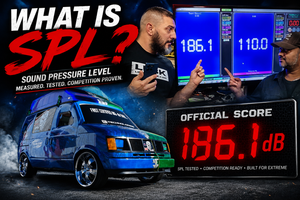
SPL competitions such as dB Drag Racing, MECA, IASCA, and similar formats reward peak sound pressure. Modern top-tier competition cars routinely exceed 160 dB, and RP Patel is recognized as the current world record holder in the mid-2020s SPL scene, with a 186.14 dB IASCA Ultimate-class score reported in 2025.
-
Vehicle cabin size, sealing, glass area, dashboard shape, seat position, and resonant frequency can massively affect sound pressure levels compared to free-field speaker tests. A subwoofer that measures one way outside the car can behave very differently once loaded into a hatchback, sedan, SUV, or wall build.
-
SPL-focused “burp” builds chase one narrow frequency for maximum pressure level. Daily driver systems aim for usable bass, clear vocals, strong mids, controlled highs, and sound quality across the full range.
-
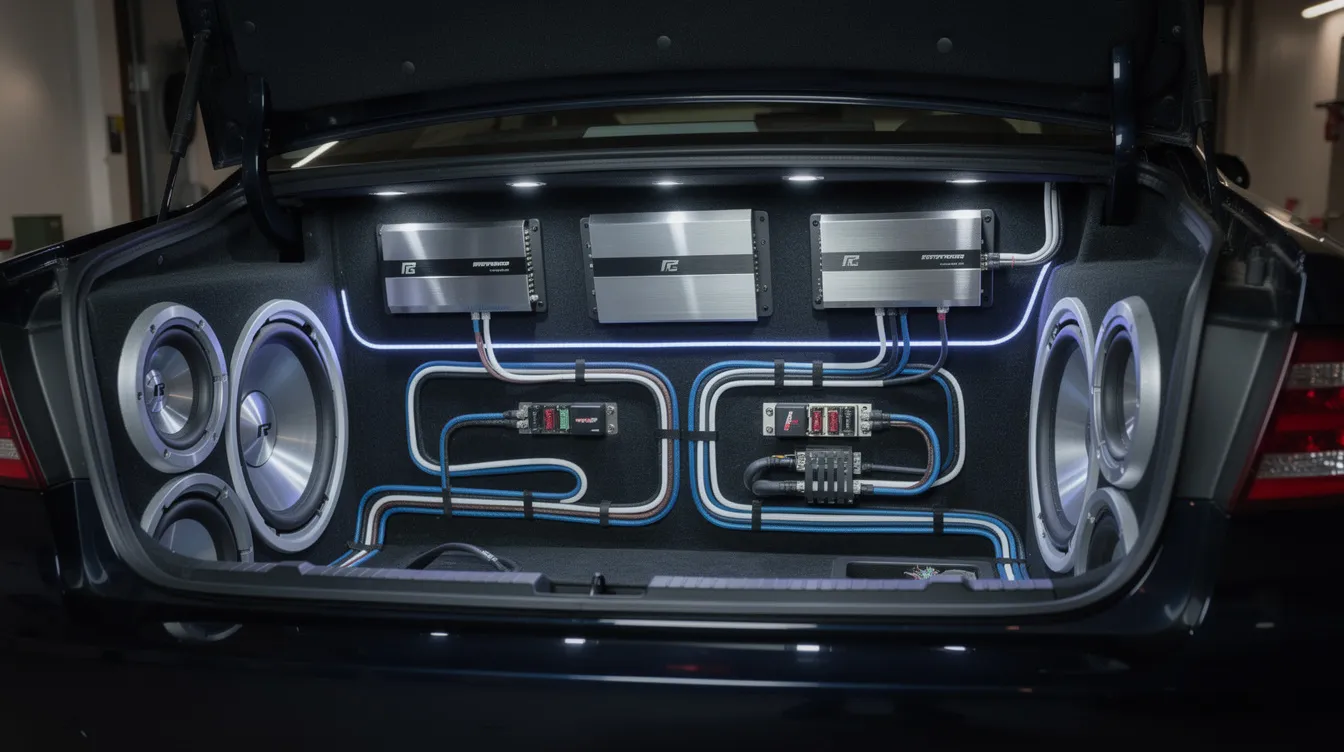
Extreme sound pressure levels require more than big amplifiers. They need the right enclosure, the right subs, stable voltage level, strong wiring, and safe operating habits.
-
Amped Up Car Audio supports both competitors and daily listeners with subwoofers, amplifiers, speakers, batteries, wiring, installation parts, and accessories designed for real car environments.
Speaker Sensitivity, Power and Maximum SPL
Speaker ratings help predict sound pressure levels, but they do not tell the full story. The enclosure, vehicle cabin, amplifier headroom, voltage stability, and installation quality can make or break the final result.
-
Sensitivity shows how loud a speaker is with 1 watt at 1 meter. A spec like “87 dB @ 1 W/1 m” means the driver produces 87 dB SPL with 1 watt of input, measured 1 meter away under standard conditions.
-
Speaker sensitivity is one of the clearest ways to compare efficiency. A driver with higher sensitivity can create more spl measured from the same electrical power, which is why higher SPL ratings mean greater loudness with less power.
-
Power handling includes RMS or continuous power and peak power. RMS tells you what the speaker can handle for normal operation, while peak power is a short-term limit that should not be treated as a daily target.
-
Maximum SPL is the loudest sound a speaker can produce before distortion, mechanical limits, or thermal stress become a problem. In the real world, maximum SPL depends on the driver, amplifier, enclosure, and vehicle.
-
The relationship between sensitivity, power p, and SPL follows a power ratio. Doubling amplifier power usually adds about +3 dB, while a 10× power gain adds about +10 dB if the speaker and enclosure can handle it.
-
SPL drops by about 6 dB when distance doubles in open space. A reading at 1 meter will not match a reading at 2 meters, and the difference can be even more complicated inside a reflective car cabin.
-
Raw wattage alone does not guarantee better sound. Enclosure tuning, cone area, excursion, thermal compression, impedance rise, amplifier efficiency, and clean voltage often matter more than chasing the biggest number on a box.
-
When shopping with Amped Up Car Audio, compare sensitivity, RMS ratings, impedance, recommended enclosure volume, and your target sound quality goals before choosing subs, amps, and wiring.
Safe Sound Pressure Levels and Occupational Health Considerations
Loud car audio is exciting, but hearing damage is permanent. The same pressure that makes bass feel powerful can become dangerous with prolonged exposure, especially when systems reach concert-level or competition-level output.
-
A common safety reference is 85 dB(A) for 8 hours. SPL levels above 85 dB can cause hearing damage with prolonged exposure, and each +3 dB roughly halves safe exposure time: 88 dB(A) is about 4 hours, 91 dB(A) is about 2 hours, and 94 dB(A) is about 1 hour.
-
Approximate examples help put this in perspective: 60 dB is conversation, 90 dB is loud traffic or a strong stereo, 110 dB is a nightclub near speakers, and 140 dB+ includes fireworks at close range and extreme SPL cars.
-
SPL can reach levels above 120 dB, risking hearing damage. Once a system gets near pain-level output, short exposures matter, and the lack of pain does not mean the sound is safe.
-
Low frequencies from car subwoofers at 30–50 Hz can still be dangerous even when they feel more like pressure than sound. The human ear and inner ear structures are still being stressed by the acoustic pressure.
-
Hearing protection should be standard for spl competition runs and extended listening above 100 dB. Use quality earplugs or earmuffs, and use dual protection around extreme sound pressure levels.
-
Treat hearing as part of your long-term system investment. Amped Up Car Audio’s stance is simple: enjoy big bass, but use smart tuning, safe listening habits, and accurate measurement so the system stays fun for years.
How to Increase SPL in a Car Without Ruining Sound Quality
Many builders want both high SPL and clean sound quality. The best systems do not rely on one oversized amplifier and hope for the best; they combine the right audio equipment, clean power, proper tuning, and a vehicle-specific plan.
-
Start with enclosure design. Ported boxes, bandpass boxes, and wall builds can raise sound pressure levels around targeted frequencies, but the box must match the subwoofer’s parameters and your listening goals.
-
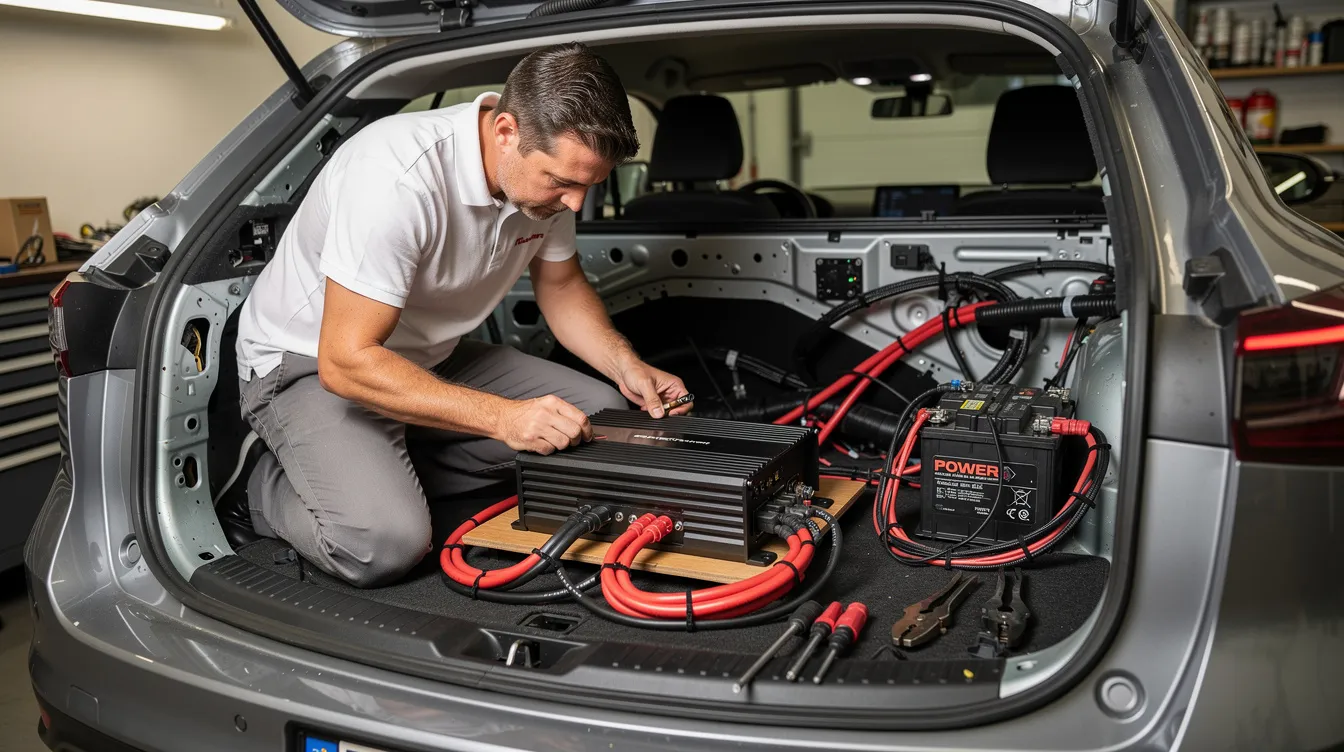
Upgrade power delivery before demanding more output. Big 0-gauge wiring, quality OFC cable, proper grounding, high-output alternators, dedicated AGM or LiFePO4 batteries, and supercapacitors help keep voltage stable under load.
-
Prepare the cabin. Sound deadening, sealing doors, reinforcing panels, and fixing rattles help convert more electrical power into clean sound pressure instead of wasted mechanical noise.
-
Use DSP, crossovers, gain setting, and time alignment. Good tuning keeps subs, mids, and highs working together so the system gets louder without muddy bass, harsh treble, or clipped amplifiers.
-
Control the bass from the driver’s seat. Eco bass knobs and remote level controls make it easier to adjust output for daily driving, demos, or quick testing without constantly changing amplifier settings.
-
Get expert help before buying mismatched parts. Amped Up Car Audio can help online with subwoofers, amplifiers, speakers, wiring kits, batteries, and accessories that support higher SPL with controllable sound quality.
FAQ
What is a “good” SPL for a car audio system?
For daily listening, a good SPL for car audio is often 90-100 dB, especially if the goal is clean music instead of competition output. Peaks around 105–115 dB at the driver’s seat already feel very loud in a vehicle cabin.
“Good” depends on the build. A sound quality system may focus on clean 95–105 dB playback, while an SPL competition vehicle may exceed 150–160 dB in short bursts at a narrow frequency.
If you want strong but usable bass, target a system capable of clean peaks around 110–115 dB, then size the subwoofers, amplifiers, batteries, and enclosure around that goal.
How does distance from the speakers affect sound pressure level?
In open space, SPL drops by about 6 dB when distance doubles. If a speaker measures a certain level at 1 meter, the level may be around 6 dB lower at 2 meters, assuming no major reflections.
Inside a car, reflections, glass, seats, standing waves, and cabin gain change the exact result. Still, distance and meter placement matter, which is why competition organizations use fixed measurement locations for fair comparisons.
This is also why moving the mic from the dash to the headrest can change the spl level, even when the system settings stay the same.
What is the difference between dB SPL and dBA?
dB SPL is the raw sound pressure level referenced to 20 µPa. It tells you the physical pressure level of the sound being measured.
dBA, also written dB(A), applies A-weighting to better reflect how humans hear different frequencies. dBA is widely used in occupational health, environmental noise monitoring, and regulations.
Car audio competitions often use unweighted, Z-weighted, or C-weighted readings because low-bass energy is a major part of the score. For long listening sessions, dBA is usually more useful for hearing-risk decisions.
Why do two identical subwoofers not double my SPL score?
Adding a second identical subwoofer does not automatically double the score because decibel scales are logarithmic. In theory, doubling sound power can add about +3 dB, and ideal pressure coupling may approach more gain, but real vehicles are not ideal test chambers.
Amplifier limits, enclosure size, phase cancellation, impedance rise, cabin acoustics, and voltage drop can reduce the gain. Many real systems gain only a few decibels unless the full design is updated.
Before adding another sub, review amplifier headroom, battery capacity, wiring, box volume, port area, and tuning with Amped Up Car Audio so the upgrade actually produces usable SPL.
How can Amped Up Car Audio help me build a high-SPL system?
Amped Up Car Audio provides curated subwoofers, amplifiers, speakers, wiring kits, batteries, installation accessories, and control gear for high-performance car audio builds.
The team can help match subwoofer power handling to amplifier output, choose enclosure volume and tuning, plan electrical upgrades, and reduce the weak points that hold back peak spl.
You can shop online 24/7 for demo-ready ideas, SPL-focused gear, and system design help based on your vehicle and budget.
Ready to Turn SPL Knowledge into Real Bass? (Call to Action)
Now that you know what is SPL, you can make smarter decisions about your next car audio system. The goal is not just a louder number; it is cleaner bass, better control, safer listening, and a build that fits how you actually drive.
-
Browse Amped Up Car Audio’s subwoofers, amplifiers, speakers, batteries, wiring kits, and installation accessories selected for high SPL potential and reliable performance.
-
Contact Amped Up Car Audio for a custom SPL or sound quality system plan through the website or by email. We operate exclusively online to provide expert support and high-performance car audio gear directly to your door.
-
Choose a target SPL and budget, measure your current sound pressure levels, then upgrade subs, amps, power, and enclosures step by step with guidance from the Amped Up team.
-
Build your next record-breaking or daily-driver system with Amped Up Car Audio today and turn SPL theory into truly unforgettable sound pressure in your own car.