
Understanding What Is Gain on an Amp: Essential Insights for Users
Posted by Jacob Morris on Jun 3rd 2026
What Is Gain On An Amp? (And How To Set Gains On Your Car Amplifier)
If your car audio system sounds weak, harsh, or keeps damaging speakers, the problem may not be the amp-it may be the gain setting. This guide is for car audio enthusiasts, DIY installers, and anyone troubleshooting amplifier issues. Understanding gain is crucial for achieving the best possible sound quality and ensuring the longevity of your audio equipment. This guide explains what gain does, why it matters, and how to set gains with a multimeter, SMD DD-1, o scope, or by ear when you have no tools.
What Is Gain On An Amp? (Answer The Question Fast)
What is gain on an amp? In the context of an amplifier, gain is the measure of how much an electronic circuit increases the strength, amplitude, voltage, or power of an input signal. In car audio, amp gain is usually an input sensitivity control, not a volume control or “more power” knob.
Amplifier gain matches the output voltage from your head unit, DSP, or line driver to the amp’s rca input so the amplifier can reach full clean power output without clipping. Gain represents the direct ratio between the output signal and the input signal, often measured in decibels (dB) or as a basic ratio.
For example, a 4V preout head unit feeding a 1500W RMS @ 1 ohm monoblock needs about 38.7V at the speaker outputs. Proper setting gains gives you loud, clean subwoofer output; poor setting gain creates distortion. Amped Up Car Audio helps customers online from Conover, NC with amplifiers, subs, wiring, batteries, and installs built to sound strong without burning gear.
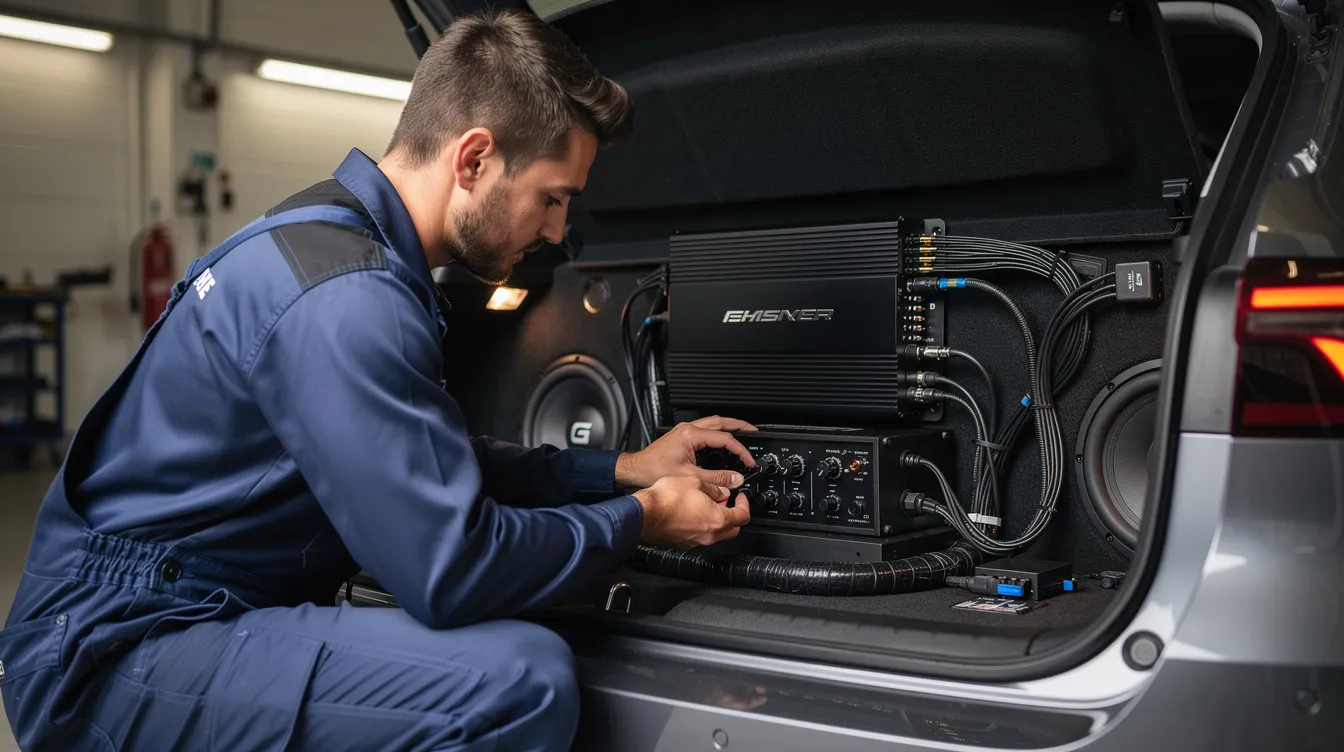
How Amplifier Gain Works (Input Sensitivity Explained)
Amplifier gain determines how much input voltage is needed to drive the amp to full RMS output. It controls how hard the input stage is driven and sets the foundational strength of the signal.
-
Turning gain up makes the amp more sensitive to a lower voltage input, but it does not create unlimited power.
-
Gain does not simply make sound louder; it fundamentally alters the behavior and texture of the audio signal.
-
Low gain yields a clean, pristine sound, while high gain overdrives the circuit, creating heavy distortion and sustain.
-
Clean sound is achieved by setting the gain at lower levels, whereas pushing the gain to high levels clips the waveform and introduces distortion.
-
A 1000W amp at 1 ohm needs about 31.6V output because Voltage = √(Watts × Ohms).
-
Excessive gain causes the signal to push past the amplifier's maximum voltage limits, leading to audio waveform flattening and distortion.
In audio gear, gain is crucial for setting the tone of the sound and preparing the signal for processing or amplification. Voltage Gain is the ratio of output voltage to input voltage; Current Gain is the ratio of output current to input current; Power Gain is the ratio of output power to input power.
Why Correct Gain Setting Matters In Car Audio
Daily drivers, SPL builds, and show cars all need correct gain staging. Headroom is the safety gap between peak signals and distortion, which is quickly consumed by high gain settings.
Proper gain setting in amplifiers is crucial for achieving optimal sound quality and preventing distortion, as it allows the amplifier to deliver the intended power without clipping. It also keeps subwoofers, speakers, and tweeters alive longer, reduces amp heat, and protects the electrical system from unnecessary strain.
Gain matching amplifiers matters when you have a monoblock for a sub and a 4-channel amplifier for doors. If the sub amp is too hot, bass buries vocals. If the door amp is too hot, mids clip before bass reaches the clipping point. Factory radios, DSPs, and most head units can range from lower voltage outputs near 1V to 4–9V preouts, so each system needs its own tune.
Before You Set The Gain: Preparation & Safety
Prep work prevents bad readings and damaged gear. To set the gain correctly, turn off EQ and bass boost, set all tone controls to flat, and play a test tone at 75% of your head unit's max volume before adjusting the gain.
-
Turn off loudness, sound enhancers, bass boost, and aggressive eq.
-
Set crossovers near final settings: 80Hz low-pass for sub, 80Hz high-pass for doors.
-
Set balance/fader center and sub level to 0.
-
Use about 75–80% of maximum volume, such as 30/40, not full volume.
-
Disconnect speakers and speaker wires from the amplifier while measuring.
-
Avoid shorting speaker terminals with probes or bare wire.
Amped Up Car Audio can help you choose wire kits, fuses, batteries, test tone files, and technical advice before you tune.
How To Set Gain With A Multimeter (Most Common DIY Method)
A digital multimeter is affordable and far better than guessing by ear. Using a multimeter to set the gain can help ensure that the amplifier is producing clean power, which enhances the overall audio experience and prolongs the life of the equipment. The limitation: a volt meter shows ac voltage, not waveform shape.
What You Need For The Multimeter Gain Setting Method
-
Digital multimeter with AC volts; a True RMS meter is best.
-
Sine wave tones: 40Hz for sub amps, 1kHz for mids/highs.
-
RMS rating and load impedance, such as 750W @ 2 ohms.
-
Calculator for Voltage = √(Watts × Ohms).
-
0dB or -5dB test tone files from a reliable source.
Using a multimeter to match your amp's actual output to a calculated voltage ensures you're getting full power without distortion, taking the guesswork out of relying on often-misleading dial markings.
Calculating Your Target AC Voltage
You need a target voltage to match the amp’s real output to rated RMS at your chosen load. The formula to calculate the target voltage for setting gain is Voltage = √(Watts × Ohms), which helps ensure the amplifier is set to deliver its rated power without distortion.
-
500W @ 2 ohms → √1000 ≈ 31.6V.
-
1000W @ 1 ohm → √1000 ≈ 31.6V.
-
1500W @ 1 ohm → √1500 ≈ 38.7V.
Use a target voltage based on the amp’s true RMS rating, not a max power claim. If you are unsure how much power your amplifier really makes, contact Amped Up Car Audio with the model number.
Step-By-Step: Setting Gain With A Multimeter
-
Disconnect subs and other speakers from the amp.
-
Set head-unit volume to 75–80% of max and leave it there.
-
Turn bass boost, loudness, processing, and level controls off.
-
Set subsonic and crossover points where you plan to use them.
-
Play the correct sine wave test tone on loop.
-
With the dmm set to AC volts, connect probes to the speaker terminals.
-
Start at minimum gain and slowly increase until the meter reaches the calculated target voltage.
Once the target ac voltage is reached, stop. Power down, reconnect speakers carefully, and check the system at low volume first. This process assumes the signal is clean; it does not show exact clipping indicators.
What If Voltage Never Reaches Your Target?
If the amp cannot hit the calculated voltage, the input signal may be too weak, vehicle voltage may be dropping, or the amp may not make rated power cleanly. Do not crank gain past reason just to hit the math.
Instead, accept the highest clean reading, then inspect battery health, alternator output, ground quality, and source voltage. A better head unit, DSP, or line driver can make gain matching amplifiers easier and more accurate.
How To Set Gain With An SMD DD-1 (Recommended Method)
The SMD DD-1 Distortion Detector is purpose-built for car audio gain setting. It is usually the best option for enthusiasts because it finds distortion directly without needing a full scope setup. Many serious installers use DD-1 tools because they are fast, repeatable, and safer for expensive equipment.
Why The SMD DD-1 Beats A Multimeter For Gain Setting
A multimeter only shows voltage. A DD-1 detects when distortion passes a threshold and turns on a distortion LED or clip light. That means you can determine the max clean volume of the head unit first, then set each amplifier at the edge of clean output.
This protects subs, components, lithium batteries, and high-output amps. If you spent serious money on audio gear, a DD-1 often costs less than replacing one burned subwoofer. You can review the general SMD method in the DD-1 owner’s manual.
Step-By-Step: Setting Gain With An SMD DD-1
-
Disconnect speakers from amplifier outputs.
-
Turn all eq, boosts, and loudness off.
-
Use the DD-1 at the head unit or amp input to find max clean volume; mark it, such as 32/40.
-
Play the DD-1 0dB 40Hz tone for sub channels or 1kHz for mids/highs.
-
Connect the DD-1 to the amplifier speaker outputs.
-
Slowly raise gain until the distortion light appears, then back down until it turns off.
-
Repeat for every amp and channel pair.
You can use -5dB or -10dB tracks for musical headroom, but understand that more overlap can increase risk if you abuse the bass knob or boost settings.
How To Set Gain With An Oscilloscope (Advanced Method)
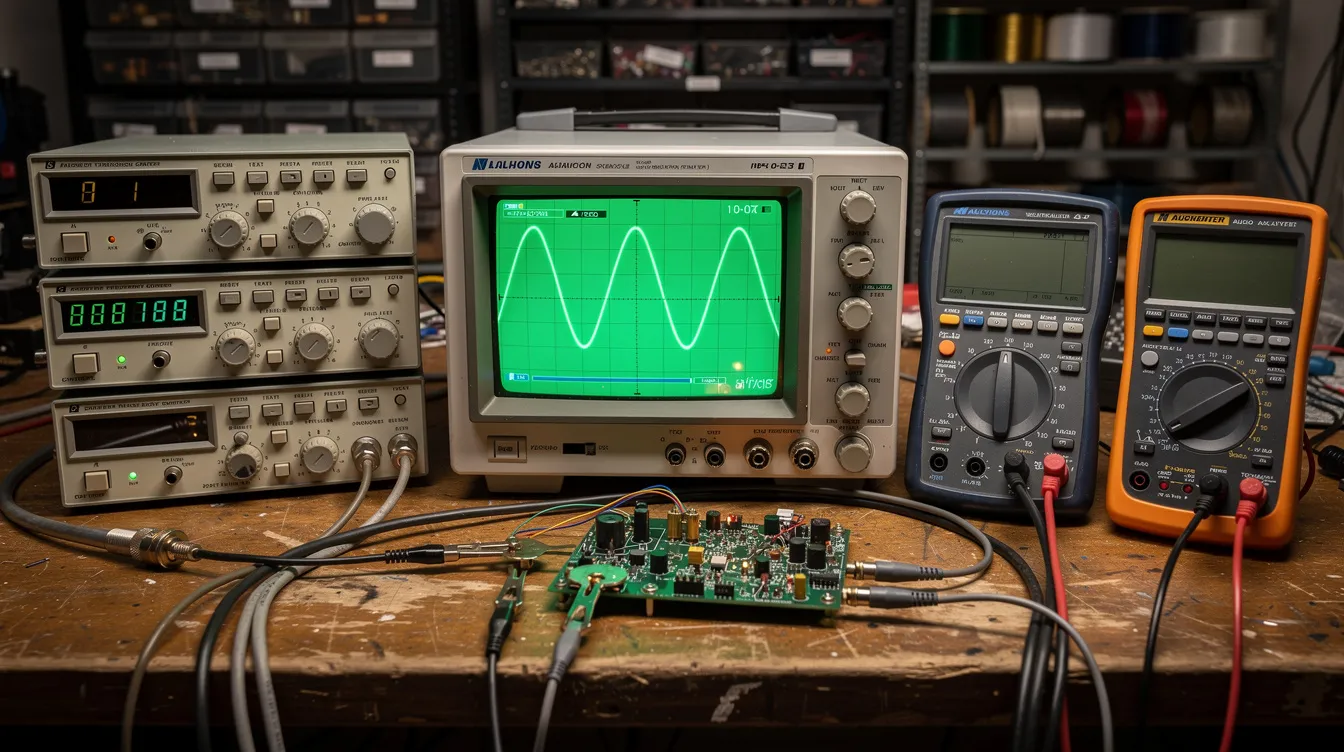
An oscilloscope is the gold standard because it lets you see the waveform. It is also more complex and expensive. Amped Up Car Audio uses scope-based methods for complex high-power builds, while many DIY customers use a DMM or DD-1.
Tools Required For The O-Scope Method
-
Oscilloscope with audio bandwidth capability.
-
40Hz, 1kHz, and other frequency tones if needed.
-
Probes or attenuators rated for the amplifier’s output voltage.
-
Basic knowledge of time base, volts per division, and coupling.
This method is best for advanced hobbyists or professionals.
Step-By-Step: Finding Clipping With A Scope
Disconnect all speakers, set the head unit to your marked max clean volume, and play a steady sine wave. Connect the scope probes across the amp output terminals. Begin with low gain and watch for a smooth wave. Slowly increase gain until the top or bottom of the wave flattens, then back off until it is clean again.
That point is the clean maximum for that channel. Repeat the process to gain match each amplifier.
Setting Gains Without Any Tools (Why “By Ear” Is Risky)
Setting gains by ear is the least accurate method. Clipping is not always obvious, especially with compressed music, pink noise, or bass between 30–50Hz. Incorrect gain settings can lead to poor sound quality, including distortion and clipping, which can damage speakers and reduce the overall performance of the audio system.
If you have no tools:
-
Keep bass boost off.
-
Keep gains conservative.
-
Never use full volume.
-
Listen for harshness, buzzing, or a sudden change in tone.
-
Back off immediately if the response sounds strained.
If the input gain is too low, background hiss or hum may become audible when compensating by increasing the volume, so do not solve every problem with more volume. At minimum, buy a basic multimeter; ideally, use a DD-1.
Gain Matching Multiple Amplifiers In A System
Gain matching amplifiers means every amp behaves correctly at the same head-unit reference volume. Pick your max clean volume, tune the sub amp first, then adjust the mids/highs amp so the front stage and bass match naturally.
For sound quality builds, the sub amp may be set slightly below maximum to keep bass tight and integrated. For demo builds, matching clipping behavior prevents one amp from failing before the rest of the system reaches its limit. Amped Up Car Audio can help design amplifier, speaker, sub, wiring, and battery packages that match electrically and sonically.
Common Gain Setting Mistakes To Avoid
Common mistakes we see in the shop include:
-
Using gain as a volume knob instead of matching signal voltage.
-
Using bass boost instead of adding real cone area or amplifier power.
-
Tuning with loudness, eq, or bass boost on.
-
Leaving speakers connected during long test tones.
-
Ignoring vehicle voltage drop below 12V.
-
Trusting dial markings instead of measuring.
Correct gain staging is vital for high-fidelity audio and ensures the signal is strong enough to avoid background noise but low enough to avoid clipping and distortion. Improper gain settings degrade audio quality by affecting the noise floor and introducing fuzzy distortion when clipping occurs.
Why Choose Amped Up Car Audio For Gain & System Troubleshooting
Amped Up Car Audio has been setting gains on real builds in Conover, NC with their combined 35+ years of experience, from daily trucks to high-output demo systems. We sell the full chain: head units, DSPs, amplifiers, subwoofers, speakers, wiring, batteries, accessories, and bass knob solutions-so we understand how every part affects gain and clipping.
Our techs use DMMs, SMD DD-1s, and oscilloscopes to diagnose weak output, noise, blown speakers, and mismatched amp settings. Online customers can send photos of amp controls, model numbers, and vehicle details for practical guidance. Online customers can ask tuning questions, including gain matching multiple amplifiers.
Dive Deeper Into Amplifier Troubleshooting
Ready to master your car audio system? Check out these in-depth guides from Amped Up Car Audio that cover a range of amplifier issues and solutions:
-
How to Bypass Protection Mode on Amp: Effective Tips and Techniques
Learn smart ways to get your amp back up and running safely. -
Troubleshooting a Car Amp Not Working: Common Issues and Solutions
Discover quick fixes for amps that won’t power on or respond. -
Understanding Alternator Whine: Causes and Solutions for Your Vehicle
Identify and eliminate that annoying electrical noise from your system. -
Troubleshooting: Car Amp Turns On but No Sound Issues Explained
Find out why your amp powers up but produces no audio output. -
Why Is My Amp Overheating So Quickly? Common Causes and Solutions
Explore the reasons behind amp overheating and how to prevent it.
These expert articles perfectly complement this guide, providing practical advice to keep your car audio system performing at its best without distortion or damage.
FAQ: Amp Gain, Setting Gains, And Troubleshooting
-
Is gain the same as volume on my amp?
No. Gain is input sensitivity. Volume comes from the source; gain tells the amplifier how much input signal is needed to reach clean output. -
How do I set the gain on my amp without distortion?
Use a DD-1 for the best DIY result, a scope for advanced tuning, or a multimeter and target voltage calculation for a solid budget method. -
What happens if my amp gain is too high?
The amp clips, heat rises, speakers can fail, and the electrical system works harder. High gain also reduces headroom. -
Can I set gains without a multimeter?
Yes, but it is risky. Keep settings low and avoid full volume, but invest in at least a budget meter or DD-1. -
How often should I re-check my amplifier gain?
Re-check after changing the head unit, DSP, amp, sub box, speakers, alternator, battery, or wiring. -
What is the best way to gain match amplifiers in a car audio system?
Find the max clean head-unit volume, then tune each amp with a DD-1 or scope at that same volume.
If your system sounds weak, distorted, noisy, or keeps blowing speakers, contact Amped Up Car Audio for gear-specific help and professional gain diagnostics.